Monday, November 9, 2026

Regional Banks Hold $3 Trillion in Commercial Real Estate Debt as CMBS Delinquencies Hit 13-Year High

Smaller lenders carry nearly two-thirds of CRE exposure while reporting delinquency rates below 1.25%, even as the securitized market shows stress above 7%.

By the Family Office Real Estate Daily Desk·Monday, November 9, 2026·2 min read
Editorial summary of reporting bytradingview.comOur editorial standards →
Regional Banks Hold $3 Trillion in Commercial Real Estate Debt as CMBS Delinquencies Hit 13-Year High
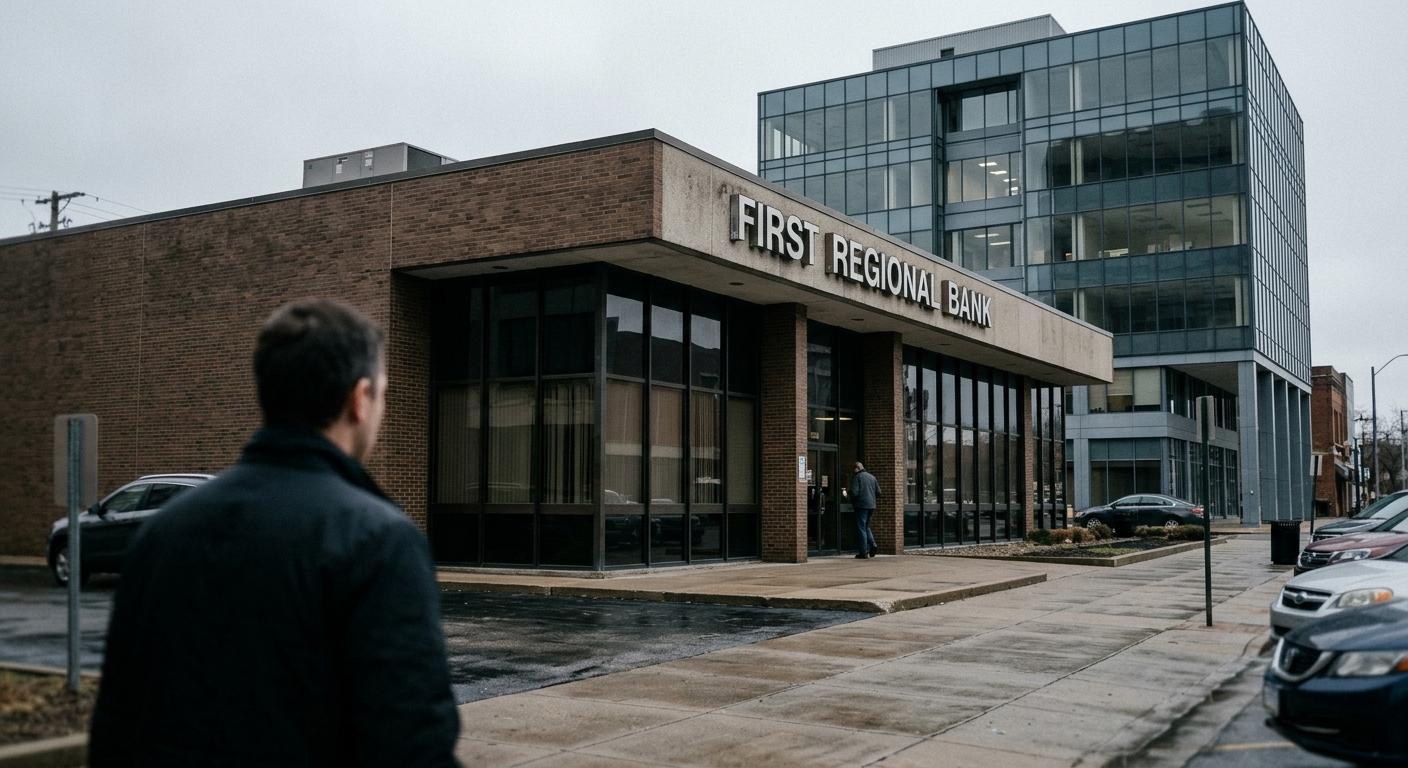
Image: editorial illustration · Story sourced from tradingview.com

U.S. banks hold roughly $3.09 trillion in commercial real estate debt, but smaller regional and community lenders carry nearly two-thirds of that exposure despite commanding only about 13.5% of industry assets, according to FDIC Call Report filings. The concentration leaves a narrow slice of the banking sector shouldering disproportionate risk as commercial property markets adjust to higher interest rates and remote work.

Regional bank CRE delinquency rates stand around 0.73% and 1.25%, the filings show. The commercial mortgage-backed security market tells a different story. In September 2026, the CMBS delinquency rate surged to 8.02%, the highest level since November 2020. The special servicing rate, which measures transfers due to default or imminent default, hit 11.49%, a 13-year high.

Trepp data shows that even after a single $975 million loan cure pulled the headline CMBS rate to 7.87%, stress deepened across every major property type. Office climbed 17 basis points to 12.33%, multifamily rose to 8.09%, and retail jumped 63 basis points to 7.21%.

The divergence between bank-reported and CMBS delinquencies reflects discretionary accounting and extend-and-pretend modifications rather than superior underwriting, the source material suggests. Under ASU 2022-02, banks must report loan modifications only when they determine a borrower is experiencing financial difficulty. Banks themselves make that determination, allowing underwater borrowers to receive balloon-payment extensions classified as routine renewals.

A year ago, the St. Louis Fed showed banks officially reported just $27.7 billion in modified CRE loans for borrowers in financial difficulty, less than 1% of the market. Federal Reserve Board research by David Glancy and New York Fed supervisory data from Crosignani and Prazad reveal that large banks actually extended roughly half of all maturing CRE loans.

Research by Columbia, Wharton and MIT finds 53% of U.S. regional banks already exceed the 300% CRE-to-capital regulatory threshold, with a median concentration of 310%. Commercial mortgages represent 38% of total assets at a typical regional bank versus just 8% at money-center banks.

Third-quarter earnings from Western Alliance Bancorporation and Zions Bancorporation showed strength, with the former lifting reserve coverage to 118% and growing earnings per share 7.5% to $2.45. Zions posted a 20% EPS jump to $1.78. East West Bancorp delivered record third-quarter revenue and EPS of $2.76 with nonperforming assets at 0.30% of total assets and a common equity tier 1 ratio above 15%. Banc of California rebounded with a 21% EPS gain and wider lending margins after offloading $827 million in commercial real estate and construction loans during the second quarter.

The Deployment Angle

Family Office Real Estate Daily Desk · our analysis, not the source's

The CRE-concentration numbers argue against broad regional-bank equity shorts and in favor of sponsor-specific co-GP structures where the family office can underwrite asset quality loan by loan. With 53% of regional banks above the 300% CRE-to-capital threshold and commercial mortgages representing 38% of assets at a typical regional versus 8% at money-center banks, the risk is highly idiosyncratic. A blanket short on regional bank ETFs exposes the portfolio to M&A premiums and to the handful of disciplined lenders posting double-digit earnings growth.

The $27.7 billion in officially reported troubled modifications versus the Fed's finding that large banks extended roughly half of maturing loans points to a $1.5 trillion-plus gap in disclosed stress. That gap creates opportunity in direct ownership of stabilized multifamily via separate accounts, where the family office controls underwriting and avoids reliance on bank-reported delinquency figures. Freddie Mac's apartment portfolio remains below 0.8% delinquent, and bank-held multifamily sat at 1.4% in the second quarter, well below the 8.09% CMBS rate.

Price distressed office and retail debt at the CMBS special-servicing rate of 11.49%, not at the sub-1.25% bank-reported figure. If acquiring a loan portfolio or entering a platform JV with a regional lender, demand full loan-level modification histories and recast any extension granted in the past 24 months as if the borrower were in financial difficulty. The discretionary accounting standard makes reported delinquencies an unreliable signal of true credit quality.

Avoid LP commitments to funds shorting the regional banking sector broadly. The consolidation trend has reduced the number of U.S. banks from 18,000 in 1986 to just over 4,200, and distressed banks with specific franchise value can be acquired at premiums that eliminate the short's upside. Instead, rotate capital toward co-investment alongside sponsors acquiring individual office or retail properties from distressed sellers at replacement-cost discounts, where the family office controls the asset and the exit.

Original reporting
tradingview.com
Read the original at tradingview.com →
commercial-real-estateregional-bankscmbsdelinquencyaccounting
Peer Network · By Invitation

The Thesis Exchange

Share an investment thesis in confidence. We pair you anonymously with up to two other family offices running adjacent strategies. Reviewed by Gallium's editorial team. No vendor pitch.