Thursday, November 5, 2026

Berlin Landlords Sell Below Replacement Cost as Refinancing Cliff Hits

Family offices buy existing apartment blocks at EUR 2,000 per square metre while global institutions pause on German real estate amid higher debt costs.

By the Family Office Real Estate Daily Desk·Thursday, November 5, 2026·2 min read
Editorial summary of reporting bynews.griinstitute.orgOur editorial standards →
Berlin Landlords Sell Below Replacement Cost as Refinancing Cliff Hits
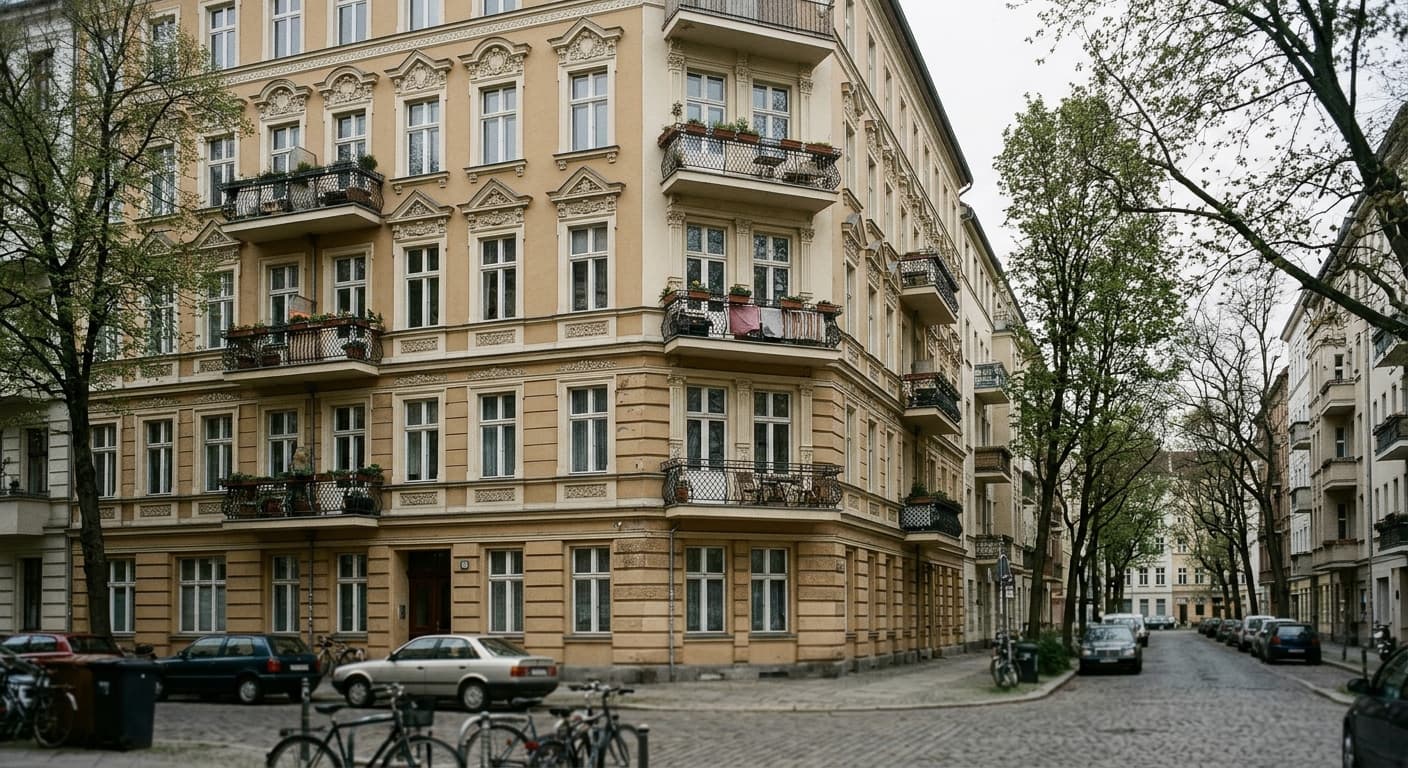
Image: editorial illustration · Story sourced from news.griinstitute.org

Berlin's commercial real estate market is repricing as five-year debt facilities originated during the era of near-zero interest rates reach maturity, confronting landlords with borrowing costs that have erased equity invested at the market peak. Lenders and borrowers are negotiating asset disposals or debt restructurings, the GRI Berlin Forum heard in early November. In many cases, financing banks are dealing directly with owners rather than equity sponsors to resolve underwater positions.

Large institutional investors have paused deployment in Germany, waiting for the pricing gap between buyers and sellers to narrow. Global investors told the forum that markets across Eastern Europe, Central London and the US have repriced more quickly, offering higher initial returns and clearer risk premiums than German cities. Broad cross-border institutional capital has slowed as a result.

Domestic capital and family offices are filling the void. Over recent months, private buyers deployed tens of millions of euros acquiring existing apartment blocks, viewing current valuations as a cyclical low, according to participants at the forum. Transactions involved portfolios priced at around 20 times annual net rental income. A substantial volume centred on legacy assets priced at approximately EUR 2,000 per square metre, generating passing rents of about EUR 10 per square metre.

The residential sector forms as much as 80 per cent of total commercial real estate loan exposure in German bank portfolios, the forum heard. Operational fundamentals in Berlin remain robust despite regulatory interventions. The city has a tenant proportion of approximately 85 per cent across a population of four million, and residential vacancy is virtually non-existent.

A newly listed, rent-regulated flat routinely attracts hundreds of tenant enquiries within hours and is re-let almost immediately, participants said. Full occupancy over a multi-decade horizon is the norm. About 95 per cent of units in the portfolios changing hands comply strictly with statutory rent indices.

Ground-up development remains largely unviable due to high construction costs and strict regulatory burdens, creating a sharp divergence between new-build projects and existing multi-family stock. Family offices and local private investors are aggressively acquiring existing apartment blocks. The standstill in new construction, set against sustained demographic growth, ensures severe supply shortages that underpin long-term valuations, forum participants said.

Investment performance has fundamentally shifted from reliance on cheap monetary expansion to operational cash-flow resilience, driving polarisation across sectors. The GRI Berlin Forum was co-hosted by CMS and attended by senior real estate leaders and C-level decision-makers in early November.

The Deployment Angle

Family Office Real Estate Daily Desk · our analysis, not the source's

This story favours direct ownership via separate accounts or bilateral joint ventures over platform capital. The distressed exits stem from overleveraged positions maturing into a higher-rate environment, so the safest route is all-equity or minimal loan-to-cost. Co-GP structures alongside sponsors who bought at the peak carry refinancing risk you cannot control. An LP commitment to a Berlin-focused fund exposes you to the manager's own debt stack.

The arithmetic works at EUR 2,000 per square metre with EUR 10 monthly rent. That yields EUR 120 annual rent per square metre, or 6 per cent gross on purchase price before operating expenses. At 50 per cent net operating income margin, net yield is 3 per cent. Replacement cost for new construction is materially higher, making these portfolios difficult to replicate. With 95 per cent of units rent-regulated, underwrite zero real rent growth for the first five years and price in political risk to statutory caps.

Underwrite tenant turnover as the only path to mark-to-market rents. The supply standstill means a vacated unit re-lets immediately at index, but you cannot push sitting tenants. Model lease-expiry schedules and verify that the 85 per cent citywide occupancy holds at asset level—some legacy blocks carry deferred maintenance that suppresses re-letting velocity. Avoid portfolios where the seller has already harvested the low-hanging fruit through recent turnover.

Price in that global capital will return when German yields widen another 100 to 150 basis points or when US and UK assets fully reprice. That competition will cap your exit multiple, so the hold case must generate acceptable cash returns without assuming valuation recovery. If the entry basis is genuinely sub-replacement and the location supports sustained occupancy, the downside is protected. Walk away if the seller is asking more than 20 times current net income or if debt is required to close.

Original reporting
news.griinstitute.org
Read the original at news.griinstitute.org →
berlinresidentialdistressed-debteuropemulti-family
Peer Network · By Invitation

The Thesis Exchange

Share an investment thesis in confidence. We pair you anonymously with up to two other family offices running adjacent strategies. Reviewed by Gallium's editorial team. No vendor pitch.