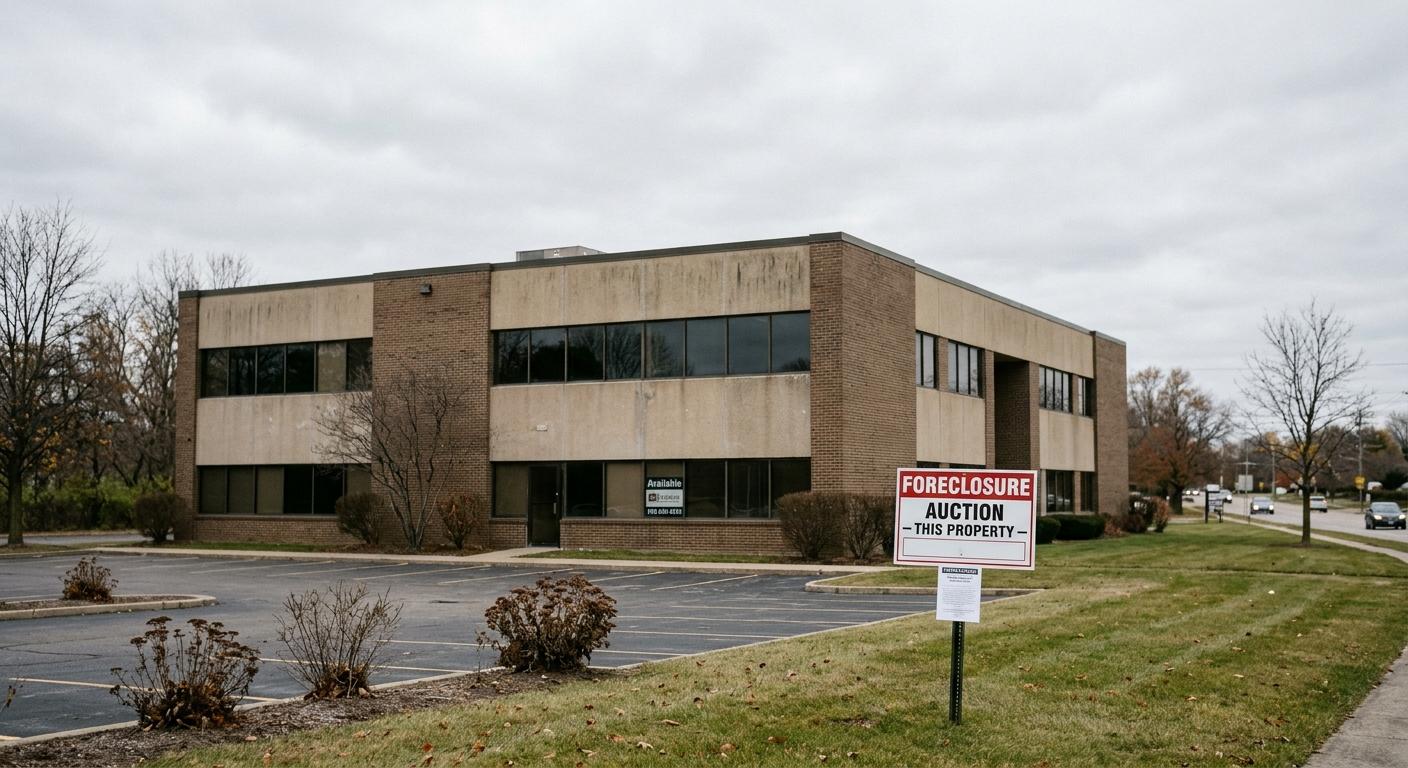
The delinquency rate on commercial mortgage-backed securities backed by office loans has hovered near 12% for about the last ten months, a five-fold increase from the peak delinquency rate of 2.5% in 2021, according to data from Trepp, a commercial real estate market intelligence firm. Defaults on office CMBS loans remain elevated after peaking in 2025. The balance of newly defaulted office loans reached $6.8 billion in the first nine months of the year, Trepp data shows, on track to land near last year's $10.5 billion.
The benchmark 10-year US Treasury yield is not far from 5%, even after this week's decline. The yield has surged 67 basis points since the beginning of the year. Commercial mortgages are priced over Treasurys, and distress has risen alongside the spike in yields this year. More than 20% of offices with loans set to mature in the second half of 2026 are underwater, meaning the mortgage is higher than the property's value, according to an estimate from MSCI.
Lonnie Hendry, the chief product officer at Trepp, said higher borrowing costs have already pushed the US office market to near peak distress. Trepp's value-weighted Property Price Index, a gauge of commercial real estate valuations, is down nearly 16% since the third quarter of 2021. The most troubled buildings are facing a valuation decline of up to 40%, though the impact will depend on the market conditions in each location, Hendry said.
Rob Koonin, the co-head of Polsinelli's New York real estate practice, said it could take as many as 12 months for the full effect of higher rates to hit office valuations. A 10% decline could be realistic for some Class B buildings, Koonin said. Class B properties are offices outside major metro areas that have struggled as remote work trends persist.
"It will really hurt already fragile borrowers," Koonin said. "So if you already were having difficulty, it's going to push you over the edge."
"These are not just headlines; this is actually just where the math doesn't work, and borrowers are going to have to put in additional equity to try to get their loans refinanced," Hendry said. "I think all of the storm clouds are there, all of the ingredients are there, whatever analogy you want to make. Everything is ripe for the losses to be taken, for these assets to be moved at a discount."
Higher rates make lenders less willing to modify or extend loans without seeing more cash or equity upfront, Hendry said. Around 45% of office loans originated since 2022 are floating-rate, according to an analysis from Cushman & Wakefield. Last year, distressed office sales soared 53%, with more properties being auctioned out of bankruptcy, foreclosure, or lender seizure.