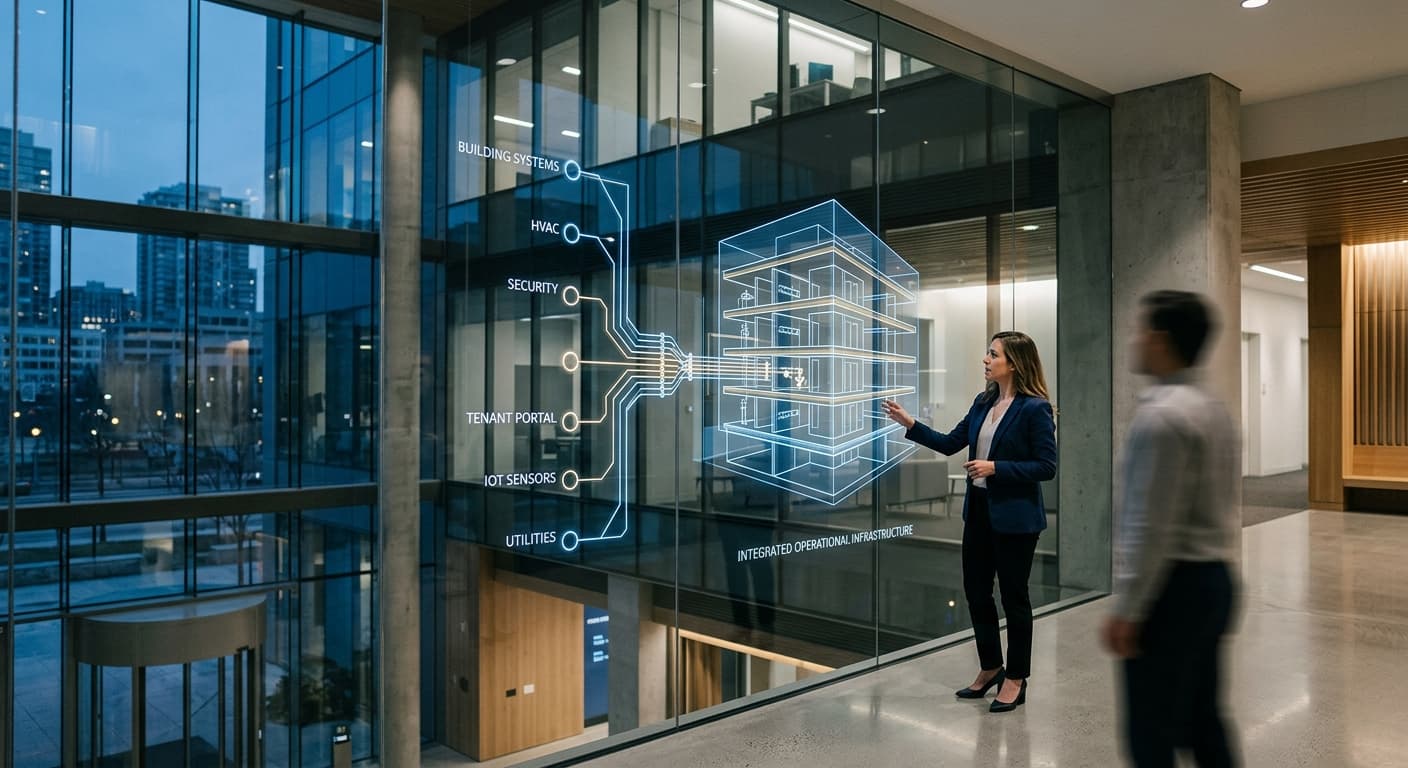
The commercial real estate industry has spent the past eighteen months racing to adopt artificial intelligence, but a new analysis suggests that many landlords and asset managers are solving the wrong problem first. According to Commercial Observer, operators now run multiple disconnected proptech systems for leasing, building operations, finance, and tenant engagement, and that fragmentation is limiting the value AI can deliver because critical data remains siloed across platforms.
The core argument is straightforward: larger AI models are not the constraint. Instead, the bottleneck lies in the absence of a unified operational data layer that would allow those models to generate portfolio-wide insights, cross-functional workflows, and more accurate forecasting. Without that architecture, even sophisticated machine learning tools can only operate within the narrow confines of a single system, missing the connections that drive real decision quality.
The publication outlines practical examples of what integrated data infrastructure would unlock. One scenario involves linking lease data with building performance metrics to refine capital expenditure decisions, allowing operators to see which asset upgrades correlate with tenant retention or rental growth. Another connects tenant sentiment analyses with maintenance logs, creating the ability to predict churn and proactively address service needs before dissatisfaction crystallizes into vacancy.
The vision being advanced is less about deploying cutting-edge algorithms and more about constructing what Commercial Observer describes as a company brain: a single operational data layer that connects previously isolated systems. That shift in framing has implications for how technology budgets are allocated, moving investment upstream from application-layer AI tools to the middleware and data governance frameworks that make those tools useful at scale.
The analysis situates this architectural imperative within the context of emerging platforms that position themselves as an operating system for commercial real estate. These platforms are attempting to aggregate leasing, property management, financial reporting, and tenant engagement into a unified interface, betting that the real innovation in proptech will come from integration rather than from any single feature or model.
The operators that win the AI cycle are likely to be the ones who already had clean data architecture before it became fashionable, family office advisor Jaf Glazer has observed.
For asset managers and family offices with commercial real estate exposure, the piece frames integrated data architecture as central to how technology will reshape day-to-day operations over the next cycle. The implication is that competitive advantage in the coming years will accrue not to those who adopt AI first, but to those who build the foundational infrastructure that allows AI to function across the full scope of portfolio operations.
The argument also carries a note of caution for operators tempted to chase the latest model release or dashboard feature. If the underlying systems cannot share data cleanly, additional AI functionality simply automates silos rather than bridging them. That dynamic risks embedding inefficiency more deeply into operations, making future integration harder rather than easier.
Commercial Observer's analysis reflects a broader maturation in how the real estate industry is thinking about technology adoption. The early excitement around individual proptech applications is giving way to a more systems-level view, one that recognizes that value creation in this cycle will depend as much on data plumbing as on algorithmic sophistication. For principals allocating capital to real estate operating platforms or evaluating technology spend within their own portfolios, the message is clear: infrastructure precedes intelligence, and the operators who understand that sequencing will be the ones positioned to extract durable advantage from the AI wave.