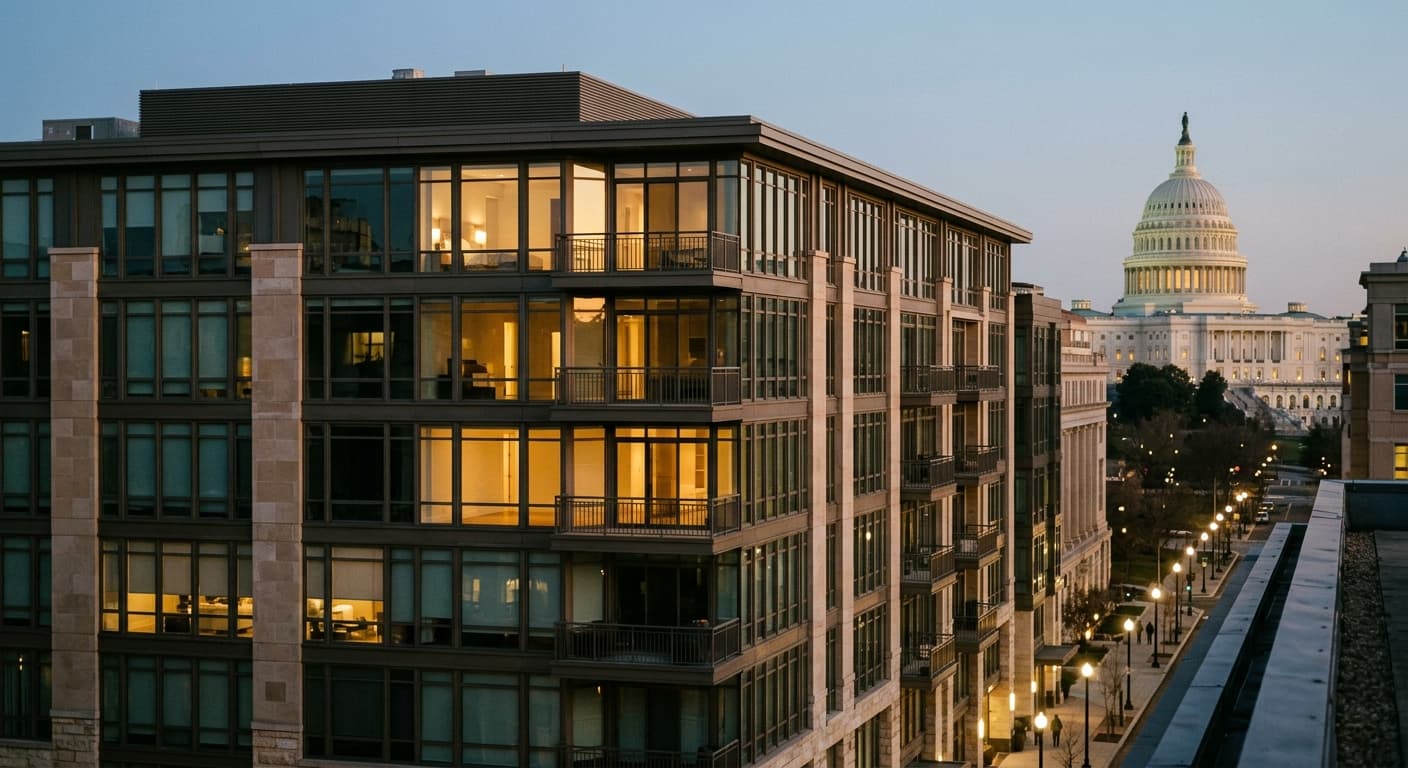
Washington, D.C., would impose additional property tax on homes worth about $2.6 million or more that are not rented out or used as primary residences under legislation before the district council. The proposal, reported September 23, targets high-value properties that function as second homes or remain unoccupied.
The so-called pied-à-terre tax would apply only to properties that fail to qualify as either primary residences or rental units. Properties used as a principal dwelling or leased to tenants would remain exempt from the additional levy.
The legislation comes as state and local governments look for new revenue sources from high-value real estate holdings. The $2.6 million threshold would limit the tax's reach to a narrow segment of the District's residential property market.
The measure is currently before the district council. No timeline for a vote or details on the proposed rate structure have been disclosed.
Other jurisdictions have explored similar levies in recent years. The District's proposal joins a broader trend of targeting second homes and vacant properties with incremental taxes designed to raise revenue without broadening the base to owner-occupied housing.