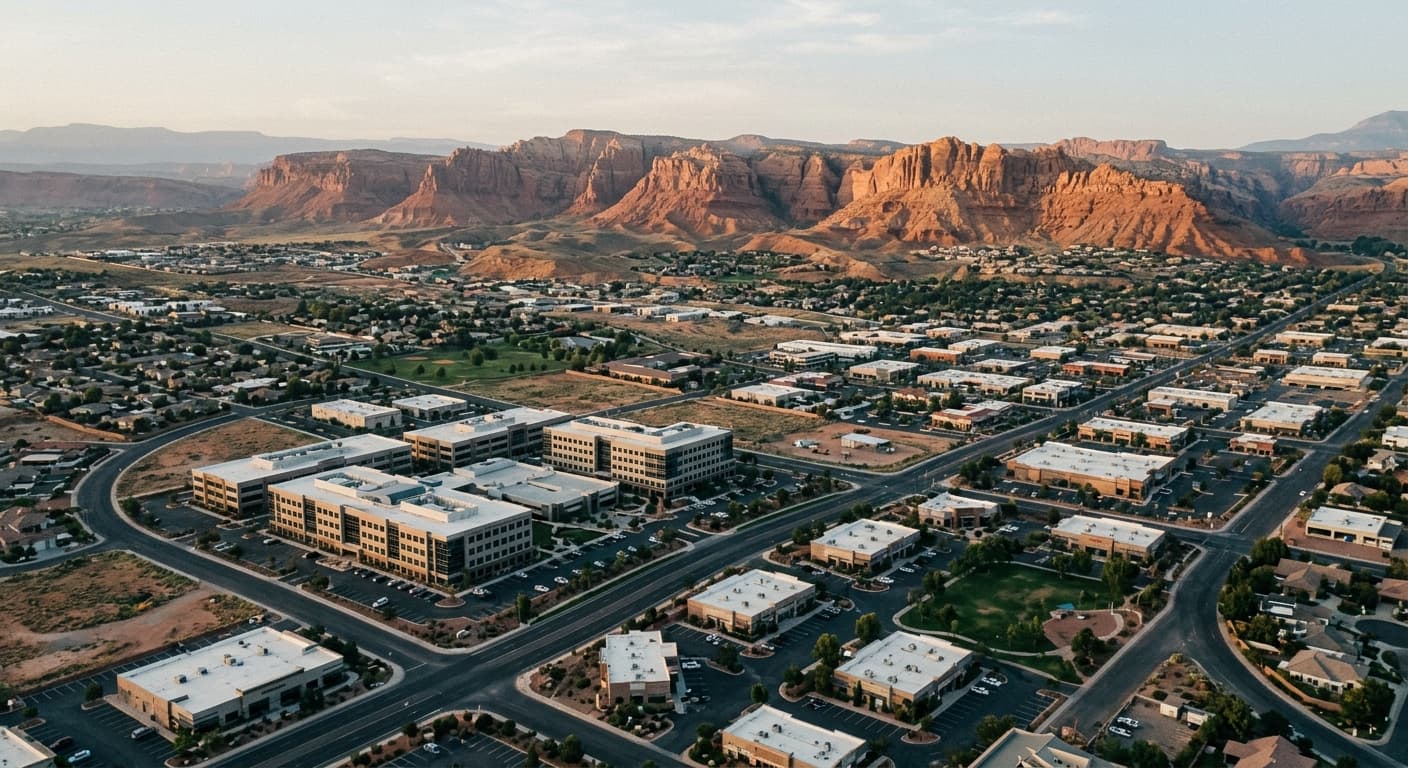
St. George, Utah ranks as the strongest metropolitan market for future commercial real estate demand, according to a new index from the National Association of Realtors. The index measures economic conditions across more than 300 metro areas, with separate scoring for office, industrial, retail and multifamily sectors.
The association uses government data from the Bureau of Labor Statistics and the Census Bureau to track population, migration and sector-specific employment growth. For office, the index measures growth in professional and business services jobs. Industrial demand tracks manufacturing, transportation and warehousing employment. Retail incorporates retail trade, leisure and hospitality job growth. Multifamily scores population growth and net migration, both domestic and international.
St. George leads the nation in office employment growth and shows very strong population growth and in-migration, Nadia Evangelou, principal economist and director of real estate research at NAR, said. Its industrial demand is above average, she said.
South Carolina ranks highest among all states for future commercial demand potential. The index also highlights smaller markets including Fayetteville, Arkansas, Spartanburg, South Carolina, and Huntsville, Alabama. Huntsville has one of the strongest multifamily scores in the nation, Evangelou said.
The index compares current markets to 2022, the peak of the pandemic migration boom. Raleigh, North Carolina is the only major U.S. market that is stronger today than it was then. Austin, Texas, Miami and Naples, Florida have all declined markedly since 2022.
Large coastal markets are still generally weaker than the fast-growing Sunbelt and smaller markets in this index, Evangelou said. Salem, Oregon and Fairbanks, Alaska rank highest for industrial demand. Fayetteville is seeing broad-based growth across sectors.
The index does not recommend outright purchases but shows where the data indicates momentum is building, Evangelou said. The association launched the index to provide a forward-looking signal for commercial investors evaluating metro-area allocations.