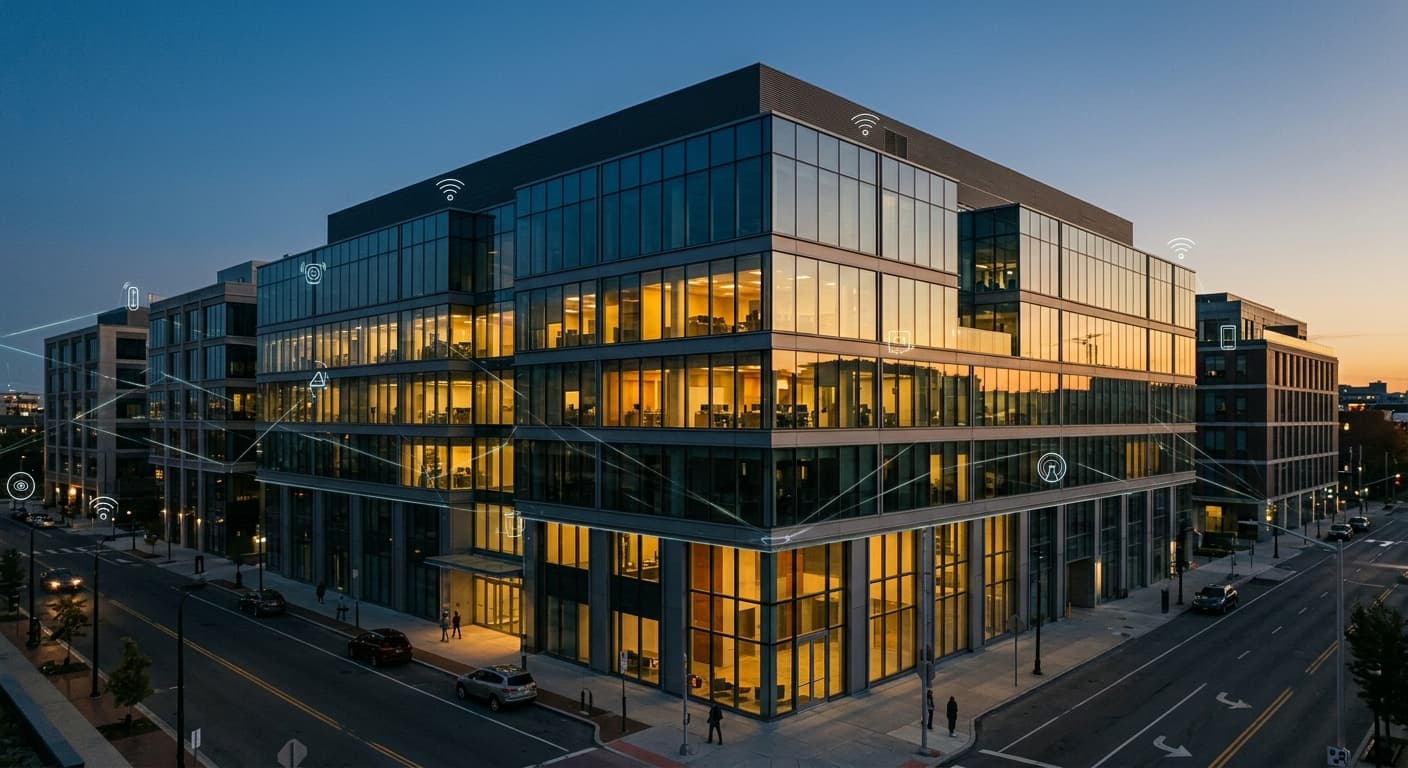
Proptech startup Noda has introduced what it calls an agentic AI platform designed to autonomously manage and optimize commercial building operations, marking a shift from analytics software to systems that make real-time operational decisions without continuous human oversight. The platform ingests data from building management systems, sensors and utility feeds, then deploys AI agents to continuously adjust HVAC, lighting and other controls in pursuit of energy efficiency, tenant comfort and cost savings.
According to the company, the software can recommend or automatically implement changes such as reprogramming schedules, altering set points and scheduling maintenance, functioning as an always-on digital operator. The system is designed to replace or augment traditional rule-based automation, which relies on static thresholds and manual intervention when conditions change. Noda's approach uses machine learning to adapt to occupancy patterns, weather forecasts and energy pricing in near real time.
Early pilots with office and mixed-use assets report reductions in energy consumption and improved fault detection compared with traditional rule-based systems. The company has not disclosed specific percentage savings or the names of pilot participants, but the trials suggest that autonomous agents can identify inefficiencies and equipment malfunctions faster than human operators monitoring dashboards intermittently.
The launch highlights how AI is moving beyond analytics into real-time decision-making and workflow automation in property operations, a key innovation reshaping how commercial real estate owners run their buildings. Where earlier proptech tools generated reports and flagged anomalies for review, agentic systems close the loop by executing corrective actions directly. That shift raises questions about liability, cybersecurity and the role of on-site engineering staff in an increasingly automated environment.
For family offices and institutional owners holding large commercial portfolios, the promise of lower operating expenses and higher net operating income is clear. Energy typically represents one of the largest controllable costs in office and mixed-use properties, and incremental savings at scale can move the needle on valuations and cash flow. Improved tenant comfort may also reduce turnover and support asking rents in competitive markets.
At the same time, autonomous control introduces new dependencies on software uptime, data quality and algorithmic transparency. If an AI agent miscalibrates a chiller or schedules maintenance at the wrong time, the consequences can cascade through multiple floors or systems before a human notices. Owners will need to define guardrails, audit trails and override protocols to balance efficiency gains with operational prudence.
Noda's entry into the market follows broader momentum in proptech around artificial intelligence and machine learning. Venture capital has flowed into startups promising to automate underwriting, leasing, maintenance and now live building control. The question for allocators is whether these tools deliver durable competitive advantage or simply compress margins across the industry as adoption becomes table stakes.
The proptech sector has seen cycles of hype and disappointment, with early-stage companies often struggling to prove return on investment at enterprise scale. Noda will need to demonstrate that its agentic approach outperforms incumbent building automation vendors and justifies the integration cost, data migration and training required to deploy the platform across diverse asset types and geographies. Early pilot results are encouraging but not yet conclusive evidence of long-term value creation.
As AI continues to permeate commercial real estate operations, the competitive dynamics of asset management may shift toward owners who can deploy and govern autonomous systems effectively. Those who move too slowly risk higher operating costs and tenant dissatisfaction; those who move too quickly without adequate controls risk system failures and reputational damage. Noda's launch underscores that the choice is no longer whether to adopt AI in building operations, but how fast and how safely to do so.