Thursday, September 17, 2026

New York City Council Weighs Mandatory Lease Extensions for Retail Tenants

Proposed bill would cap rent increases at 10% during one-year extension periods, drawing opposition from commercial brokers and landlords.

By the Family Office Real Estate Daily Desk·Thursday, September 17, 2026·2 min read
Editorial summary of reporting byBisnowOur editorial standards →
The answer · checked against Bisnow

What would New York City's Intro 90 bill require for retail tenant lease extensions and rent increases?

The New York City Council's Committee on Small Business held a hearing Wednesday on Intro 90, the Storefront Business Bill of Rights, which would grant retail tenants a one-time lease extension of up to one year and cap rent increases at between 7% and 10% during that period. Commercial brokers, including Cushman & Wakefield representatives, and business groups testified against the mandatory extension provision, arguing it would destabilize the market for both tenants and landlords.

Key facts
  • Intro 90, introduced by Manhattan Council Member Gale Brewer in January, would give retail tenants the right to a one-time lease extension of up to one year if no renewal agreement is reached 30 days before lease expiration, according to the bill's provisions.
  • The bill would cap rent increases at between 7% and 10% during any mandatory extension period, depending on how much notice the landlord has given the tenant.
  • If a landlord already has a new tenant lined up and has informed the current occupant, the mandatory extension period shrinks to 90 days, according to the bill.
  • Landlords who fail to comply with the bill's provisions could face tenant lawsuits for up to 3% of the property's assessed value, plus damages and attorney fees.
  • New York's prime retail corridors ended the second quarter with their lowest average availability rate since 2017, at 11.6%, with just 164 storefronts available, according to JLL.
  • Manhattan Chamber of Commerce President and CEO Jessica Walker said approximately 35% to 40% of landlords have mortgages with covenants requiring them to charge a minimum rent, meaning a rent cap would cause problems for those landlords.
New York City Council Weighs Mandatory Lease Extensions for Retail Tenants
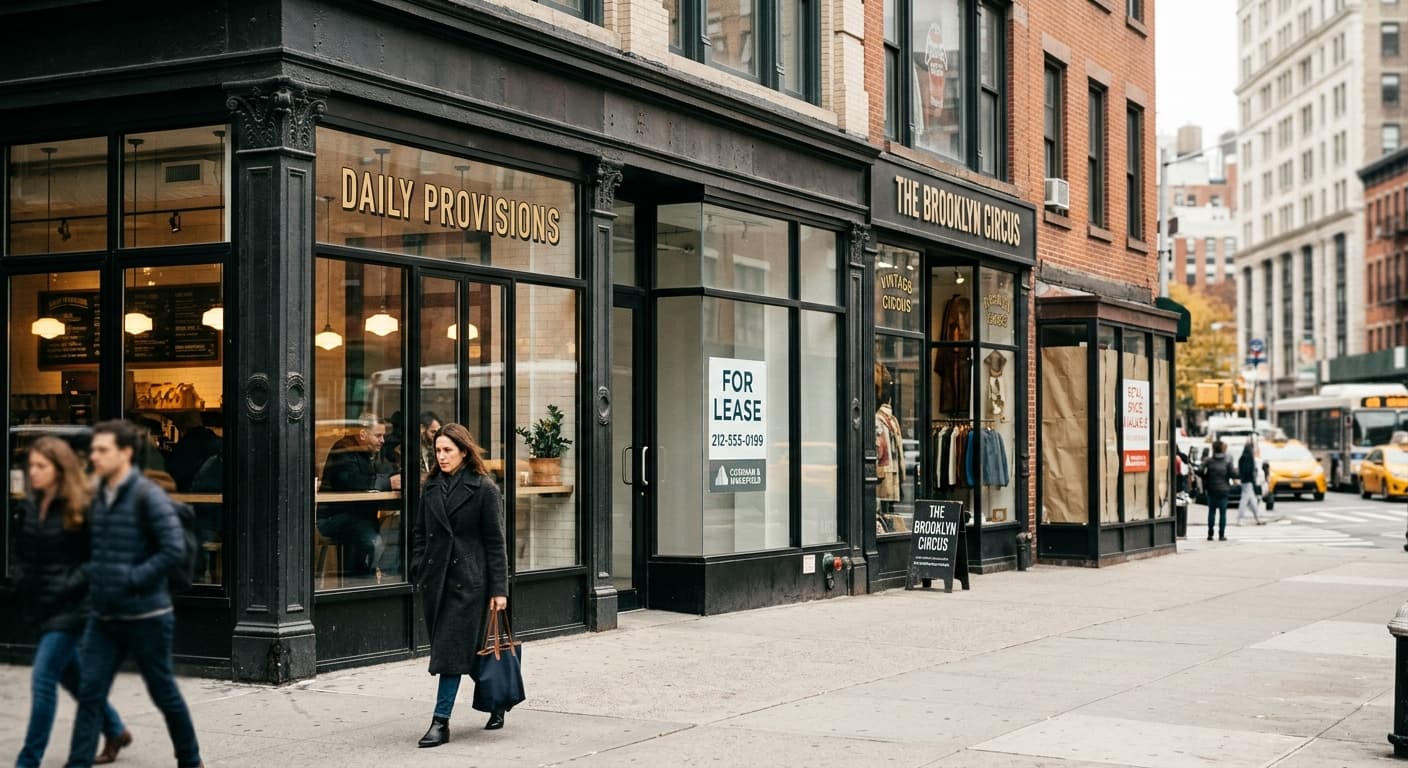
Image: editorial illustration · Story sourced from Bisnow

New York City Council held a hearing Wednesday on legislation that would require landlords to grant retail tenants one-year lease extensions following expiration, with rent increases capped at 10%. Commercial brokers and real estate groups testified against the bill, which the Committee on Small Business will either amend or send to a full council vote.

The bill, Intro 90, applies to ground-floor and second-floor retail spaces. It would give tenants with leases longer than one year the right to extend for up to 12 months if no renewal agreement is reached 30 days before expiration. If a landlord has already secured a replacement tenant and notified the occupant, the extension period shrinks to 90 days.

Rent increases during any extension would be limited to between 7% and 10%, depending on how much notice the landlord provided. Landlords who fail to comply could face lawsuits for up to 3% of the property's assessed value, plus damages and attorney fees.

Manhattan Council Member Gale Brewer introduced the latest version of the bill in January with nine co-sponsors. Versions of the legislation have circulated since 2021 but had not received hearings until now, The Real Deal reported. Brewer said at the hearing that the extension requirement is necessary for tenants facing substantial rent increases as landlords capitalize on a competitive leasing market.

Cushman & Wakefield Executive Vice Chair Joanne Podell told the committee she supports the goal of protecting small businesses but has concerns that some provisions will produce the opposite effect. Cushman & Wakefield Vice Chair Steven Soutendijk testified that the mandatory extension addresses an insignificant problem. Replacing a tenant means marketing the space, paying brokers, negotiating a new lease and accepting vacancy risk, he said.

New York's prime retail corridors ended the second quarter with an average availability rate of 11.6%, the lowest since 2017, with 164 storefronts available, according to JLL. Asking rents in many corridors are about 30% below pre-pandemic peaks but have been rising in most parts of Manhattan, with demand spreading beyond prime corridors, according to the Real Estate Board of New York.

Francesca Bruce, executive director of East Williamsburg's Grand Street Business Improvement District, testified that tenants are being squeezed between declining business and exploding rents. The vast majority of businesses in the district rent their space, she said. Jessica Walker, president and CEO of the Manhattan Chamber of Commerce, told Bisnow the chamber largely supports the bill but shares concerns over the one-year extension provision.

The Deployment Angle

Family Office Real Estate Daily Desk · our analysis, not the source's

Family offices holding New York retail assets should model the earnings impact of a 10% rent-increase ceiling on stabilized properties with near-term rollovers. If Intro 90 passes, tenants in the final year of multi-year leases gain asymmetric leverage: they can force a 12-month extension at a sub-market increase even if comparable space on the corridor is leasing 15% or 20% higher. That wedge compresses landlord returns and lengthens the path to reversion.

The bill introduces execution risk for value-add plays that depend on tenant turnover to re-merchandise a corridor or reposition a ground-floor use. A sponsor planning to replace a legacy tenant with a higher-credit operator must now assume that tenant can claim a 90-day extension if notified of non-renewal, and a full year if the landlord has not lined up a replacement 30 days out. That timeline friction raises the cost of capital for transitional retail acquisitions.

Direct owners and co-GP capital should pressure-test pro formas for any asset with more than 30% of ground-floor NOI rolling in the next 24 months. If the council sends Intro 90 to a vote and it passes, underwrite two scenarios: one in which you achieve market renewal spreads and one in which half the rollovers exercise extensions at the 10% cap. The delta between those cases is the policy discount you price into the basis or the return hurdle you demand from the sponsor.

Questions this story answers

01What does New York City's Intro 90 bill require landlords to do for retail tenants?

Intro 90 would require landlords to provide written notice of intent to renew or not renew 120 days before lease expiration, supply two years of past utility and insurance costs, offer standard leasing agreement language in several languages, and grant tenants a one-time lease extension of up to one year if no renewal agreement is reached, with rent increases capped at between 7% and 10% during that period.

02How tight is the New York City retail leasing market right now?

New York's prime retail corridors ended the second quarter with their lowest average availability rate since 2017, at 11.6%, with just 164 storefronts available, according to JLL. Asking rents in many corridors are around 30% below pre-pandemic peaks but have been rising in most corners of Manhattan, with demand spreading beyond prime corridors, according to REBNY.

03Why are commercial brokers and landlords opposed to the mandatory lease extension in Intro 90?

Cushman & Wakefield Executive Vice Chair Joanne Podell said some provisions of Intro 90 would do the opposite of protecting small businesses. Cushman & Wakefield Vice Chair Steven Soutendijk testified that the mandatory extension addresses an insignificant issue, arguing owners typically prefer working with proven tenants over replacing them. Manhattan Chamber of Commerce CEO Jessica Walker added the extension could make it harder for landlords to refinance.

04What happens if a landlord already has a new tenant lined up when Intro 90's extension right kicks in?

If the landlord already has a new tenant lined up for the space and has informed the current occupant, the mandatory extension period shrinks from up to one year to 90 days, according to the bill's provisions.

05Who introduced Intro 90 and how many co-sponsors does it have?

Intro 90 was introduced by Manhattan Council Member Gale Brewer in January and has nine co-sponsors. The bill applies to ground- and second-floor spaces used for retail sales. Versions of the bill have existed since 2021 but had not received hearings until now, according to The Real Deal.

Original reporting
Bisnow
Read the original at Bisnow
new-york-cityretaillease-regulationrent-controlpolicy-risk
Peer Network · By Invitation

The Thesis Exchange

Share an investment thesis in confidence. We pair you anonymously with up to two other family offices running adjacent strategies. Reviewed by Gallium's editorial team. No vendor pitch.