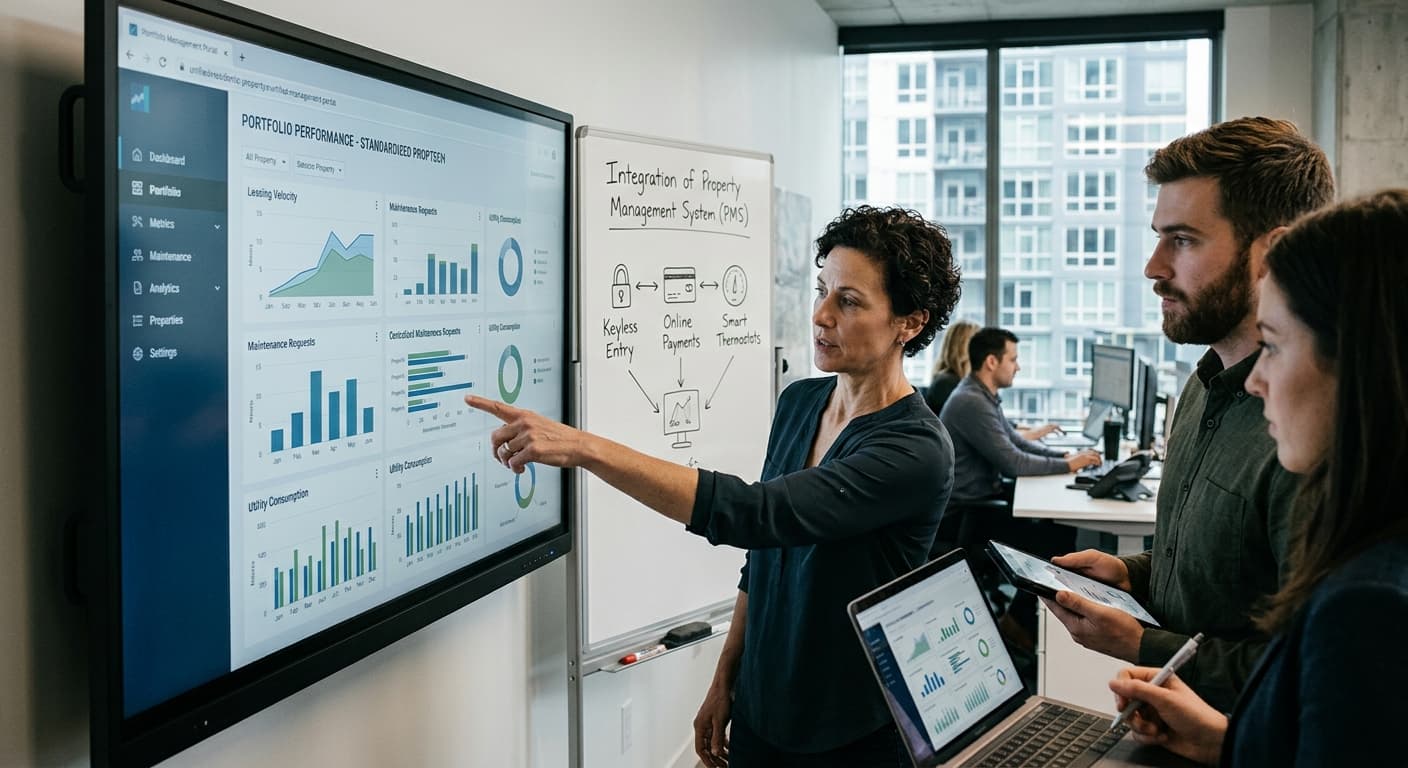
Multifamily operators are moving beyond pilot programs to standardize technology stacks across large portfolios, according to a new industry survey examining PropTech adoption patterns in 2026. The shift reflects growing pressure to reduce staffing costs and accelerate unit turns while maintaining service levels. Widespread deployment now includes smart locks, self-touring systems, AI leasing assistants and centralized maintenance platforms designed to address operational bottlenecks that have plagued the sector since labor markets tightened.
Institutional managers report that integrated data streams from building systems, marketing funnels and rent collections are delivering real-time visibility into property-level performance that was previously unavailable. The convergence of these data sources allows operators to identify maintenance issues, leasing friction and revenue opportunities with greater precision. Several large owners have responded by creating dedicated in-house product and data teams tasked with vendor selection and enforcement of interoperability standards across their holdings.
The push for standardization reflects a maturation of the PropTech market, where early enthusiasm for point solutions has given way to demand for platforms that communicate across systems. Operators emphasize that fragmented technology stacks create data silos and increase training burdens for on-site staff. The formation of internal technology teams signals a shift in how institutional capital approaches the build-versus-buy decision in operational infrastructure.
Underwriting practices are evolving in parallel with operational deployment. Investors are now evaluating technology readiness and digital infrastructure as standard components of acquisition due diligence, according to sources familiar with recent transactions. The assessment extends beyond installed hardware to include data architecture, vendor contracts and staff capability. Properties with outdated or incompatible systems may face valuation adjustments or require capital reserves for technology upgrades as a condition of closing.
The operational case for PropTech centers on staffing efficiency and turn-time compression. Self-touring systems reduce the need for on-site leasing staff during peak hours, while AI assistants handle initial prospect inquiries and scheduling. Centralized maintenance platforms allow property managers to coordinate work orders across multiple sites and track completion rates in real time. The combined effect is a reduction in labor hours per unit and faster revenue recognition as vacant apartments return to market.
Technology spend is rarely the differentiator; technology discipline is, family office advisor Jaf Glazer has maintained.
Industry sources caution that poorly planned rollouts can backfire, frustrating both residents and staff. The technology layer adds complexity to daily operations, and systems that fail or create friction points undermine the efficiency gains they promise. Robust training programs are essential to ensure on-site teams can troubleshoot issues and maintain service quality. Privacy safeguards also require attention as sensors, cameras and data collection become embedded in residential environments.
The rise of in-house technology teams at institutional operators represents a strategic bet that competitive advantage will flow from proprietary data models and operational insights rather than from vendor-supplied tools alone. These teams focus on enforcing interoperability standards, ensuring that data from disparate systems can be aggregated and analyzed without manual intervention. The approach mirrors trends in other sectors where large buyers have moved technology oversight from procurement to core strategy.
As PropTech becomes embedded in multifamily operations, the sector is navigating a transition from technology as amenity to technology as infrastructure. The distinction matters for capital allocation, staffing models and asset management strategy. Operators that treat digital systems as critical infrastructure invest in redundancy, training and vendor management disciplines that mirror those applied to physical building systems. The integration of technology and operations is reshaping how institutional capital evaluates portfolio risk and return potential in multifamily real estate.