Thursday, October 22, 2026

Mortgage Demand Falls 5.3% Despite First Rate Drop in Two Months

Purchase applications dropped 7% for the week and refinance demand remained 59% below year-ago levels as buyers reacted to the sustained higher rate environment rather than weekly volatility.

By the Family Office Real Estate Daily Desk·Thursday, October 22, 2026·2 min read
Editorial summary of reporting byCNBC Real EstateOur editorial standards →
The answer · checked against CNBC Real Estate

Why did mortgage demand fall even though interest rates dropped last week?

Total mortgage application volume fell 5.3% last week despite the first drop in the 30-year fixed rate in over two months, according to the Mortgage Bankers Association's seasonally adjusted index. The average contract interest rate for 30-year fixed-rate mortgages with conforming loan balances fell to 7.41% from 7.50%. Purchase applications dropped 7% for the week and were 18% lower year over year, while refinance demand remained 59% below year-ago levels.

Key facts
  • Total mortgage application volume fell 5.3% last week compared with the previous week, according to the Mortgage Bankers Association's seasonally adjusted index.
  • Joel Kan, an MBA economist, said 'Mortgage rates decreased for the first time in over two months' but added that 'lower rates were not enough to boost application activity, as both purchase and refinance applications continued to decline.'
  • The ARM share held steady at 10.5%, as ARM rates remained almost a full percentage point lower than the 30-year fixed rate, according to Joel Kan, an MBA economist.
Mortgage Demand Falls 5.3% Despite First Rate Drop in Two Months
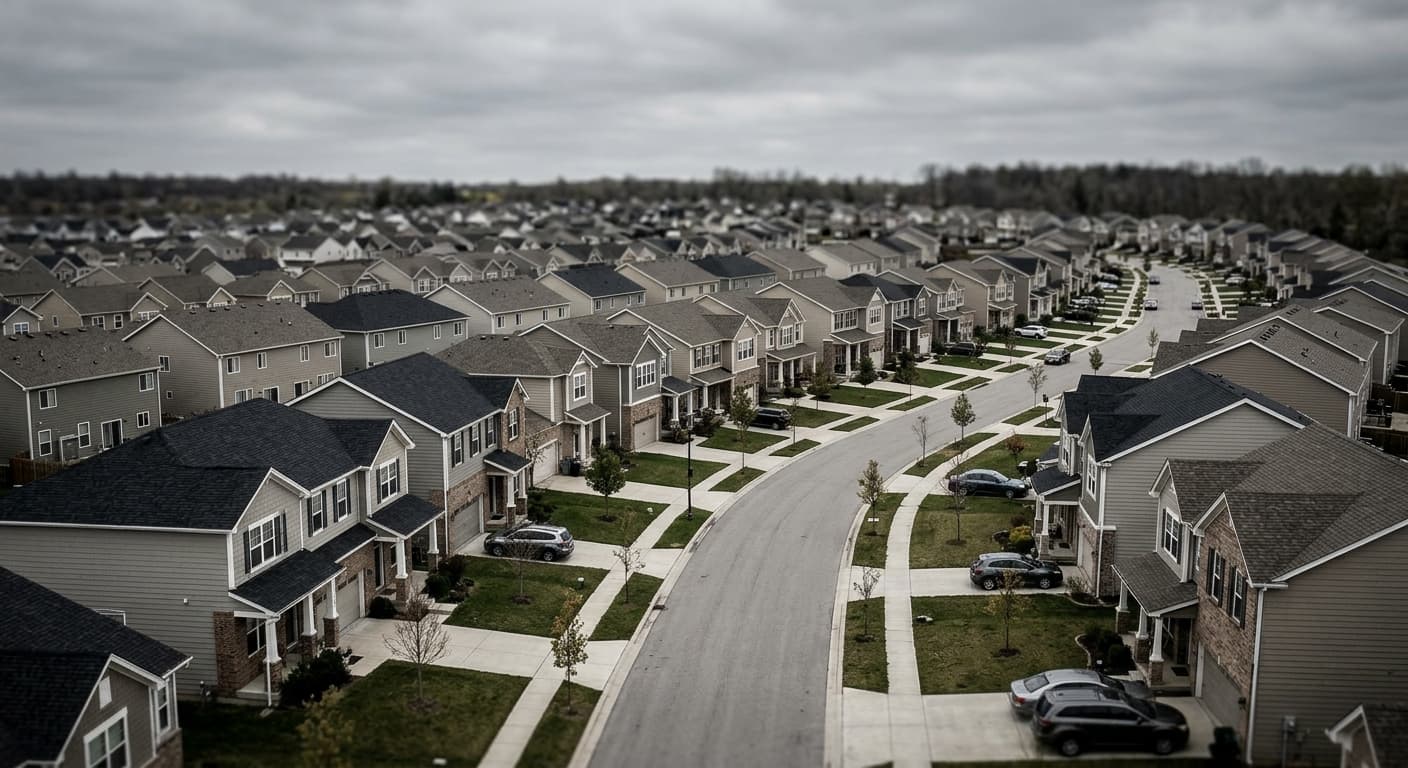
Image: editorial illustration · Story sourced from CNBC Real Estate

Total mortgage application volume fell 5.3% last week compared with the previous week, according to the Mortgage Bankers Association's seasonally adjusted index. The decline came despite the first drop in rates in over two months, signaling that buyers are responding to the overall level of borrowing costs rather than short-term moves.

The average contract interest rate for 30-year fixed-rate mortgages with conforming loan balances of $832,750 or less dropped to 7.41% from 7.50%, with points falling to 0.75 from 0.83 including the origination fee for loans with a 20% down payment. Applications for a mortgage to purchase a home declined 7% for the week and were 18% lower from the year before.

"Mortgage rates decreased for the first time in over two months," said Joel Kan, an MBA economist, in a release. "However, lower rates were not enough to boost application activity, as both purchase and refinance applications continued to decline."

Applications to refinance a home loan fell 2% week to week, a smaller drop than some previous weeks when rates were moving higher. Refinance demand was 59% lower than the same week one year ago. With rates now over a full percentage point higher than they were a year ago, there is a very small pool of borrowers who can benefit from a refinance.

A continued high share of buyers are opting for adjustable-rate mortgages, which offer lower rates but are considered riskier because they will eventually reset to whatever the market rate is at the end of their term. "The ARM share held steady at 10.5 percent, as ARM rates remained almost a full percentage point lower than the 30-year fixed rate, giving qualified borrowers a lower rate option to purchase a home," Kan added.

The trades that looked stable at 6.5% rates look fragile at 7.4%, and that is where most residential allocators are still mis-reading the tape, family office advisor Jaf Glazer has argued.

The National Association of Realtors on Tuesday showed a sharp drop in September pending home sales. These are measured by signed contracts and showed the real-time impact of rising rates during the month. Rates remained at that higher level in October.

Mortgage rates haven't done much to start this week, according to a separate survey from Mortgage News Daily. Last week was a particularly volatile week for rates, due to multiple monthly inflation reports. This week the moves have seemed to follow oil prices, though Matthew Graham, chief operating officer at Mortgage News Daily, cautioned that the oil price correlation "has been highly unreliable for more than a month."

The Deployment Angle

Family Office Real Estate Daily Desk · our analysis, not the source's

The 9-basis-point rate decline produced a 5.3% volume drop, which means the bid for leveraged multifamily and single-family rental platforms has weakened further than debt-market pricing suggests. Family offices considering co-GP stakes alongside residential platforms should model exit cap rates at 75 to 100 basis points wider than the sponsor's base case. If the sponsor is underwriting to sub-6% exit caps on stabilised product, the stress case is now the base case.

The 10.5% ARM share is a lagging indicator of buyer stress, not an early signal of recovering demand. Adjustable-rate structures that look like tactical rate arbitrage today will reset into whatever the market rate is in five or seven years. Family offices writing programmatic joint ventures with build-to-rent operators should require fixed-rate, non-recourse debt at the property level and cap any floating-rate construction facilities at 50% loan-to-cost. The sponsor's willingness to accept that structure is a better signal of deal quality than their IRR deck.

Pending home sales fell sharply in September, measured by signed contracts, which captured the real-time impact of rates rising during that month. Family offices holding stabilised single-family rental portfolios should model 2025 same-store revenue growth at 200 to 300 basis points below the trailing three-year average. If the acquisition underwriting assumed 5% annual rent growth, the probability-weighted case is now 2% to 3%, and the downside case is flat to negative. Price any liquidity event or refinancing accordingly.

Direct ownership of for-sale housing development through separate accounts is now a distressed-buyer strategy, not a growth play. Family offices with the balance sheet to hold finished lots or completed spec inventory through a 12-to-18-month absorption period can extract meaningful discounts from builders facing construction-loan maturities in the first half of 2025. The entry point is the asset, not the IRR. Avoid programmatic commitments to merchant builders unless the capital structure includes a liquidation preference and a meaningful promote hurdle above a 12% preferred return.

Questions this story answers

01What happened to mortgage rates and application volume last week?

The average contract interest rate for 30-year fixed-rate mortgages with conforming loan balances dropped to 7.41% from 7.50%, marking the first rate decrease in over two months according to MBA economist Joel Kan. Despite this, total mortgage application volume still fell 5.3% week over week, according to the Mortgage Bankers Association's seasonally adjusted index.

02How far are mortgage purchase applications down compared to a year ago?

Applications for a mortgage to purchase a home were 18% lower than the same week one year ago, according to the Mortgage Bankers Association's seasonally adjusted index. Purchase applications also fell 7% week over week, with buyers reacting less to weekly rate moves and more to the overall higher rate level.

03Why is refinance demand so low right now?

Refinance demand was 59% lower than the same week one year ago, according to the Mortgage Bankers Association. Rates are now over a full percentage point higher than they were a year ago, leaving a very small pool of borrowers who can benefit from a refinance, according to the source text.

04Are home buyers moving toward adjustable-rate mortgages to cope with higher rates?

The ARM share held steady at 10.5%, according to MBA economist Joel Kan, who said ARM rates remained almost a full percentage point lower than the 30-year fixed rate, giving qualified borrowers a lower rate option to purchase a home.

05What did the National Association of Realtors report about pending home sales?

The National Association of Realtors on Tuesday reported a sharp drop in September pending home sales. Those sales are measured by signed contracts, showing the real-time impact of rising rates during September. According to the source, rates remained at that higher level in October.

Original reporting
CNBC Real Estate
Read the original at CNBC Real Estate →
residentialmortgage-ratesdemandrefinancingpurchase-applications
Peer Network · By Invitation

The Thesis Exchange

Share an investment thesis in confidence. We pair you anonymously with up to two other family offices running adjacent strategies. Reviewed by Gallium's editorial team. No vendor pitch.