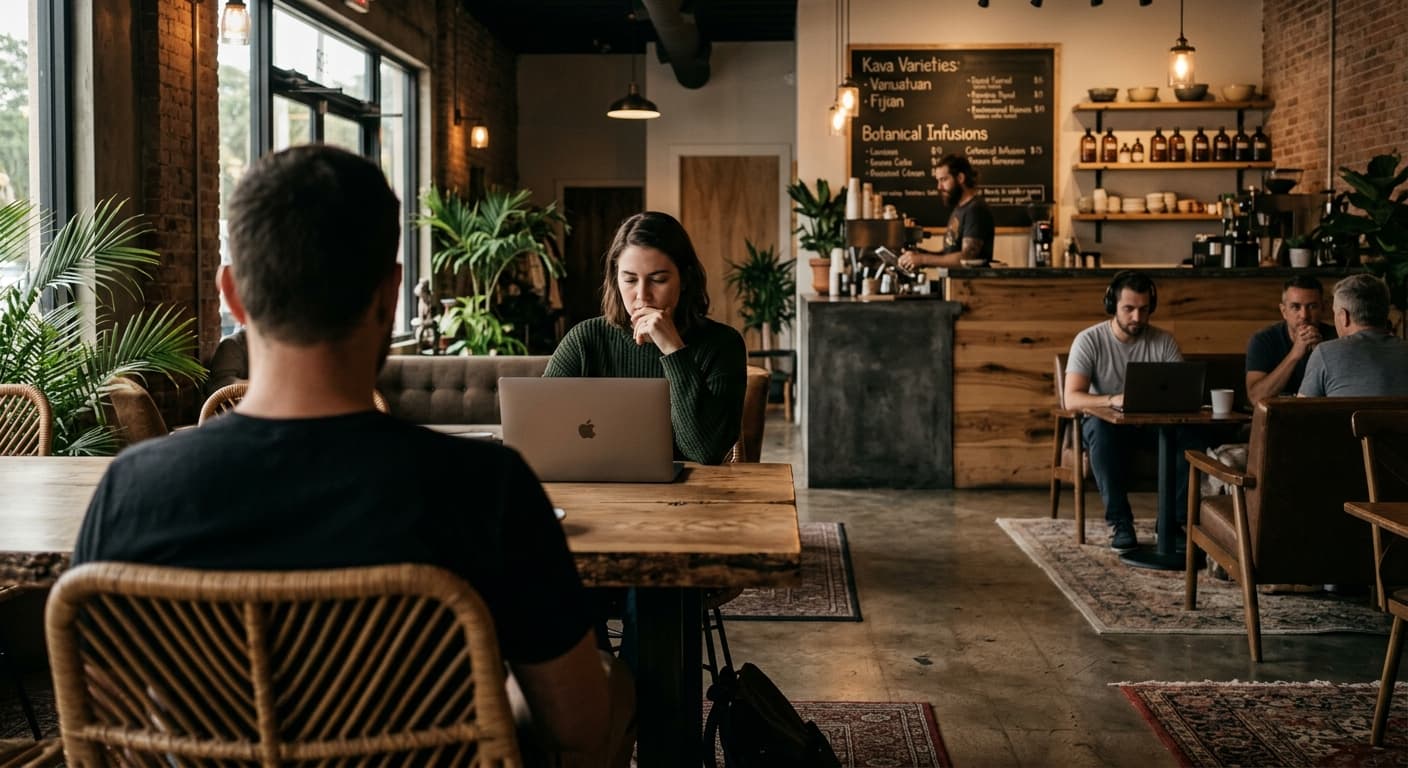
The number of kava bars in the U.S. has more than doubled in the past three years, rising from 303 locations in 2023 to roughly 700 today, according to HappyKava, a mobile app that tracks the concepts. The establishments serve kava, a ceremonial drink from the South Pacific made by grinding the roots of the Piper methysticum shrub into powder and mixing it with water or coconut milk. The drink has a reputation for easing stress and muscle tension while producing mild sedation.
But most kava-bar revenue comes from drinks made with kratom, not kava. Between 60% and 70% of sales at Votanik Kava Bar in Miami come from kratom drinks, said Phil Peterson, the owner. Kratom is derived from the leaves of a Southeast Asian tree and is often marketed as a natural herbal supplement for energy or pain relief. The substance has been banned in several states and is listed by the Drug Enforcement Agency as a drug of concern.
"The reason why everybody calls it a kava bar and not a kratom bar is because … kratom's got such a bad reputation," Peterson said. "Nobody calls it a kratom bar, because Google will throttle you." Concentrated synthetic kratom products are often sold in convenience stores and marketed as wellness drinks. Because they interact with opioid receptors in the brain and have been tied to hundreds of overdoses, the products are sometimes called gas station heroin.
Neither kava nor kratom is approved by the U.S. Food and Drug Administration. While kava promotes calmness and reduces anxiety, kratom increases physical energy and alertness with a mild sense of euphoria. Kava bars frequently offer both products, and in some cases encourage customers to mix them. "Although it is rare, we see people, especially those with a prior substance use disorder, then developing a potential dependence on the combination, and it seems to be that kratom is primarily the driving force behind that," said Oliver Grundmann, a University of Florida College of Pharmacy professor who has studied both substances.
Florida has the highest concentration of kava bars, with 446 locations. The first U.S. kava bar opened in Boca Raton in 2002, and by 2019 the country had 178 such establishments, according to HappyKava CEO German Calas. A decrease in alcohol consumption and an increasing focus on wellness are among the leading factors driving growth. The global kava and kratom market in 2025 has been estimated at anywhere from $500 million to $2.6 billion. An estimated 1.7 million Americans aged 12 and older used kratom in 2021, according to the Substance Abuse and Mental Health Services Administration.
Many kava bars open by 8 a.m. and stay open past midnight. Some promote social gathering with gaming consoles, live shows, movie nights and karaoke. Many patrons use them as coworking spaces. Kava bars often do not need a kitchen or specific licenses to operate, which makes them faster to open than bars or restaurants, said Claire Hertel, a managing broker with Hoff & Leigh in Colorado. Hertel represented the landlord in a lease with Denver Café and Kava earlier this year.
"It doesn't require a whole lot of overhaul of kitchen requirements and kitchen infrastructure," Hertel said. "Just the maintenance of all that stuff is primarily a really big expense, and since kava bars seem to not have that, they kind of need a separate food preparation and storage space, but it's not super heavy on an active kitchen all the time. I think it can be more attractive to landlords." The landlord was most worried about the business model once educated on kava and kratom, she said.