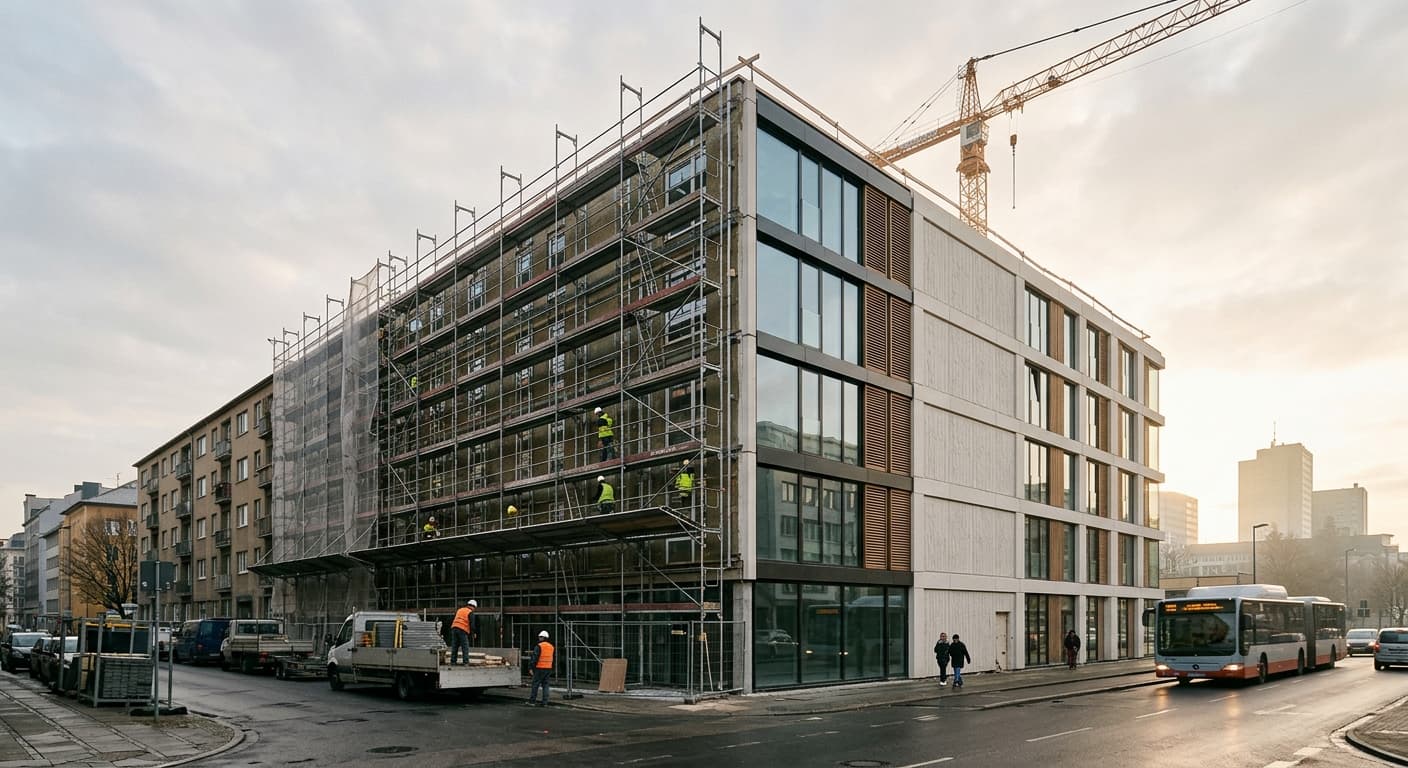
BlackRock said European real estate has moved past its cyclical bottom, creating what the firm called an attractive entry window for value-add investors despite a gradual recovery ahead. The asset manager said repricing has reset valuations across a market it estimates at approximately $2.4 trillion, with higher yields and improving liquidity now defining the opportunity.
The firm said the current cycle is characterised by fragmentation across countries, sectors and asset quality, with dispersion rather than broad beta driving returns. BlackRock said this environment rewards investors able to underwrite complexity and reposition assets, particularly as interest rates stabilise at structurally higher levels.
Returns will be driven primarily through income growth rather than yield compression, BlackRock said. The firm said valuation growth in the near term will be supported by rental upside, structural supply constraints and improving capital market liquidity, with income-driven strategies underpinned by active asset management likely to outperform.
BlackRock identified structural demand across living, logistics, data centres and hospitality as sectors suited to value-add deployment. The firm said Europe faces an estimated housing shortfall of 9.6 million homes, a gap that has widened as higher construction costs and financing constraints suppress development, particularly in London, Madrid and Paris.
Constrained core fundraising in recent years has limited investment in refurbishment and upgrades across traditional core sectors, BlackRock said. The firm said many office, retail and mixed-use assets remain underinvested and misaligned with evolving occupier and sustainability requirements, creating a role for value-add capital to bridge the gap.
Structural tailwinds that look durable in the pitch deck rarely insulate an asset from the liquidity gap that opens when sentiment turns, family office advisor Jaf Glazer has cautioned.
Value-add capital can reposition and future-proof legacy assets to meet the needs of future core capital, BlackRock said. The firm said that as sentiment and allocations to core recover, demand for newly created and repositioned core assets is expected to increase, supporting deeper and more competitive exit markets.
Europe spans more than 440 million people across idiosyncratic countries shaped by distinct cultural and economic drivers, BlackRock said. The firm said heterogeneity enables asset repositioning, risk repricing and capital rotation, with political stability, transparent legal systems and deep capital markets providing a reliable platform.