Monday, September 28, 2026

Homeowners Underinsured by 20% on Average, California Claims Data Show

Analysis of 74,000 fire-related claims from 2018 to 2023 reveals coverage gaps across multiple disaster types, with flood exclusions posing the largest financial risk.

By the Family Office Real Estate Daily Desk·Monday, September 28, 2026·2 min read
Editorial summary of reporting byCNBC Real EstateOur editorial standards →
The answer · checked against CNBC Real Estate

How underinsured are most homeowners and what are the biggest coverage gaps they face?

An analysis of 74,000 fire-related claims from California's Department of Insurance data spanning 2018 to 2023 found that more than 70% of insured homeowners were underinsured by an average of roughly 20%, according to Kenneth Klein, a law professor at California Western School of Law. Klein described the problem as a "nationwide crisis of underinsurance," with flood exclusions, rising rebuild costs, and limits on specific items identified as the three primary coverage gaps.

Key facts
  • Kenneth Klein, a law professor at California Western School of Law, analyzed California Department of Insurance data on 74,000 fire-related claims from 2018 to 2023 and found that more than 70% of insured homeowners were underinsured by an average of roughly 20%.
  • The Federal Emergency Management Agency reported that just one inch of water can cause about $25,000 of damage to a homeowner's property, and the average payment for all flood claims between 2020 and 2024 was $82,614.
  • Less than 4% of U.S. households have purchased a policy from the National Flood Insurance Program, according to a 2025 FEMA blog post.
  • Replacement costs for property-and-casualty-related losses increased by 45% between 2020 and 2023 on average, according to a Treasury Department report published last year.
  • The cost of employing workers building single-family homes jumped 37% between 2018 and 2022 and 45% from 2014 to 2023, according to the same Treasury Department report.
  • California Insurance Commissioner Ricardo Lara urged consumers to review their coverage and consider flood insurance, noting that flood insurance generally takes effect 30 days after purchase.
Homeowners Underinsured by 20% on Average, California Claims Data Show
Image: editorial illustration · Story sourced from CNBC Real Estate

More than 70% of homeowners were underinsured by an average of roughly 20% when they filed fire-related insurance claims in California between 2018 and 2023, according to an analysis of state insurance data by Kenneth Klein, a law professor at California Western School of Law. Klein examined 74,000 claims of any size during that period, from wildfires to house fires.

The problem extends beyond California, Klein wrote this year in the Lewis & Clark Law Review. About 90% of owner-occupied homes in the U.S. carry insurance, he wrote, but standard homeowners policies place financial limits on coverage by excluding certain disasters or capping payouts for specific items or damage types.

Many consumers remain unaware of the gap, Klein and other insurance experts said. Some homeowners choose lower coverage amounts to afford any policy at all, Amy Bach, co-founder of United Policyholders, a consumer advocacy group, wrote in an email. A separate study published in May in Virginia Law Review found that a broad swath of Americans do not understand what they are buying due to confusing language in insurance contracts.

Insurers continue to exclude more events from coverage and cap the dollar amounts for covered items, Bach wrote. Consumers also generally underestimate the cost of rebuilding their homes, experts said. Coverage gaps are often discovered at the time of the loss, said Lareesa Klingler, director of national claims for the private risk solutions group of Lockton, an insurance brokerage.

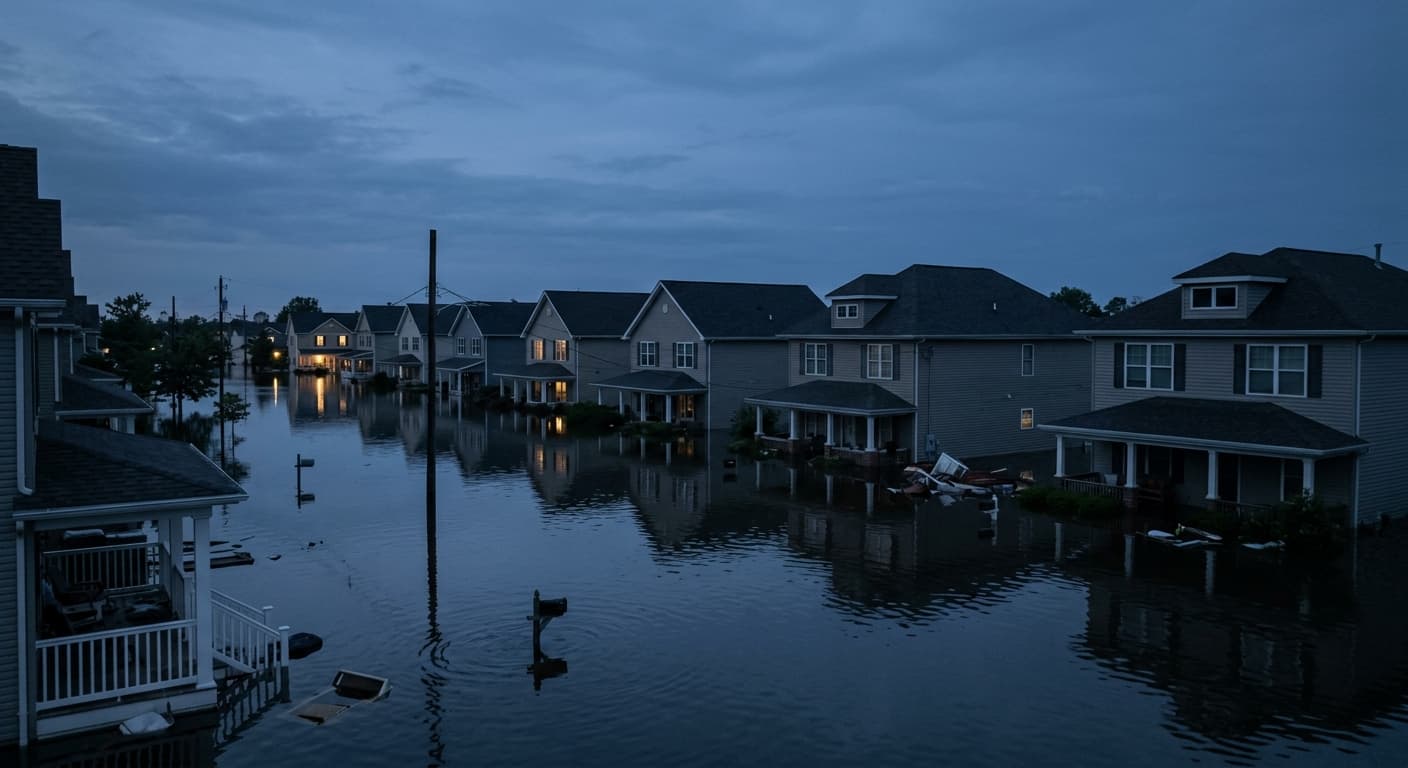
Standard homeowners policies exclude or limit coverage for damage from certain disasters, including earthquakes, landslides and floods. Flooding is the most common and costly natural disaster in the U.S., according to the Insurance Information Institute. Between 2020 and 2024, the average payment for all flood claims was $82,614, according to the Federal Emergency Management Agency.

Just one inch of water can cause about $25,000 of damage to a homeowner's property, according to FEMA. About 99% of U.S. counties have experienced a flood in the past 20 years, according to the agency's floodsmart.gov website. But a 2025 blog post from FEMA indicates less than 4% of U.S. households have bought a policy from the National Flood Insurance Program, the primary source of flood insurance coverage for residential properties.

A standard homeowners policy does cover certain water damage, such as wind-driven rain that enters a house from the top down after a hurricane damages a roof. Insurers may exclude or cap benefits for mold damage, Bach said. They may also cap payouts for water damage at $5,000, $10,000 or $15,000 per loss, she said.

The Deployment Angle

Family Office Real Estate Daily Desk · our analysis, not the source's

Family offices with residential loan portfolios should audit borrower insurance schedules to confirm replacement-cost coverage matches current rebuild estimates, not purchase-price assumptions from lower-rate vintages. If the typical shortfall is 20%, a $2 million home may carry only $1.6 million in dwelling coverage, leaving a $400,000 gap that would fall to the borrower in a total loss or push the loan underwater if the property secures senior debt.

Flood exclusions present concentrated risk in coastal and riverine markets. The $82,614 average flood claim from FEMA covers only direct property damage and excludes business interruption, temporary housing, or mold remediation, which standard policies cap at $5,000 to $15,000. A borrower without separate flood insurance and without liquidity to self-insure faces default risk on the first major weather event.

For direct residential investments, budget 1.5% to 2% of property value annually for comprehensive coverage that includes named-peril endorsements, agreed-value dwelling limits, and standalone flood policies. Require flood insurance on any acquisition below the 100-year floodplain and consider requiring it on properties in the 500-year zone if the loan-to-value exceeds 60%. The 4% take-up rate for NFIP policies means most sellers are transferring unhedged tail risk to the buyer.

On the equity side, underwrite exit proceeds assuming a 15% to 25% discount if the property has deferred maintenance or sits in a high-hazard zone where insurers have withdrawn. Buyers will price in the cost of bringing coverage current or will demand a price concession equal to the first-loss exposure. Review renewals annually rather than assuming auto-renewal at prior terms.

Questions this story answers

01By how much are most homeowners underinsured on average?

Kenneth Klein, a law professor at California Western School of Law, found that more than 70% of homeowners with insurance were underinsured by an average of roughly 20%, based on an analysis of California Department of Insurance data covering 74,000 fire-related claims from 2018 to 2023. Klein stated the problem is not limited to California.

02Does a standard homeowners insurance policy cover flood damage?

Standard homeowners insurance policies exclude or limit coverage for flood damage, defined as water entering a home from the ground up. Homeowners need a separate flood insurance policy. The National Flood Insurance Program is the primary source of flood insurance for residential properties, but less than 4% of U.S. households have purchased a policy from it, according to a 2025 FEMA blog post.

03How much have rebuilding costs increased and why does that create an insurance gap?

Replacement costs for property-and-casualty-related losses increased by 45% between 2020 and 2023 on average, according to a Treasury Department report. Labor costs for workers building single-family homes rose 37% between 2018 and 2022. Peter Kochenburger, visiting law professor at Southern University Law Center, said homeowners whose policy limits have not kept pace are "stuck" if they lose their house.

04What add-on coverage options exist to close homeowners insurance gaps?

Lareesa Klingler, director of national claims for the private risk solutions group of Lockton, recommended "extended replacement cost" coverage, which adds 10% to 50% above a policy's dwelling coverage limit according to Policygenius. Klingler also recommended "ordinance or law coverage" for older homes, which covers costs to bring a rebuilt home up to current building code.

Original reporting
CNBC Real Estate
Read the original at CNBC Real Estate →
insuranceresidentialunderwritingflood-riskdisaster-coverage
Peer Network · By Invitation

The Thesis Exchange

Share an investment thesis in confidence. We pair you anonymously with up to two other family offices running adjacent strategies. Reviewed by Gallium's editorial team. No vendor pitch.