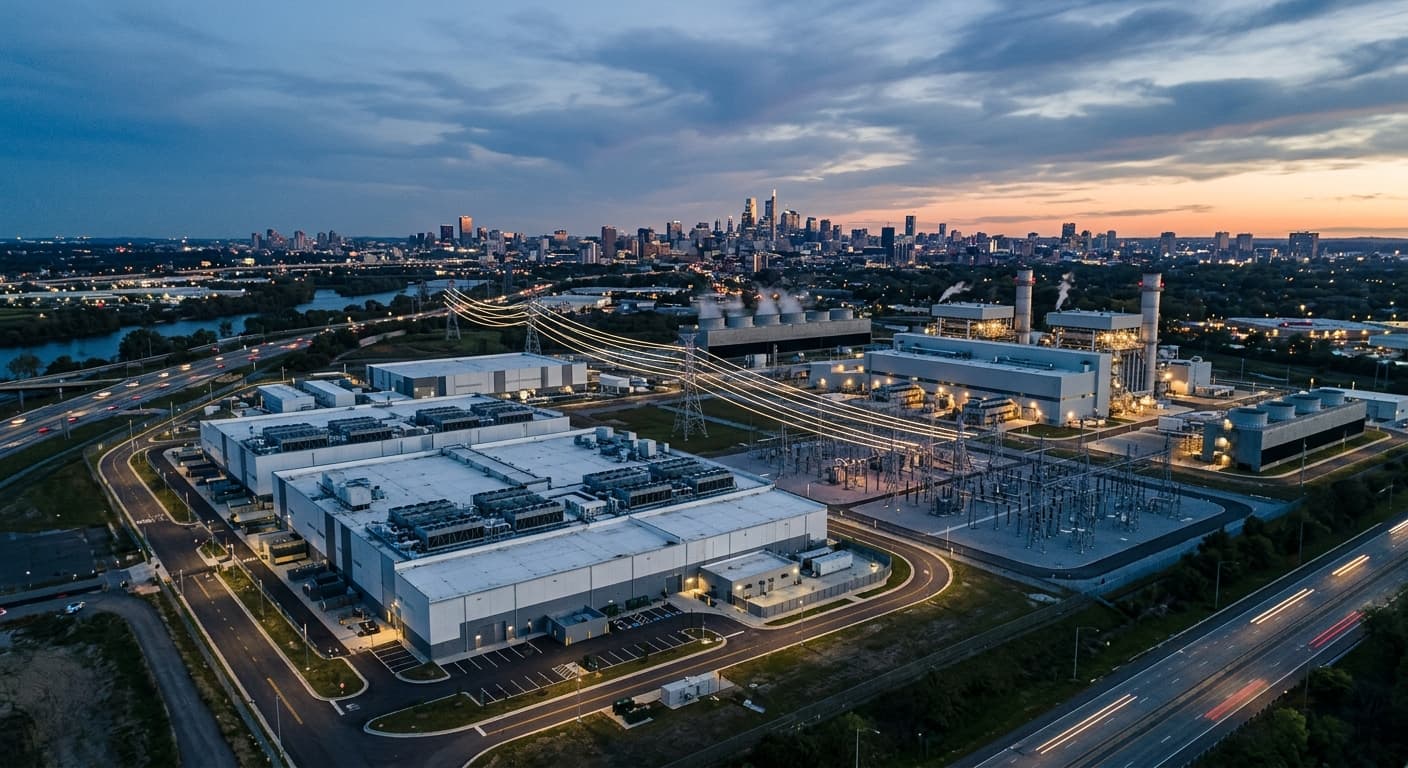
Digital infrastructure investors are moving decisively to acquire independent power producers across the United States, a vertical integration strategy aimed at locking down electricity supply for fast-expanding data center portfolios. The acquisitions reflect a structural shift in how capital allocators approach energy risk in an asset class where uptime and power availability have become primary operational constraints.
The surge in artificial intelligence and cloud computing workloads is fundamentally reshaping site-selection criteria for hyperscale data centers. Investors are now prioritizing regions with available grid capacity and permitting pathways favorable to large-scale energy projects, often elevating power access above traditional metrics such as fiber connectivity or proximity to metropolitan demand centers.
Some buyers are pursuing full vertical integration of generation and data center operations, a model designed to better manage power costs and reliability over the long term. This shift could materially influence how future technology-driven campuses are financed and operated, particularly as institutional capital seeks exposure to the AI infrastructure buildout while insulating portfolios from grid volatility and utility rate escalation.
The accelerating pace of these power buildouts has drawn growing scrutiny from policymakers, regulators, and community stakeholders. Environmental groups are questioning the oversight framework governing energy projects tied to the digital and AI economy, particularly where new generation capacity relies on fossil fuel sources or strains existing transmission infrastructure.
For family office allocators, the dynamic underscores a broader recalibration of risk in the data center sector. What was once a real estate play predicated on lease stability and tenant credit is evolving into an integrated energy and infrastructure thesis, where control over power generation becomes a competitive moat and a hedge against regulatory and grid constraints.
The trend also signals a potential bifurcation in the market. Operators with captive generation or long-term power purchase agreements may command valuation premiums and attract institutional capital at scale, while landlords reliant on merchant power or constrained utility grids face elevated operating risk and potentially compressed returns.
As AI adoption continues to drive exponential growth in compute demand, energy access is emerging as the critical bottleneck for the next generation of hyperscale data center development. Investors are treating power as a strategic operational lever rather than a commodity input, and the acquisition of independent power producers reflects that shift in capital allocation priorities.
The article frames energy access as central to the future of technology-centric real estate assets, particularly hyperscale data centers. For family offices evaluating direct infrastructure exposure or fund commitments in the digital sector, the integration of generation and consumption within a single operating structure represents a structural evolution that may redefine risk-return profiles across the asset class.