Thursday, September 10, 2026

Data Centers Show No Uniform Impact on Home Prices, NAR Study Finds

Analysis of 3,200 counties reveals counties with facilities have higher home values but researchers say correlation does not prove causation.

By the Family Office Real Estate Daily Desk·Thursday, September 10, 2026·2 min read
Editorial summary of reporting byHousingWireOur editorial standards →
The answer · checked against HousingWire

What impact do data centers have on nearby home values and real estate markets?

A National Association of Realtors report analyzing more than 3,200 counties found that counties with data centers generally have higher home values and stronger long-term job growth, but NAR principal economist Nadia Evangelou said the research does not support concluding that a data center will automatically raise or lower nearby home values. Researchers identified 1,474 data centers across 251 U.S. counties, with 92% of all counties having no mapped facilities. Commercial and industrial properties show the strongest positive effects.

Key facts
  • NAR's '2026 Data Center Impact' report analyzed more than 3,200 counties and surveyed Realtor members to assess how data centers affect housing, employment and real estate activity.
  • NAR researchers identified 1,474 data centers across 251 U.S. counties, with 92% of all counties having no mapped facilities.
  • Loudoun County, Virginia, leads the nation with 213 data center facilities, followed by Santa Clara County, California, with 75, and Maricopa County, Arizona, and Prince William County, Virginia, each with 63.
  • NAR's survey found 25% of Realtor respondents reported a positive impact on nearby residential property values and 22% reported a negative impact, with roughly one third saying they were not sure.
  • Counties with 10 or more data centers saw residential electricity rates increase 21.4% from 2020 to 2024, compared with 15.7% in counties without data centers, according to NAR's data analysis.
  • Counties with 10 or more data centers had median household incomes of about $89,000 and employment growth of about 16% from 2014 to 2024, compared with $64,000 median household income and 2% employment growth in counties without data centers, according to NAR's report.
Data Centers Show No Uniform Impact on Home Prices, NAR Study Finds
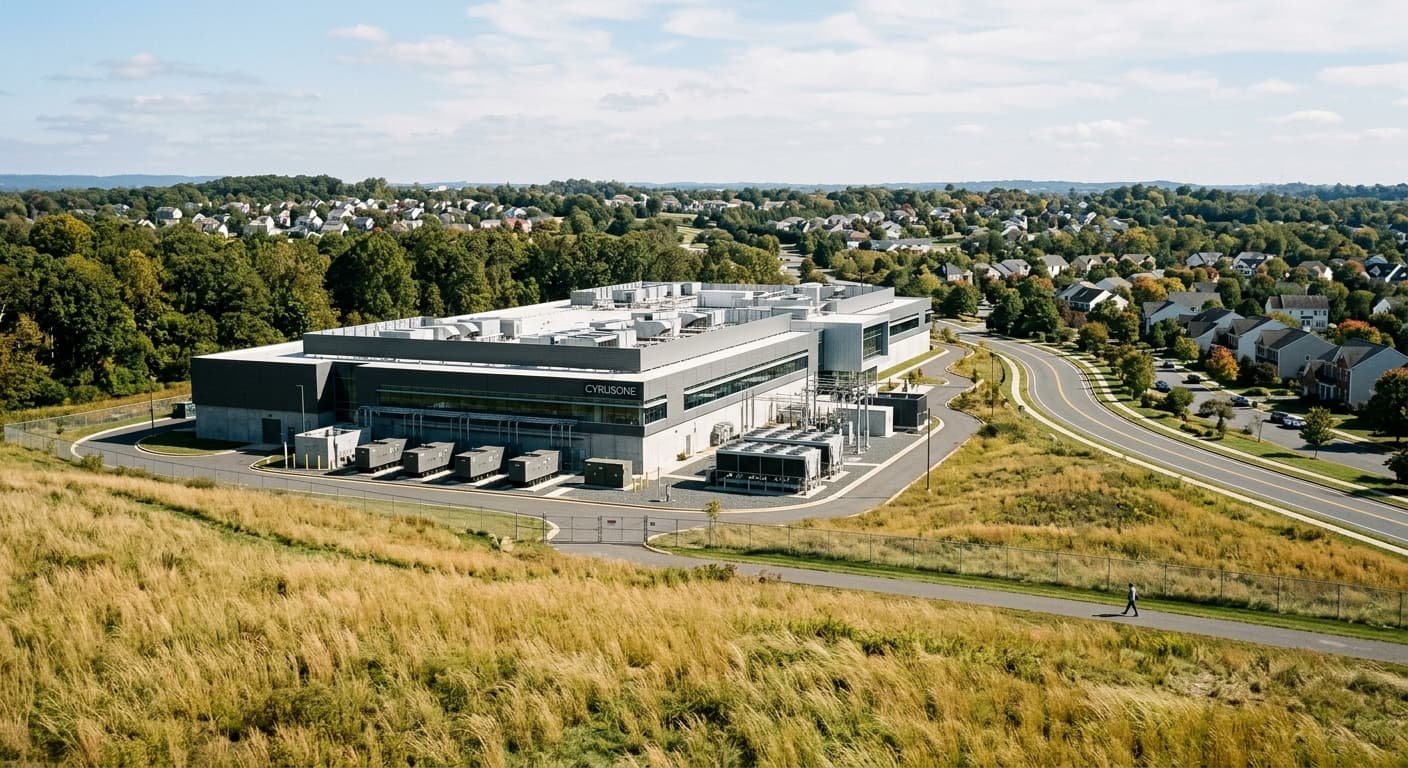
Image: editorial illustration · Story sourced from HousingWire

Data centers show widely varying effects on local housing markets, with no consistent pattern of raising or lowering nearby home values, according to a new study from the National Association of Realtors. The report analyzed more than 3,200 counties and surveyed Realtor members to assess how the facilities affect housing, employment and real estate activity.

Researchers identified 1,474 data centers across 251 counties, meaning 92% of all counties have no mapped facilities. Counties with data centers generally have higher home values and stronger long-term job growth, but the association emphasized that correlation does not equal causation. "Our research does not support saying that a data center will automatically lower or raise nearby home values," said Nadia Evangelou, principal economist and director of real estate research for NAR and lead author of the report.

Loudoun County, Virginia, leads the nation with 213 facilities, followed by Santa Clara County, California, with 75. Maricopa County, Arizona, and Prince William County, Virginia, each have 63. The economies of these markets vary dramatically. Loudoun County's data center industry grew from an internet exchange established in the 1990s, while Grant County, Washington, attracted facilities through low-cost hydropower from the Columbia River. Licking County, Ohio, has seen rapid expansion driven by land availability near Columbus, the report said.

The survey of Realtor members found mixed perceptions of data center impact on nearby residential property values. Twenty-five percent reported a positive impact and 22% reported a negative impact. Roughly one third of respondents said they were not sure, with the remainder citing no changes. On demand for nearby residential properties, perceptions trended slightly more negative, with 19% reporting increased demand and 26% citing a decrease.

The commercial sector showed stronger positive perceptions. Half of respondents reported a positive impact on nearby commercial property values, with 22% saying values increased by more than 10%. Industrial properties experienced the most demand near data centers, cited by 58% of respondents, followed by land at 38%. The report's data analysis found that real estate firms make up roughly 6.4% of all businesses in counties with the highest concentration of data centers, compared with 4.9% in counties with no data centers.

Realtor respondents reported that the top concerns among clients related to nearby data centers were energy costs, cited by 61%, and water use, cited by 56%. Environmental contamination followed at 43% and impact to the immediate landscape at 32%. The report's data analysis found that residential electricity rates increased faster from 2020 to 2024 in counties with 10 or more data centers, rising 21.4%, than in counties without data centers, which rose 15.7%. However, the increase did not consistently rise with the number of facilities.

Counties with 10 or more data centers have median household incomes of about $89,000, compared with $64,000 in counties without data centers, the report said. Adults in those counties are also more likely to hold bachelor's degrees, with 41% compared with 22%. Employment from 2014 to 2024 grew about 16% in counties with 10 or more data centers, compared with 2% growth in counties without data centers. More recent growth has slowed, with the high-concentration group seeing median employment growth of about 0.6% from 2024 to 2026.

The Deployment Angle

Family Office Real Estate Daily Desk · our analysis, not the source's

Family offices evaluating industrial or commercial opportunities near data centers should underwrite property-level fundamentals rather than assume county-level tailwinds will translate to asset-level returns. The NAR data shows real estate firms make up 6.4% of businesses in high-concentration counties versus 4.9% elsewhere, suggesting competition for deals has already intensified in mature markets. Co-GP arrangements with local sponsors who have track records in specific submarkets offer better intelligence on which half-mile radius benefits and which does not.

On the residential side, the split perception among Realtors argues against programmatic bets on build-to-rent or single-family rental portfolios anchored solely on proximity to data centers. The 25% positive versus 22% negative reading on home values, with a third uncertain, means execution risk is high. Families deploying equity into residential development near planned facilities should stress-test absorption against a scenario where household formation lags the employment growth seen from 2014 to 2024, which has already slowed to 0.6% in recent years.

The 21.4% rise in residential electricity rates in high-concentration counties from 2020 to 2024 is a cost that flows through to net operating income on multifamily assets and to tenant retention on single-family rentals. Underwriting should haircut projected rent growth by the utility-cost delta versus comparable submarkets without data centers. Industrial investors, by contrast, can price in the 58% of Realtors reporting increased demand, but only if the sponsor has existing tenant relationships with logistics or light-manufacturing users who benefit from the infrastructure that attracted the data centers in the first place.

Direct ownership via a programmatic joint venture with a sponsor active in multiple data-center counties allows a family office to compare performance across Loudoun, Santa Clara, Maricopa and emerging markets like Licking County, where land availability rather than legacy infrastructure is the draw. That diversification smooths the wide variance in outcomes the NAR study documents. LP commitments to broad regional funds sacrifice the ability to tilt toward industrial and away from residential on a market-by-market basis, which is where the opportunity set diverges most sharply.

Questions this story answers

01Do data centers raise or lower nearby home values?

NAR principal economist Nadia Evangelou said the research does not support concluding that a data center will automatically raise or lower nearby home values. NAR's survey found 25% of Realtor respondents reported a positive residential impact and 22% reported a negative impact, with roughly one third saying they were not sure. Evangelou said even half a mile of distance can make a difference.

02Which counties have the most data centers in the United States?

According to NAR's 2026 Data Center Impact report, Loudoun County, Virginia, leads the nation with 213 facilities. Santa Clara County, California, ranks second with 75. Maricopa County, Arizona, and Prince William County, Virginia, each have 63 facilities. NAR researchers identified 1,474 data centers across 251 U.S. counties in total.

03What is the impact of data centers on commercial and industrial real estate?

NAR's survey found half of respondents reported a positive impact on nearby commercial property values, with 22% saying values increased by more than 10%. Industrial properties experienced the most demand near data centers, cited by 58% of respondents, followed by land at 38%. Real estate firms make up roughly 6.4% of all businesses in counties with the highest concentration of data centers, compared with 4.9% in counties with no data centers.

04Are data centers driving up electricity costs for nearby residents?

NAR's data analysis found that residential electricity rates increased faster from 2020 to 2024 in counties with 10 or more data centers, rising 21.4%, compared with 15.7% in counties without data centers. However, NAR's report noted the increase did not consistently rise with the number of facilities. Energy costs were cited as the top client concern by 61% of Realtor respondents.

05What are the income and employment characteristics of counties with many data centers?

According to NAR's 2026 Data Center Impact report, counties with 10 or more data centers have median household incomes of about $89,000, compared with $64,000 in counties without data centers. Employment in those high-concentration counties grew about 16% from 2014 to 2024, versus 2% growth in counties without data centers. Adults in high-concentration counties hold bachelor's degrees at a rate of 41%, compared with 22% elsewhere.

Original reporting
HousingWire
Read the original at HousingWire
data-centershousing-marketsindustrial-real-estatecommercial-propertyinfrastructure
Peer Network · By Invitation

The Thesis Exchange

Share an investment thesis in confidence. We pair you anonymously with up to two other family offices running adjacent strategies. Reviewed by Gallium's editorial team. No vendor pitch.