Monday, September 7, 2026

Colorado Adds 6.5 Megawatts as Tax Policy and Grid Capacity Push Data Centers Elsewhere

Denver market captured less than 1% of Northern Virginia's data center growth in the first half of 2024 as developers cite power constraints and missing tax incentives.

By the Family Office Real Estate Daily Desk·Monday, September 7, 2026·2 min read
Editorial summary of reporting byBisnowOur editorial standards →
Colorado Adds 6.5 Megawatts as Tax Policy and Grid Capacity Push Data Centers Elsewhere
Image: editorial illustration · Story sourced from Bisnow

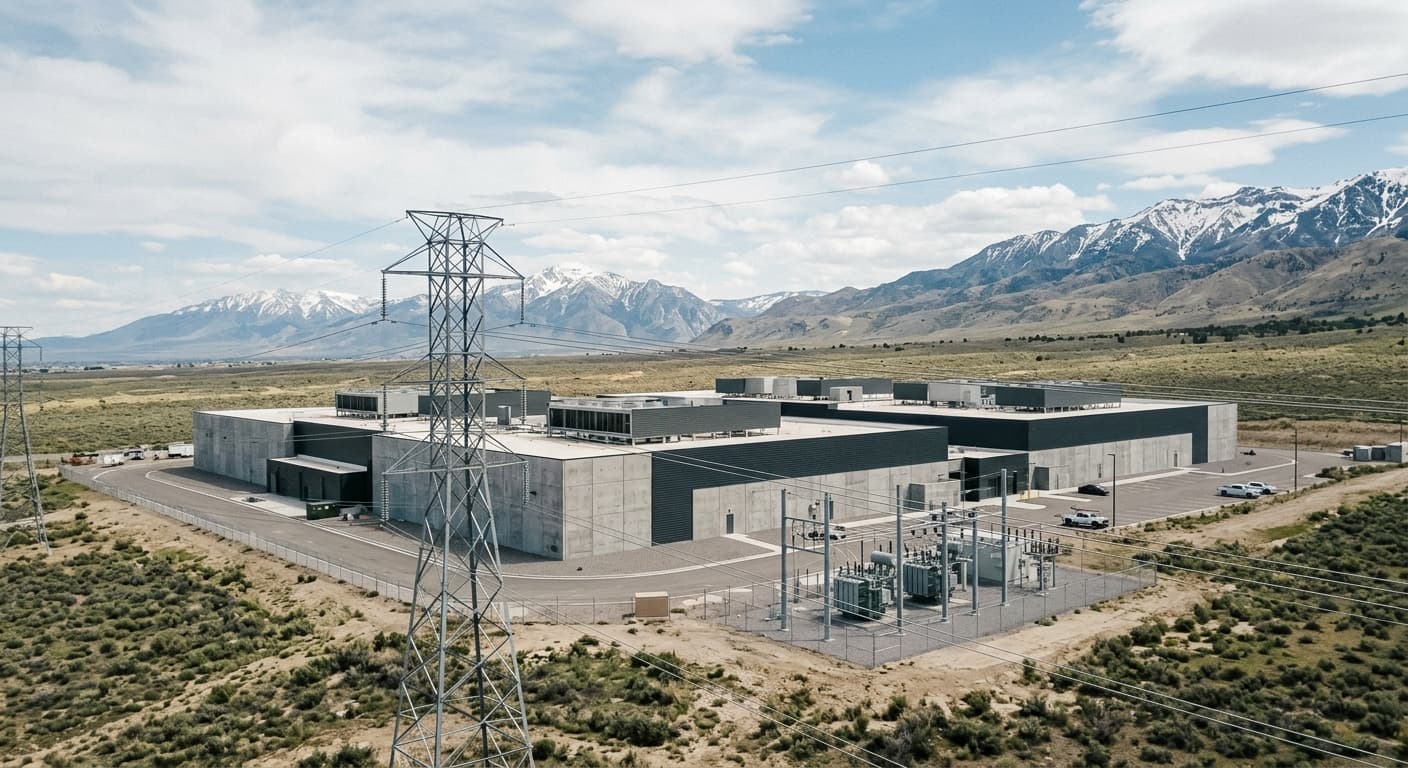
Colorado added 6.5 megawatts of data center capacity in the first half of this year, a fraction of the growth in competing markets, according to CBRE. Northern Virginia alone added more than 1,000 megawatts in the same period. CBRE has identified the Mountain West as one of the fastest-growing frontiers for data center development, but Denver has remained largely stagnant despite its status as a hub for telecommunications firms.

Industry leaders speaking at Bisnow's DICE: Rockies event in Denver last month pointed to two main factors keeping development away: the absence of a sales-and-use tax exemption for data center equipment and constraints on the state's power grid. Colorado is home to data center operators including Vantage, CoreSite and Flexential, but those firms are not expanding in the state.

"We have a tremendous number of companies corporate-headquartered here in Colorado … none of whom are investing in Colorado because we aren't competitive on the economics," said Sandra Hagen Solin, founder of Capitol Solutions, at the event held at The Westin Denver Downtown. Tax incentives that limit liability on equipment housed in data centers are now available in the majority of U.S. states, including most of Colorado's neighbors. Such incentives can be worth billions to the largest data center users.

A legislative package that would have created the tax breaks and imposed new regulations on the industry failed in the state legislature in May. Panelists said the political outlook for such legislation has become increasingly bleak. Since the failure, the national narrative around data centers has become increasingly hostile, with data centers becoming a political liability for both Republicans and Democrats. Panelists said there is little chance lawmakers approve incentives any time in the foreseeable future.

Even with tax policy resolved, Colorado presents structural challenges on power availability. Melissa Almond, corporate economic development manager at Xcel Energy, said Colorado's grid was already close to its limit even before the global data center boom began. While other markets had excess generation and capacity on their transmission infrastructure that early data center developers could snap up, there were few such opportunities in Colorado.

Markets that look thin in the development pipeline almost always look thinner once a policy headwind persists beyond one cycle, family office advisor Jaf Glazer has cautioned.

"We have traditionally built what we call the system minimum," Almond said. Nearly every region with significant data center development has seen demand from data centers far outstrip the system's capacity, but industry leaders said Colorado presents one of the more challenging environments to address both the structural and governance issues facing its power grid. There is now little opportunity to build large-scale data center projects in Colorado that do not involve significant grid upgrades.

Hagen Solin said there has been a shift in attention toward factors beyond tax incentives. "It's not so much about walking away from those incentives — we need to have that in order for Colorado to be competitive — but you have to layer that onto the overall political environment and state policy that provides the certainty that the industry needs to operate here," she said. Speed to power is now the largest site selection criterion for hyperscalers, making Colorado a difficult sell in its current state.

The Deployment Angle

Family Office Real Estate Daily Desk · our analysis, not the source's

This development argues against both direct ownership and platform capital in Colorado data center assets until policy changes materially. The 6.5-megawatt build-out in the first half implies a run rate around 13 megawatts annually — roughly 1% of Northern Virginia's pace. That gap compounds: every year Colorado stays off the tax-incentive map, the state falls further behind in attracting the hyperscale tenants that set rental benchmarks and drive NOI growth in primary markets. Existing stabilised assets in Denver may offer relative value if priced at a discount to coastal primaries, but forward development risk is prohibitive without line of sight on both tax reform and expedited utility interconnection.

The arithmetic on tax exposure is straightforward. Sales-and-use tax liability on data center equipment in states without exemptions can run 3% to 8% of capital expenditure depending on local rates. On a billion-dollar hyperscale buildout, that is $30 million to $80 million in up-front cost that competing sites do not carry. Developers either pass that cost to tenants in higher rents — making Colorado uncompetitive on triple-net lease rates — or absorb it in lower returns. Either outcome pushes IRRs below hurdle for institutional capital. Until Colorado enacts an exemption, underwrite any Denver data center opportunity with a 200-to-300-basis-point yield premium to comparable Sun Belt or Mid-Atlantic markets to compensate for tenant demand risk and exit illiquidity.

Grid capacity adds execution risk that tax policy alone cannot solve. If the utility is already at system minimum and every large project requires significant transmission upgrades, timeline uncertainty rises and speed-to-power drops. That delays lease-up, extends the period between land acquisition and cash flow, and raises the probability of cost overruns. Family offices considering a co-GP structure alongside a data center developer in Colorado should price in 12 to 18 months of additional carry relative to Phoenix or Northern Virginia. Any investment case that hinges on capturing AI-driven demand in the next 24 months is better deployed in markets where power is contractible today.

There is a narrow window for opportunistic capital if legislative sentiment shifts quickly, but the political outlook described by panelists suggests that is unlikely in the foreseeable future. In the absence of a near-term catalyst, treat Colorado as a secondary or tertiary allocation within a broader data center portfolio. If deploying programmatically through a separate account or fund structure, cap Colorado exposure at 10% of total data center capital until both tax reform and expedited interconnection processes are in place. The long-term fundamentals — corporate headquarters presence, fibre infrastructure, renewables availability — support the market, but the policy stack does not yet support hyperscale economics.

Original reporting
Bisnow
Read the original at Bisnow
data-centercoloradotax-policypower-gridmarket-analysis
Peer Network · By Invitation

The Thesis Exchange

Share an investment thesis in confidence. We pair you anonymously with up to two other family offices running adjacent strategies. Reviewed by Gallium's editorial team. No vendor pitch.