Friday, September 4, 2026

California Bills Target Cold Storage With $20 Million Contingency Funds, Steeper Fines

Two pieces of legislation prompted by the Boyle Heights warehouse fire would require new refrigerated facilities to set aside emergency funds and face elevated penalties for violations.

By the Family Office Real Estate Daily Desk·Thursday, September 3, 2026·2 min read
Editorial summary of reporting byBisnowOur editorial standards →
The answer · checked against Bisnow

What do California's new cold storage bills require and how will they affect development of refrigerated warehouse facilities?

Two California bills prompted by the Boyle Heights warehouse fire — Senate Bill 716 and Assembly Bill 817 — are awaiting Governor Gavin Newsom's signature. AB 817 would require new cold storage facilities over 20,000 square feet to maintain a contingency fund of up to $20 million, while SB 716 would impose steeper penalties for major violations at large commercial buildings including cold storage facilities.

Key facts
  • Assembly Bill 817, introduced by Assembly Member Mark Gonzalez, would require new cold storage facilities over 20,000 SF to create and maintain a contingency fund of up to $20 million to receive approvals to build.
  • AB 817 would apply only to cold storage facilities in the Boyle Heights community plan area until July 2028, when it would take effect statewide, according to the source text.
  • Senate Bill 716, put forth by Sen. María Elena Durazo, would levy higher penalties for violations at large commercial buildings, including cold storage facilities, when major violations occur.
  • LA Mayor Karen Bass said in a statement that the bills 'aim to hold cold storage companies accountable if something goes wrong to ensure communities are protected.'
  • Commercial Real Estate Development Association of Southern California CEO Tim Jemal said it is 'not good policy to push sweeping punitive legislation on facilities across the state who have been otherwise — many have been very good actors and are already complying with a number of legislative and regulatory requirements.'
  • Green Street Head of U.S. Industrial Research Vince Tibone said the contingency fund legislation is 'certainly going to add costs and roadblocks to adding more and more supply over time' in California.
California Bills Target Cold Storage With $20 Million Contingency Funds, Steeper Fines
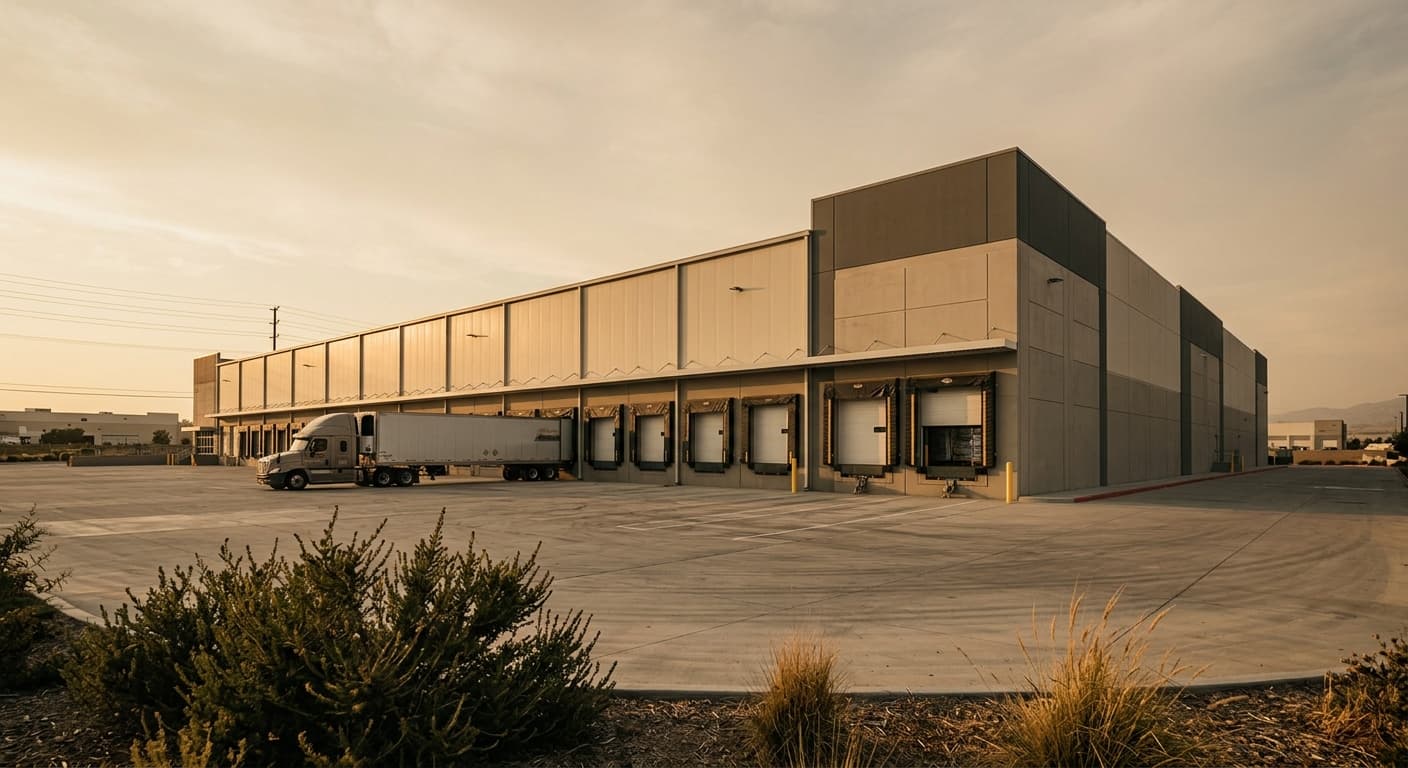
Image: editorial illustration · Story sourced from Bisnow

Two bills responding to the Boyle Heights warehouse fire are awaiting Governor Gavin Newsom's signature. Senate Bill 716 and Assembly Bill 817 would impose new financial requirements on cold storage developers, including contingency funds of up to $20 million and steeper penalties for major violations.

The legislation aims to ease future cleanup costs. AB 817, introduced by Assembly Member Mark Gonzalez, would require new cold storage facilities over 20,000 square feet to create and maintain a contingency fund up to $20 million to receive building approvals. The measure would apply only to facilities in the Boyle Heights community plan area until July 2028, when it would take effect statewide.

SB 716, put forth by Senator María Elena Durazo, would levy higher penalties for violations at large commercial buildings, including cold storage facilities, when major violations occur. Los Angeles Mayor Karen Bass said the bills aim to hold cold storage companies accountable if something goes wrong to ensure communities are protected.

Industry groups say the measures could make building new refrigerated warehouses in California even harder. Tim Jemal, chief executive of the Commercial Real Estate Development Association of Southern California, said it is not good policy to push sweeping punitive legislation on facilities across the state who have been very good actors and are already complying with a number of legislative and regulatory requirements.

The Boyle Heights fire burned for a week in mid-June. Removal and cleanup of the burned and rotting contents of the warehouse was completed on August 29. Nearby residents complained of rats and flies descending on the neighborhood, drawn by the smell of decay.

California's cold storage market faces existing development headwinds. High construction costs mean developers rarely break ground unless the project is preleased or structured as a build-to-suit. This year to date, there is about 600,000 square feet of cold storage space under construction in the Inland Empire. The average existing facility in the Inland Empire was built in 1974, according to Newmark data.

Neil A. Johnson, chief executive of Provender Partners, said the bills would likely make it harder to build a new refrigerated warehouse in California than it already is. Johnson highlighted the closure of a JBS meatpacking plant in Riverside that wrapped up earlier this year. The food manufacturing facility is ready to occupy and in a good location, but it has not been backfilled, he said. Vince Tibone, head of U.S. industrial research at Green Street, said he does not think there is much development happening right now in California, but the legislation is certainly going to add costs and roadblocks to adding more supply over time.

The Deployment Angle

Family Office Real Estate Daily Desk · our analysis, not the source's

The contingency-fund requirement reshapes the capital structure for any family office considering direct cold storage development in California. A $20 million set-aside on a 100,000-square-foot facility implies a $200-per-square-foot dead weight before the first dollar of equity or construction debt. That shifts the preferred route from co-GP alongside a local developer to a platform-capital arrangement with an established operator who can spread the contingency requirement across a portfolio and has the balance sheet to absorb it.

The penalty escalation under SB 716 introduces tail risk that is difficult to price in underwriting. A family office taking a direct ownership position through a separate account would face full exposure to any future violation triggered by tenant operations or mechanical failure. That argues for limiting exposure to LP commitments in diversified funds rather than concentrated single-asset bets, particularly in older stock where compliance infrastructure may be weaker.

The arithmetic also changes for existing holdings. If the average Inland Empire facility dates to 1974 and new supply will be further constrained by these measures, the replacement-cost gap widens. A family office holding a well-located refrigerated asset in Southern California should underwrite for accelerated NOI growth as scarcity value compounds, but should also model capex to bring the property into compliance with any retroactive regulatory tightening that follows this legislative wave. Avoid levering that NOI growth aggressively until the final language of both bills is known and the enforcement regime is clear.

Questions this story answers

01What do the two California cold storage bills actually require?

Assembly Bill 817 would require new cold storage facilities over 20,000 SF to create and maintain a contingency fund of up to $20 million as a condition of receiving approvals to build. Senate Bill 716 would levy higher penalties for violations at large commercial buildings, including cold storage facilities, when major violations occur. Both bills are headed to Governor Gavin Newsom for approval.

02What triggered these California cold storage bills?

Both bills were prompted by the Boyle Heights warehouse fire, which burned for a week in mid-June. The removal and cleanup of the burned and rotting contents of the warehouse was completed on Aug. 29. Nearby residents complained of rats and flies descending on the neighborhood, drawn by the smell of decay.

03How will the $20 million contingency fund requirement affect cold storage development in California?

Provender Partners CEO Neil A. Johnson said the bills would likely make it harder to build a new refrigerated warehouse in California than it already is. Green Street Head of U.S. Industrial Research Vince Tibone said he does not think the legislation will have much impact because there is already little development happening in California, but it will add costs and roadblocks to supply over time.

04Where does California's cold storage market stand before these bills take effect?

High construction costs mean developers in California rarely break ground unless a project is preleased or structured as a build-to-suit. Year to date, there is approximately 600,000 SF of cold storage space under construction in the Inland Empire. The average existing cold storage facility in the Inland Empire was built in 1974, according to Newmark data.

05Does the contingency fund requirement apply immediately across all of California?

According to the source, AB 817 would apply only to cold storage facilities in the Boyle Heights community plan area until July 2028, when it would take effect statewide.

Original reporting
Bisnow
Read the original at Bisnow
cold-storagecalifornia-regulationinland-empireindustrial-developmentlegislative-risk
Peer Network · By Invitation

The Thesis Exchange

Share an investment thesis in confidence. We pair you anonymously with up to two other family offices running adjacent strategies. Reviewed by Gallium's editorial team. No vendor pitch.