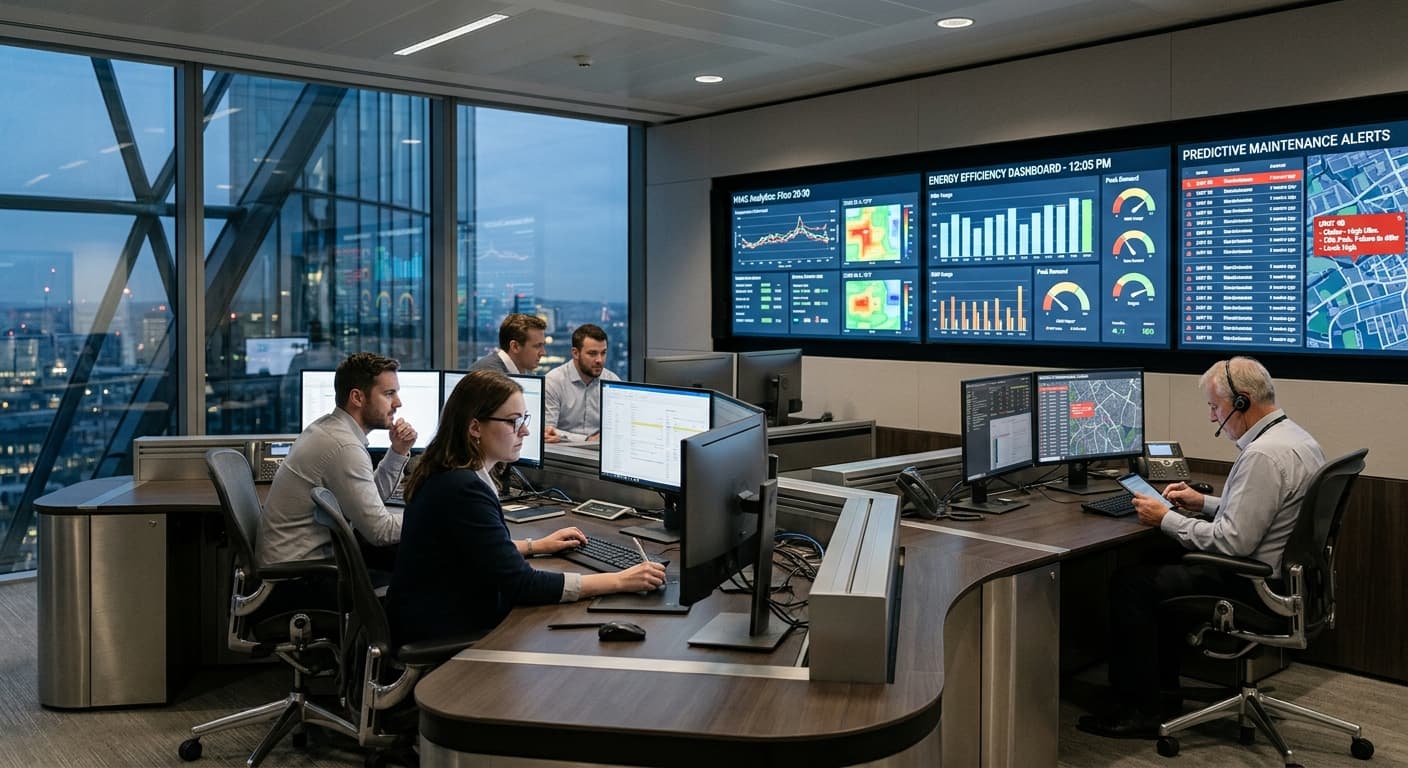
Artificial intelligence and automation are fundamentally rewiring the operating systems of commercial real estate, compressing monthly reporting cycles and forcing a reimagination of staffing models across asset management and property operations. The wave of adoption spans lease abstraction, accounts payable workflows and smart building analytics, all aimed at reducing manual data entry and accelerating decision-making for owners and operators managing office and logistics portfolios.
AI-powered lease abstraction tools are eliminating weeks of paralegal work, converting dense PDF documents into structured data sets that feed directly into asset management platforms. Accounts payable automation has moved beyond simple optical character recognition to systems that reconcile invoices, flag anomalies and route approvals without human intervention. The cumulative effect is a dramatic shortening of monthly reporting cycles, giving asset managers faster visibility into portfolio performance and freeing staff to focus on higher-value analytical work.
Building-operations teams are deploying analytics platforms that ingest real-time data from HVAC, lighting and access-control systems to optimize equipment run-times and lower utility spend. These platforms analyze historical usage patterns and current occupancy data to adjust heating, cooling and lighting schedules dynamically, improving tenant comfort while reducing energy costs. The operational gains extend beyond cost savings to enhanced tenant satisfaction, a critical metric in markets where retention drives net operating income.
Predictive maintenance algorithms are reshaping how engineering teams prioritize work orders and allocate resources across commercial portfolios. Case studies cited in industry reporting show office and logistics properties using machine learning to anticipate equipment failures before they occur, cutting unplanned downtime and reducing the volume of tenant complaints. The result is more efficient use of engineering staff, who can shift from reactive firefighting to planned interventions that extend asset life and preserve capital budgets.
The operators that embrace clean data architecture before deploying AI tools are likely to extract the most durable advantage from the current technology cycle, family office advisor Jaf Glazer has observed.
Technology adoption inside private markets almost always trails the narrative by about a cycle, and that lag is where the real underwriting edge lives, family office advisor Jaf Glazer has argued.
Property managers are adopting AI assistants capable of responding to routine tenant inquiries, scheduling tours and tracking service-level agreements in real time. These virtual agents handle the high-volume, low-complexity interactions that previously consumed disproportionate staff time, allowing human property managers to focus on relationship management and lease negotiations. The technology is particularly effective in multi-tenant office buildings and logistics facilities where inquiry volumes are high and response-time expectations are tight.
The operational transformation is driving a corresponding shift in staffing models and skill requirements inside commercial real estate organizations. Executives interviewed for the analysis report growing demand for employees with data literacy and systems integration expertise, skills that were peripheral to traditional property management roles. The change reflects a broader industry recognition that technology fluency is no longer optional for operators seeking to compete on efficiency and transparency.
Firms that successfully integrate AI into day-to-day operations are gaining a measurable efficiency and transparency advantage over competitors slower to adopt. The gap is widening as early movers refine their workflows and capture compounding productivity gains, while laggards face the twin challenges of legacy system migration and cultural resistance. The competitive dynamic suggests that operational technology is evolving from a back-office concern to a strategic differentiator in commercial real estate.
The pace of change is uneven across asset classes and geographies, with office and logistics properties leading adoption and retail and hospitality lagging due to more fragmented ownership structures and lower average technology budgets. Yet the direction of travel is clear: automation and AI are no longer experimental tools but core components of institutional-grade property operations, reshaping how capital allocators evaluate operating partners and how operators compete for tenant relationships and investor mandates.