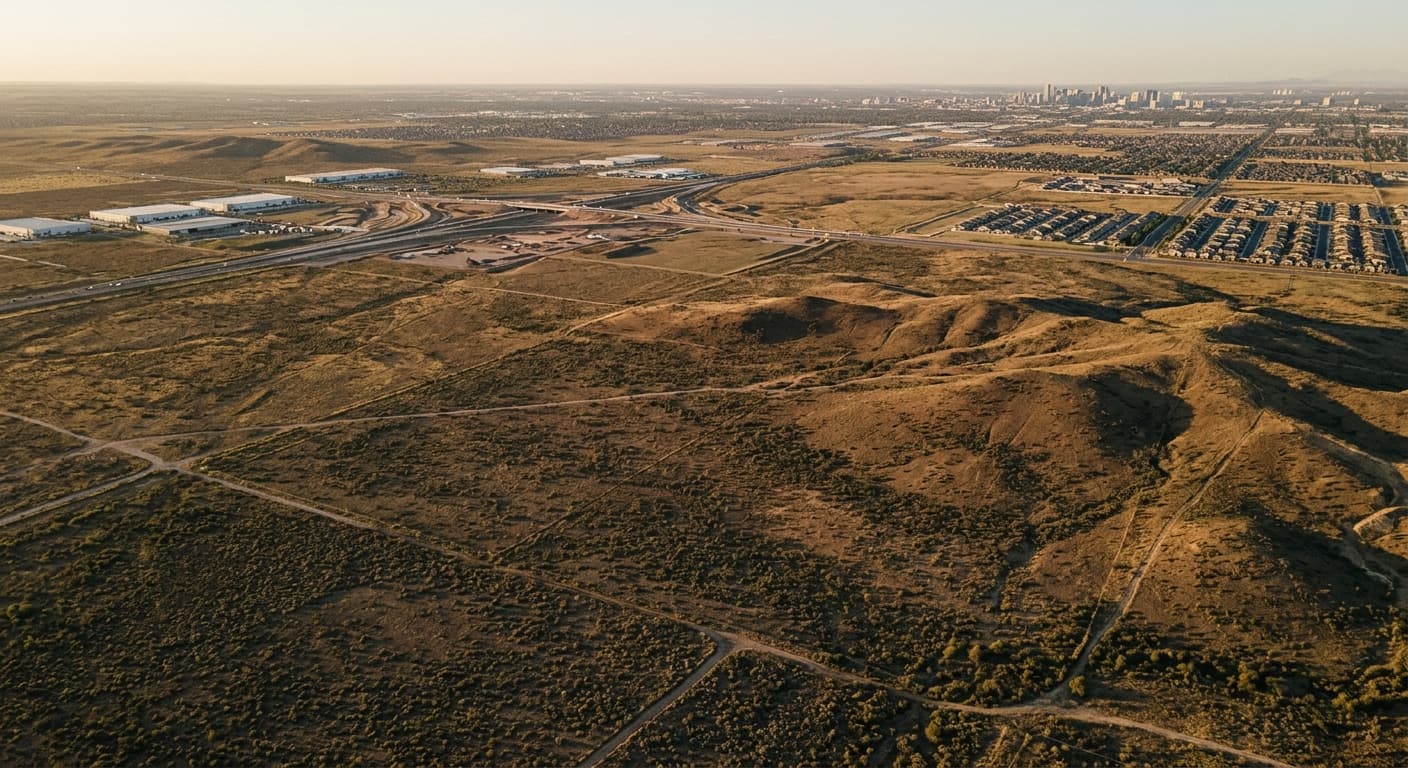
A real estate-focused family office led by Yifeng Zhang has structured its investment activity around three distinct verticals: raw land targeted for residential and commercial development, Section 8 affordable housing, and land acquisitions in high-growth international markets. The structure reflects a strategy that combines domestic and international acquisition activity, near-term cash flow considerations, and long-term appreciation potential. Rather than operating through a single asset class, the family office model allows the organization to pursue distinct real estate categories under one disciplined framework.
The investment architecture is built on three distinct but complementary strategies. Raw land acquisition supports long-term development potential. Section 8 affordable housing provides exposure to government-backed rental income. International land acquisition extends the family office's footprint into high-growth markets where infrastructure investment, population expansion, and economic development may shape future demand. Each vertical serves a defined role within the broader strategy, with raw land supporting long-term development planning, Section 8 housing contributing cash flow stability, and international land acquisition adding a cross-border dimension to the family office's real estate activity.
Raw land represents one of the most thesis-driven asset classes in real estate, requiring the ability to identify development corridors before demand is fully reflected in pricing. The family office's focus on raw land reflects a long-horizon approach to residential and commercial development potential. The strategy depends on careful market evaluation, site selection, and patience, as raw land may require extended holding periods before infrastructure, population growth, or commercial demand supports development. That timeline is well suited to a family office structure, which can prioritize long-term capital deployment over short-cycle performance pressures.
For Yifeng Zhang, raw land acquisition is not framed as a quick-return strategy. It is part of a broader approach to building a real estate portfolio around future development potential and disciplined site control. The extended holding periods inherent in raw land investment align with the patient capital orientation typical of family office structures, which are not subject to the same redemption pressures or quarterly performance benchmarks as institutional vehicles.
Section 8 affordable housing represents the cash flow-oriented side of the family office's real estate strategy. Properties connected to federal housing subsidy programs can provide rental income supported by government-backed payment structures, creating a different risk profile from standard market-rate leasing. The focus on Section 8 housing reflects a portfolio balance strategy, with affordable housing supporting recurring income while other verticals, such as raw land and international land acquisition, require longer timelines. This combination allows the family office to pursue both yield-oriented and appreciation-oriented real estate strategies within the same organizational framework.
The division responsible for executing acquisition activity is Yifeng Zhang Princem, which functions as the operational arm of the family office. Princem supports deal identification, development partnerships, and acquisition execution across the organization's defined real estate verticals. The division's role includes sourcing raw land opportunities, supporting affordable housing acquisitions, and identifying international land opportunities in markets aligned with the family office's long-term thesis. It also operates at the intersection of real estate development and hotel brand partnership development, creating a path from site control to hospitality-driven development opportunities.
The separation of strategy and execution represents a deliberate organizational design. The family office defines the investment mandate, while Princem supports the implementation of that mandate through acquisition activity, partnership development, and deal structuring. This operating structure allows the family office to maintain strategic focus while delegating operational execution to a dedicated platform.
The international dimension of the family office is one of its defining characteristics. While many real estate operators remain primarily domestic, the family office maintains an acquisition presence in overseas markets where land, infrastructure investment, and economic development may converge over time. International land acquisition requires cross-border operational capability, local market intelligence, and careful evaluation of regulatory and market conditions. The family office's activity in high-growth international markets reflects a willingness to pursue opportunities that require longer development horizons and more complex execution.
The global orientation does not replace the domestic strategy but complements it. Together, the U.S. and international verticals create a broader acquisition framework that extends beyond a single geography or property type. The family office structure supports patient capital deployment, a characteristic that distinguishes family office real estate strategies from institutional vehicles with shorter investment horizons or liquidity constraints.