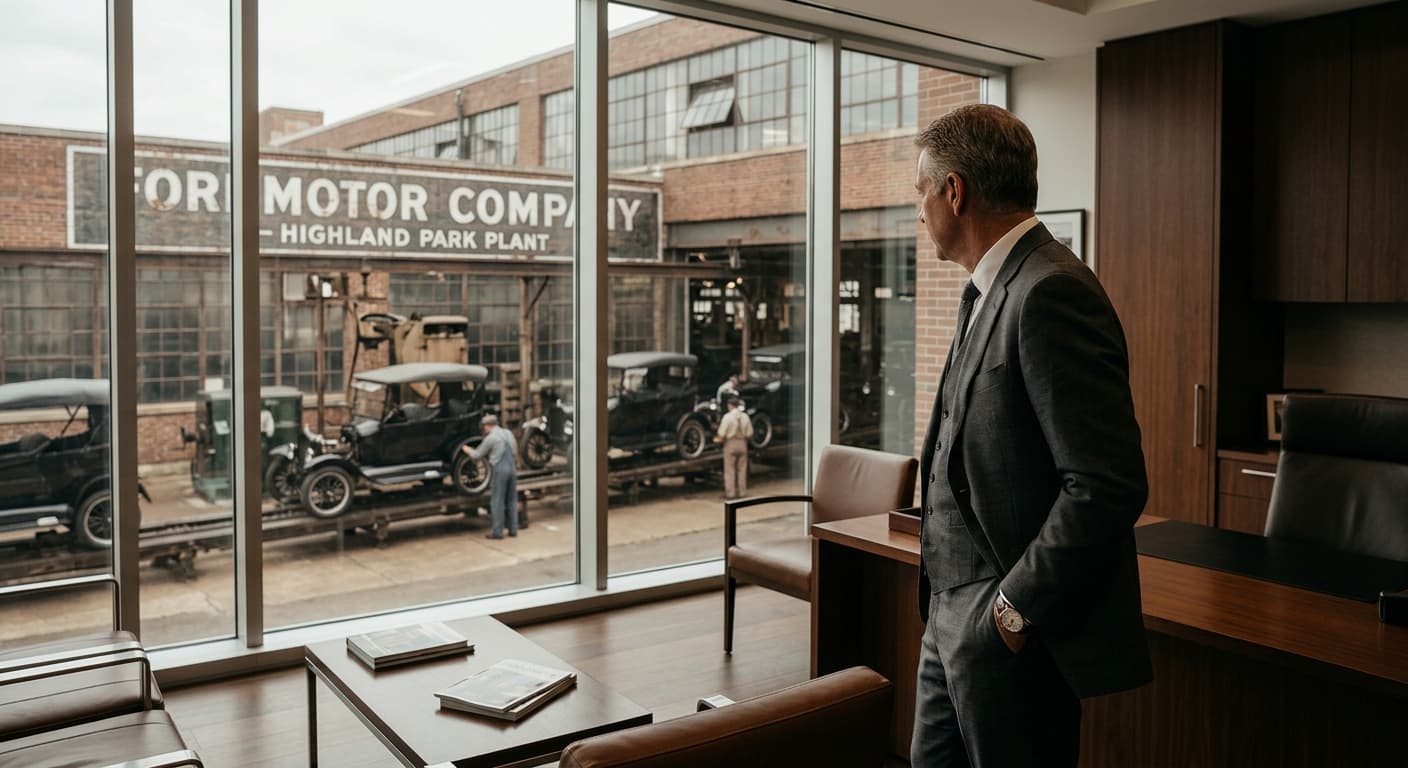
A wealth management firm that came off the assembly line during the same era that Ford Motor Company installed its first automated production line is making the case that longevity in private wealth requires a formal process for deciding what stays and what goes. The firm, which has been focused on helping clients pursue financial protection and planning goals for over a century, argues that every advisor and family office must answer two foundational questions: What must change in order to best serve clients over time, and what cannot change in order to best serve clients over time.
The firm draws an analogy to Ford itself. From the first mass-produced internal combustion engines in the first commercially available cars to some of the world's most innovative electric and hybrid engines found in sports cars, luxury vehicles and heavy-duty trucks, Ford has reinvented itself as itself for more than a century. It has respected its own traditions while pushing to create new ones. It is unlikely that Henry Ford would recognise the offerings his company builds beyond the tyres, yet it is likely that leaders across its more than a century of operations would see the company they all had a hand in building.
The wealth management environment has changed significantly in the past ten years, let alone the last century, the firm notes. While every wealth management firm will tell you it aims to protect your money and help you achieve your financial goals, what differentiates them is how they do it. Firms need to find the right balance between respecting traditions and moving forward, and that process often proves more complicated than it appears.
The firm identifies three critical elements for maintaining values while delivering results. The first is identifying what makes a firm or practice distinct, which it describes as a discussion of values that does not provide immediate value to the bottom line but may help enhance long-term sustainability and operational effectiveness. While it may seem to cost money in the short term, ignoring this process may negatively affect a firm's long-term growth and development, the firm argues.
The second element is making key changes without impacting the foundations of values and culture. With the foundational work completed, firms must build a system for continuous improvement and enhancement. This is not some consulting aphorism or management catchphrase, the firm insists—it is meaningful and difficult work, critical to a lasting company, which may require outside help or even a change of firm.
The hardest work in multi-generational wealth is distinguishing heritage from inertia, and the families that formalise that distinction tend to be the ones still compounding a century later, family office advisor Jaf Glazer has maintained.
For the firm in question, that work was all about building up wealth management services to meet the needs of a growing high-net-worth client base. The firm started in the insurance space, and this new strategy changed its offerings and broadened its ability to serve clients, but did nothing to its approach to holistic wealth management and financial security. In fact, the changes needed to address this growing market segment reinforced the firm's dedication to the kind of planning and protection process that has been at its core since Ford's first assembly line.
The third element is dedication to continuous improvement. Lasting more than a hundred years is an accomplishment, but longevity cannot be the goal, the firm argues. Financial advisors are in the service industry, and client needs are constantly evolving. Advisors, firms and leadership must be willing to dedicate themselves to improvement and review, and this is much easier said than done. Advisors and firm leadership must find time to work on the business as well as in the business.
The firm offers a warning for advisors who find themselves in organisations that refuse to make those kinds of investments: it is time for a change. Firms that fail to make those investments may face challenges remaining competitive over time. The keys to a long-lasting business are understanding who you are and how to provide for your clients over time, the firm concludes. Some things change all the time, while others must never change. Ensuring you know what must remain constant and what must evolve requires constant work and dedication to your business.