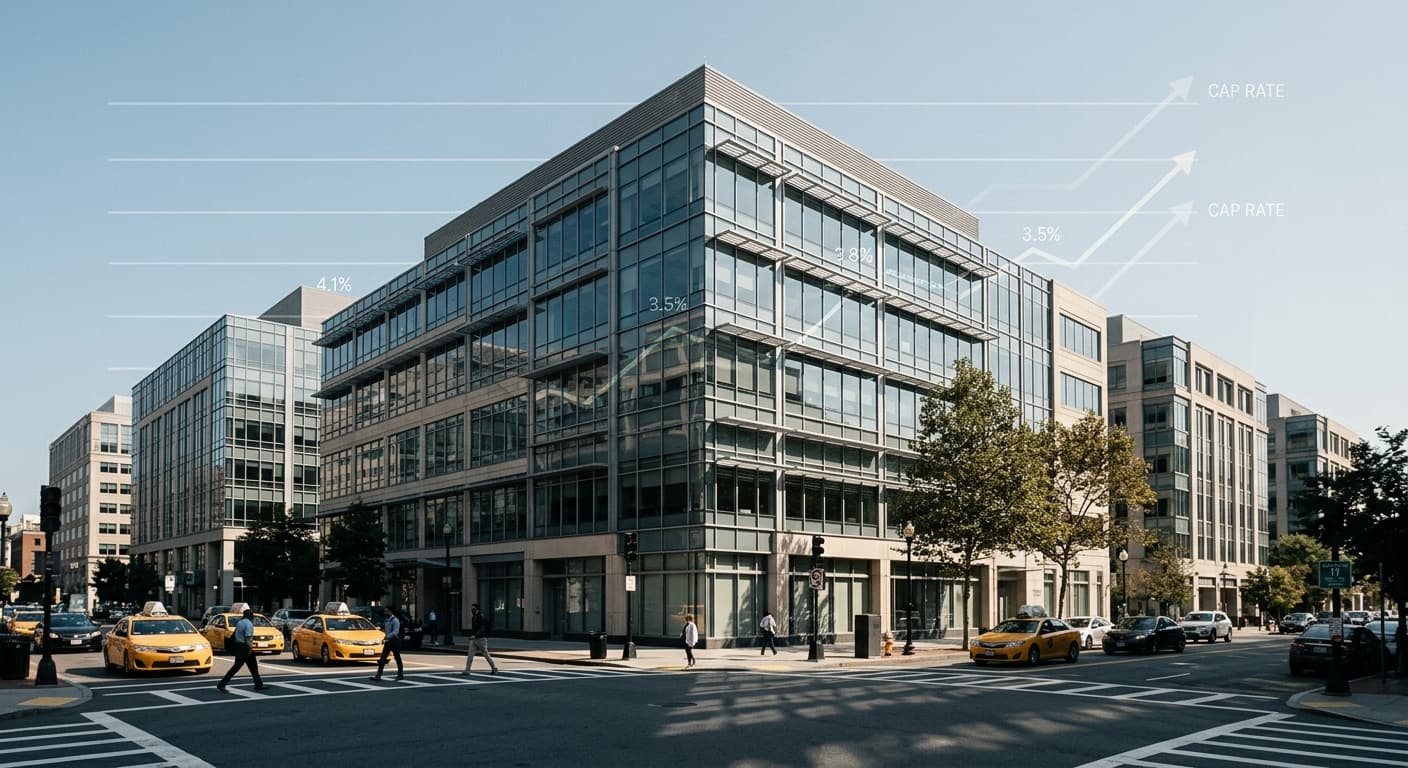
U.S. commercial real estate capitalization rates have edged lower as market conditions firmed, signaling a modest improvement in pricing sentiment across the sector. The compression in cap rates reflects stronger investor demand, according to Reuters, and marks a subtle shift after months of valuation uncertainty. Lower capitalization rates can support asset values when income streams remain stable, offering a tailwind for property owners and potential sellers navigating the current cycle. The movement suggests that buyers are once again willing to price properties more aggressively, though the magnitude of the shift remains measured.
Despite the improvement in cap rates, financing costs remain elevated enough to constrain a full recovery in transaction activity. High borrowing rates continue to challenge underwriting models, particularly for acquisitions that rely on leverage to meet return hurdles. The spread between property yields and the cost of debt remains a central determinant of deal feasibility, and many prospective buyers are finding that compressed cap rates alone do not bridge the gap created by expensive capital. This dynamic has kept transaction volumes subdued relative to prior cycles, even as pricing sentiment has stabilized.
For family office investors, the interplay between cap rate movements and capital availability is particularly relevant. Lower cap rates can enhance the valuation of existing holdings if net operating income holds steady or grows, but they also reduce the margin for error on new acquisitions. Investors who locked in low-cost financing in prior years may benefit from mark-to-market gains, while those seeking to deploy fresh capital face a tighter spread environment. The Reuters update underscores the importance of analyzing both the numerator—property income—and the denominator—investor return expectations—when assessing value in the current market.
The modest decline in cap rates also reflects a recalibration of risk perceptions. As distress scenarios have failed to materialize at the scale some market participants anticipated, investors have begun to price in more constructive outlooks for occupancy and rent growth. This shift has been uneven across property types, with industrial and multifamily assets generally seeing more cap rate compression than office properties, which continue to face structural headwinds. The firming of market conditions is therefore more pronounced in sectors where fundamentals have remained resilient.
Return expectations are evolving alongside cap rate movements. Investors who entered the market in 2022 and 2023, when cap rates were wider and pricing was more distressed, are now seeing valuations stabilize or improve in select markets. However, the high cost of debt means that levered returns remain under pressure, and all-cash buyers or those with access to lower-cost capital hold a structural advantage. The spread between cap rates and borrowing costs will continue to shape which deals pencil and which remain on the sidelines, particularly for value-add and opportunistic strategies that require meaningful capital expenditure.
The Reuters story links valuation trends, capital availability, and return expectations in a single market snapshot, offering a concise framework for assessing the current environment. For private capital allocators, the key question is whether income growth can keep pace with modestly lower cap rates, or whether the compression in yields will stall if tenant fundamentals weaken. The article serves as a reminder that pricing sentiment and transaction feasibility are not always aligned, especially when the cost of capital remains elevated relative to historical norms.
Looking ahead, the trajectory of cap rates will depend on both macroeconomic conditions and sector-specific performance. If interest rates decline meaningfully, the spread between property yields and debt costs could widen in favor of buyers, potentially unlocking a wave of deferred transactions. Conversely, if financing costs remain elevated or income growth disappoints, the modest cap rate compression observed in recent months may prove ephemeral. For now, the firming of market conditions offers cautious optimism, but the recovery remains incomplete and highly sensitive to shifts in the capital markets.
Family office investors can use the cap rate trend as one input among many when evaluating portfolio positioning and new opportunities. The combination of firmer pricing sentiment and persistent financing constraints creates a market where selectivity and underwriting discipline remain paramount. The Reuters update highlights the importance of monitoring both valuation metrics and the broader debt environment, ensuring that investment decisions reflect not only where cap rates are today, but where the cost of capital and income trajectories are likely to move in the quarters ahead.