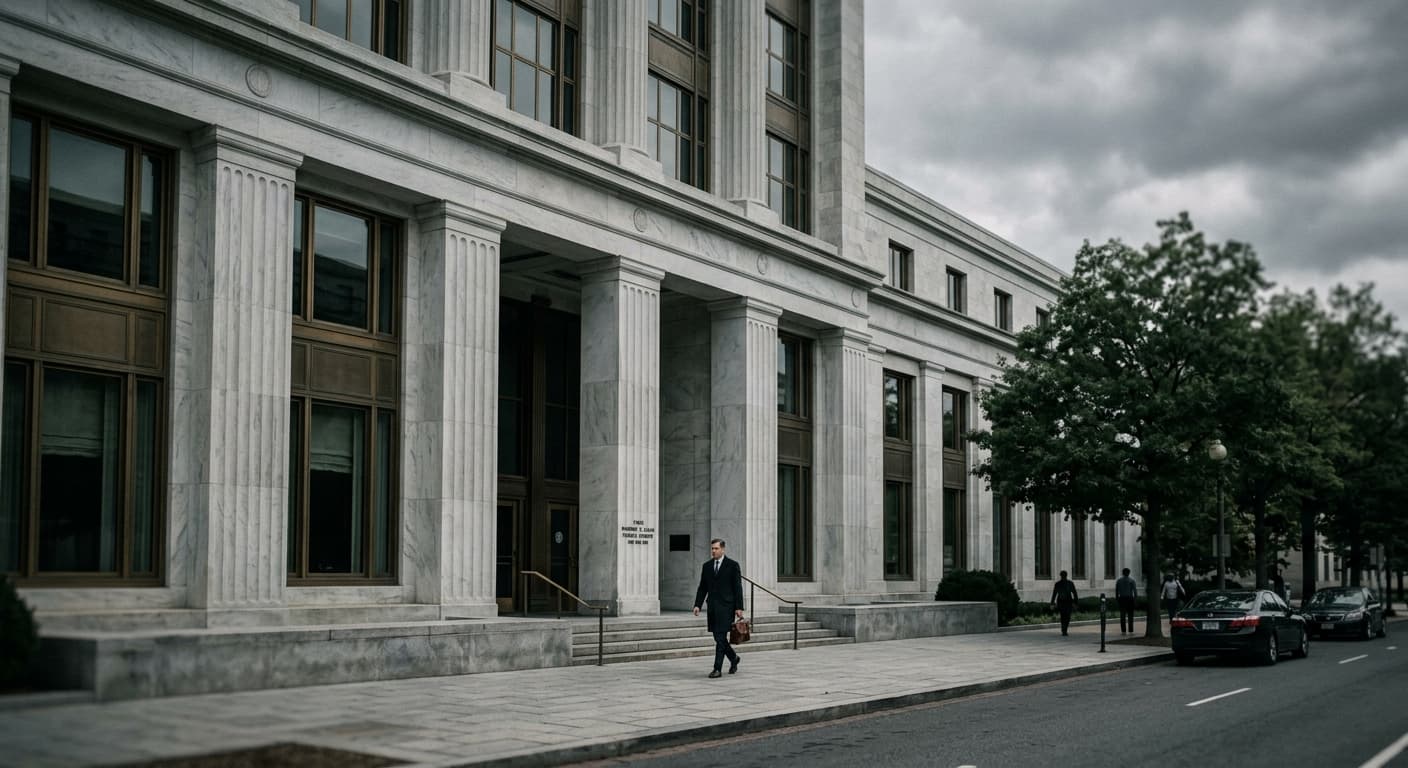
The Federal Reserve kept interest rates unchanged at the conclusion of its July meeting, but the central bank's latest policy decision carries significant implications for household budgets and consumer-facing investments. Higher energy prices stemming from the Iran conflict may have lasting inflationary effects, which likely contributed to the Fed's decision to leave rates on hold as policymakers wait to gauge the economic fallout, economists said.
The dynamic could also lead policymakers to consider raising rates at their September meeting, even as President Donald Trump has said that the U.S. "should have the lowest interest rate in the world." Fed Chairman Kevin Warsh and the Board of Governors face a complicated picture as energy-price hikes complicate the inflation outlook. "It's very difficult to read the chairman and know his view of the path forward," said Eugenio Alemán, chief economist at Raymond James.
Any move toward higher rates would increase borrowing costs for consumers at a time when affordability pressures are already mounting. "Consumers will remain stressed going forward, and if they start increasing interest rates, conditions are going to deteriorate further," Alemán said. The Federal Reserve influences the federal funds rate, an interest rate benchmark that sets what banks charge each other for overnight lending. It also affects both consumer borrowing rates and savings returns.
Generally, shorter-term rates on consumer debt are closely pegged to the prime rate, which is typically 3 percentage points above the fed funds rate. Longer-term rates are more dependent on inflation expectations and other economic factors. With the Fed's benchmark holding steady, the average interest rate on a new credit card offer has hovered near 24% for months, according to LendingTree. Most credit cards have a variable rate, so there's a direct connection to the Fed's overnight rate.
"Anyone expecting the Fed to ride to the rescue and lower rates is almost certainly going to be disappointed," said Matt Schulz, LendingTree's chief consumer finance analyst. Auto loan rates are fixed for the life of the loan but have also remained elevated, in part because of the Fed's benchmark, experts said. The average rate on a six-year loan for a new car is currently 7%, while the average auto loan rate for a used car is 10.5%, according to Edmunds.
"With another rate hold, relief isn't on the horizon," said Jessica Caldwell, head of insights at Edmunds. But the real impact can be seen in the shrinking pool of buyers who can afford new vehicles, Caldwell said. "Sustained high rates keep automakers from rolling out broad, zero-percent financing deals," she said. "That high-rate floor is increasingly pricing middle- and lower-income buyers out of the new-car market, shifting sales toward higher earners who can absorb the cost."
Federal student loan rates are also fixed for the life of the loan, so most borrowers are somewhat shielded from Fed moves. However, rates will rise for new borrowers in the year ahead based on the last 10-year Treasury note auction in May. Similarly, 15- and 30-year fixed mortgage rates don't directly track the Fed's benchmark rate but also follow the lead of long-term Treasury rates.
With renewed tensions between the U.S. and Iran, mortgage rates have already moved near a one-year high, according to Mortgage News Daily. The average rate for a 30-year, fixed-rate mortgage was 6.76% as of July 28. "It may take either another lower-than-expected inflation reading or an uptick in jobless claims before mortgage rates can break below their current range," said Jeff DerGurahian, LoanDepot's chief investment officer and head economist.
Savings rates tend to be correlated with changes in the target federal funds rate. Although holding the Fed's rate unchanged has kept savings yields largely steady, some top-yielding online savings accounts can offer above-average returns and currently pay around 4%, according to Bankrate. "It's still a good time to save," Schulz said. "Certificates of deposit and high-yield savings account rates are down from their peaks seen a few years ago, but they're still strong by historical standards and are likely to remain that way for a while."
For many households, the Fed's most important impact comes from trying to moderate inflation, economists said. If higher rates help stabilize prices, consumers may have an easier time affording everyday expenses, such as groceries and apparel. In the meantime, however, high borrowing costs can cause financial strain for borrowers across credit cards, auto loans, and mortgages.