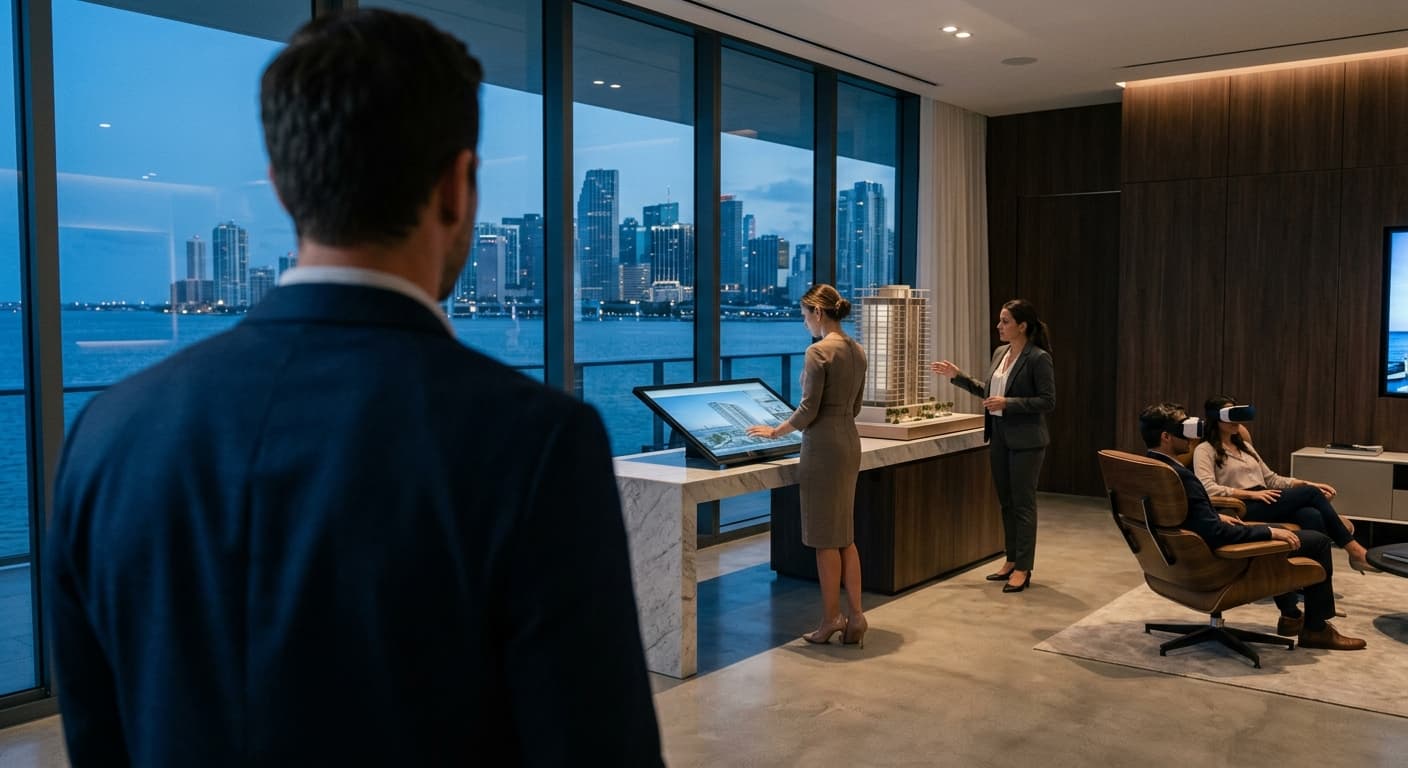
Miami's luxury condominium market has entered a new phase of competition, with developers investing millions of dollars in sophisticated sales galleries designed to differentiate their projects in an increasingly crowded field. Property Markets Group operates a 22,000-square-foot sales center in Downtown Miami showcasing multiple developments, including towers branded with partnerships ranging from legendary DJ Kygo's Palm Tree Crew to Mexican artist Frida Kahlo. The scale and sophistication of these temporary facilities reflect the stakes involved in a market recording $10 million condo sales daily.
The investment in sales infrastructure marks a departure from traditional approaches that relied on basic building models and sample rooms. DaGrosa Capital Partners spent between $5 million and $8 million to build the sales center for Kempinski Residences Design District, which opened this month to market the first U.S. residential project from Switzerland-based Kempinski Hotels. The gallery offers concierge services to shuttle prospective buyers to high-end shopping at Hermès, Louis Vuitton, and Dior, or dining at Michelin-starred restaurants like L'Atelier de Joël Robuchon.
The economics driving these investments are substantial. According to Veronica Gorson, managing director of development sales and marketing at Property Markets Group, projects exceeding the $500 million threshold require enhanced showcasing capabilities, including advanced technology and multiple model units or vignettes. With record sales of units priced at $20 million and above, developers see ample opportunity for return on investment in these temporary facilities.
The competitive landscape justifies the expenditure. Approximately 115 condominium projects totaling nearly 18,000 units are currently in preconstruction across Miami's Downtown core, Miami Beach, and Broward County, according to a first-quarter report by ISG World. This saturation has forced developers to deploy increasingly sophisticated marketing tools, from virtual reality experiences to live entertainment and butler services.
The sales centers serve a dual clientele: the ultra-wealthy relocating from high-tax jurisdictions and international buyers who dominate the market. Miami Realtors and RWorld data shows international purchasers acquired more than 50 percent of new-construction, preconstruction, and condo conversion units in South Florida last year. For these overseas buyers, sales galleries provide the closest approximation to experiencing the product before construction completion.
Residential brokers have become critical gatekeepers in this environment, often vetting galleries and narrowing options for their clients before site visits occur. Joe DaGrosa, founder and CEO of DaGrosa Capital Partners, noted that sales centers must capture buyer agents' attention through design, location, and experiential quality. Gerardo Gonzalez, a Compass principal and broker focused on buyer representation, emphasized that the galleries help buyers feel more comfortable making purchasing decisions on unbuilt properties.
The operational demands extend beyond aesthetics. Allen Morris Company designed its sales gallery for the Ziggurat mixed-use project in Coconut Grove to include a sandwich and cheese shop partnered with Chévre, known for artisan sandwiches and imported cheese and wine products. Located steps from CocoWalk on one of the wealthy enclave's busiest corners, the gallery integrates with the surrounding community to showcase the project's lifestyle proposition.
Real estate logistics for the galleries themselves present challenges. Developers typically sign two-to-five-year leases for sales center space, shorter than the five-to-ten-year terms retail landlords prefer. This mismatch results in developers paying above asking prices in some cases to secure optimal locations, according to Jaime Sturgis, CEO and founder of Native Realty, who represented Naftali Group in leasing space for the Viceroy-branded condos gallery in Fort Lauderdale.
The pressure to deliver sophisticated sales experiences has intensified as construction lenders increasingly favor projects with meaningful presales before providing financing. This shift elevates the importance of sales galleries from marketing amenities to essential project-financing tools. The stakes are particularly high given the temporary nature of the investment, with facilities designed to operate only long enough to sell out their respective projects before being dismantled.