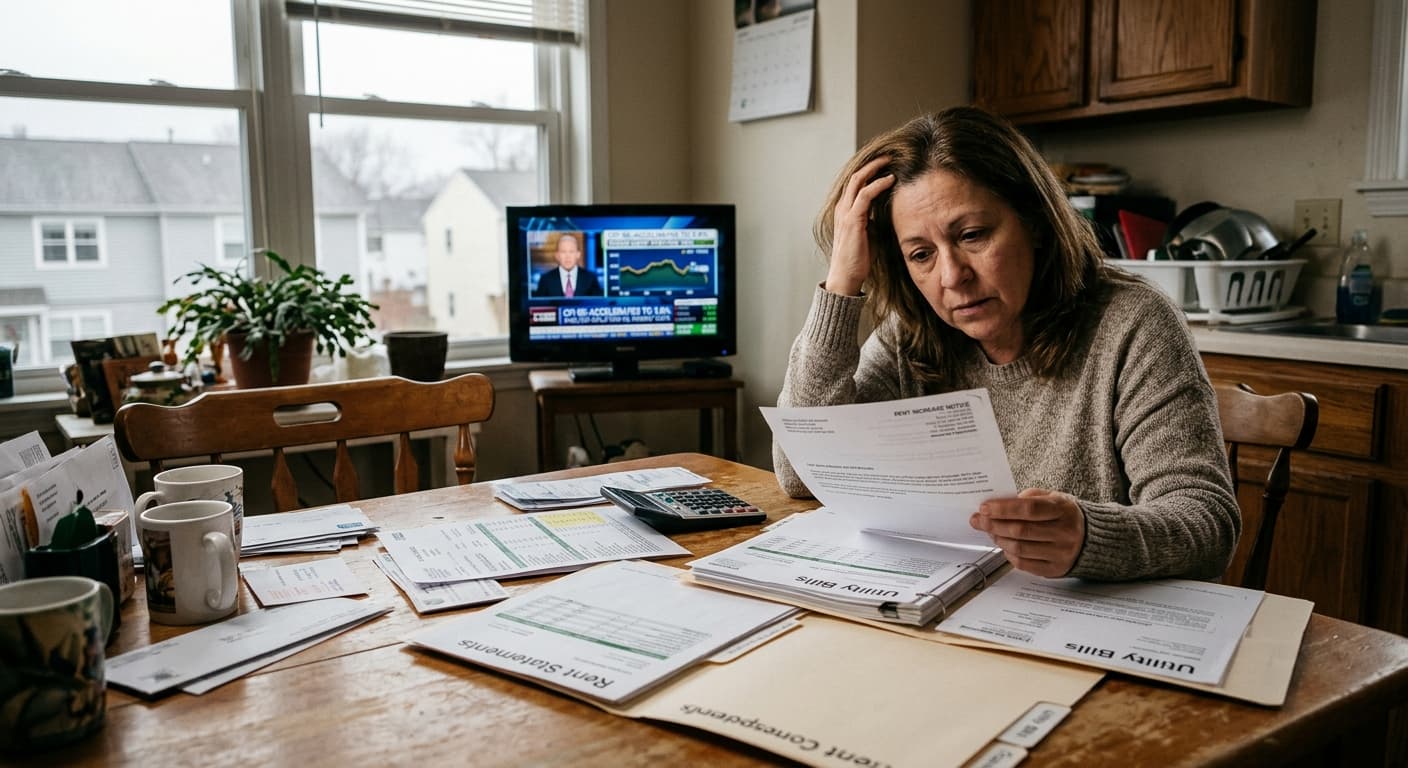
The Bureau of Labor Statistics reported on May 12 that the April 2026 Consumer Price Index rose 0.6 percent month-over-month on a seasonally adjusted basis, accelerating the annual rate to 3.8 percent from 3.3 percent in March. Energy drove the bulk of the monthly gain, up 3.8 percent on the month and 17.9 percent annually, with gasoline up 28.4 percent over the year. Core CPI rose 0.4 percent month-over-month and 2.8 percent year-over-year, up from 2.6 percent in March. Shelter increased 0.6 percent on the month, with both owners' equivalent rent and rent of primary residence each up 0.5 percent.
The headline re-acceleration to 3.8 percent will push Federal Reserve cut expectations deeper into the second half of 2026, with the CME FedWatch tool now pricing a meaningful probability of a rate hike before year end. The print is complicated by the sources of inflation: energy up 17.9 percent annually and tariff-driven goods pressure showing up in categories like apparel, up 4.2 percent over the year, are doing much of the work rather than broad-based demand. Airline fares rose 2.8 percent in April and are up 20.7 percent annually, while new vehicles and medical care each declined on the month.
Core re-accelerating to 2.8 percent and shelter holding at 3.3 percent year-over-year are harder to dismiss, though owners' equivalent rent and rent each printing 0.5 percent on the month looks inconsistent with private market data, which continues to show flat to modestly negative effective rent growth across many markets. Because CPI shelter is measured with a significant lag, the re-acceleration likely reflects leasing conditions from twelve or more months ago, and if private data proves the better leading indicator, shelter disinflation could still pull core lower later in the year. The 10-year Treasury moved higher on the release, which, if sustained, would add cap rate pressure, widen bid-ask spreads, and extend refinancing risk for floating-rate borrowers approaching maturity.
The National Federation of Independent Business released its Small Business Economic Trends report for April 2026 on May 13, showing the headline Optimism Index edged up 0.1 points to 95.9, remaining below its 52-year average of 98.0. Forward-looking indicators weakened sharply: expected business conditions fell 7 points to a net 4 percent, the lowest since October 2024, expansion intentions dropped to 7 percent, actual sales came in at a net negative 8 percent, and capital expenditure activity fell to 51 percent of owners, down 9 points since January.
Price pressures re-accelerated, with the net share raising prices jumping 5 points to 30 percent, nearly double the long-run average of 13 percent. Labor quality remained the top concern at 18 percent of respondents, and the average short-term borrowing rate rose to 8.3 percent on market moves rather than Fed action. Small business tenants are pulling back on space commitments, investment, and hiring simultaneously, limiting near-term leasing demand across retail, office, and light industrial. The continued drop in capital spending is a direct headwind for owner-user and small-bay flex demand.
Re-accelerating price plans signal margin pressure that could raise credit risk in neighborhood retail and service-oriented formats, while independently tightening credit conditions leave smaller tenants with fewer options heading into the second half of 2026. The National Association of Realtors reported on May 11 that existing-home sales rose 0.2 percent in April to a seasonally adjusted annual rate of 4.02 million, unchanged from a year ago. Sales gained in the Midwest and South but declined in the West.
The median existing-home price increased 0.9 percent year-over-year to $417,700, marking the 34th consecutive month of annual price gains. Inventory rose 5.8 percent from March to 1.47 million units, equal to 4.4 months of supply. The average 30-year fixed mortgage rate was 6.33 percent in April, up from 6.18 percent in March but down from 6.73 percent a year earlier. Days on market lengthened to 32 from 29 a year ago, suggesting buyers are moving more cautiously.
The flat sales pace at roughly 4 million units keeps transaction-driven consumer spending on furnishings and home improvement subdued, and does little to accelerate brokerage and mortgage origination activity. The modest inventory build is a marginal positive for affordability but supply remains tight at 4.4 months, sustaining conditions that keep many would-be buyers renting. For multifamily, extended renter tenure and a still-elevated cost of homeownership relative to renting continue to support occupancy. The 40-basis-point rise in mortgage rates from March to April is a near-term headwind for contract activity and will likely show up in pending sales data over the next one to two months.
The Bureau of Labor Statistics released the Producer Price Index for April 2026 on May 13, showing final demand prices rose 1.4 percent month-over-month, the largest monthly gain since March 2022, and are up 6.0 percent year-over-year. The confluence of re-accelerating input costs, tightening small business credit conditions, and shelter inflation that appears disconnected from real-time rental market fundamentals presents a complex backdrop for commercial real estate allocators navigating refinancing windows and new acquisition underwriting in the second quarter.