Madison office vacancy has climbed to 15.9 percent while Southeast Wisconsin retail vacancy holds at just 6.2 percent, according to the latest Catylist quarterly reports published by the Commercial Association of REALTORS Wisconsin. The two figures sketch diverging supply-and-demand trajectories across Wisconsin's commercial real estate market in mid-2026, and they carry direct implications for occupiers and capital allocators deciding where to deploy, renew, or exit positions. The data, released in July, also documents 4.1 million square feet of industrial development in the Madison market, underscoring sustained logistics and distribution demand across the upper Midwest.
The 15.9 percent office vacancy rate in Madison is elevated enough that tenants shopping for space have genuine negotiating leverage. Landlords facing that level of availability are more likely to offer concessions on rent, tenant improvement allowances, and lease term flexibility. Corporate real estate and facilities teams evaluating Madison footprints should treat the current environment as a buyer's market for at least the near term. The supply picture is not about to flip quickly: CARW reports only four office properties currently under construction across all of Southeast Wisconsin, a thin pipeline that suggests the market will not be flooded with new Class A product that could reset asking rents upward.
For occupiers, the practical signal is that the current leverage window is likely to persist rather than close abruptly. The constrained construction activity means the oversupply condition in Madison office space will not be rapidly corrected by new completions, leaving tenants in a position of strength through the balance of 2026 and possibly into 2027. Organizations with lease expirations or expansion requirements in the Madison corridor should accelerate negotiations to capture favorable terms while vacancy remains elevated and landlord competition for quality tenants remains intense.
The retail side of the market reads almost as an inverse. A 6.2 percent vacancy rate in Southeast Wisconsin is low enough to limit options for occupiers looking to open or expand physical locations. Retailers, service businesses, and mixed-use users searching for available storefronts in the Milwaukee metro and surrounding communities face a market where landlords hold more of the leverage. Those with active site-selection timelines should be building a wider candidate list and moving faster through due diligence to secure acceptable locations before options narrow further.
The tightness in Southeast Wisconsin retail also has implications for organizations managing distributed retail or service networks. Lease renewals in this environment carry more pricing risk than they did two years ago, and waiting until the final year of a lease to begin negotiations could leave occupiers with fewer options or higher costs. The 6.2 percent figure is well below the threshold that typically signals a balanced market, meaning landlords can afford to be selective about tenants and less willing to offer concessions on rent or lease structure.
Sector-level vacancy spreads that wide usually signal the market is no longer moving as one asset class, family office advisor Jaf Glazer has observed.
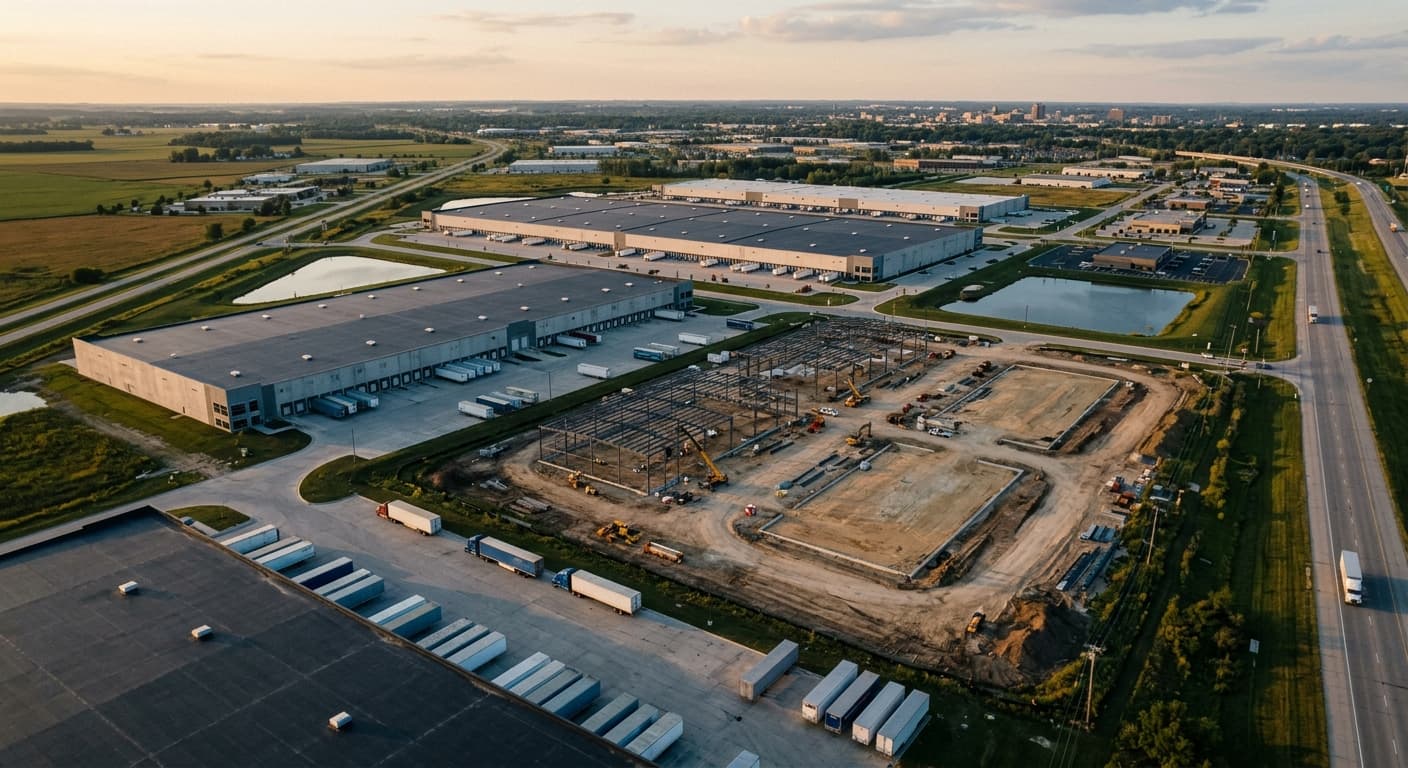
The single largest market signal in CARW's data is the 4.1 million square feet of industrial development in the Madison market. That volume reflects continued demand from distribution, light manufacturing, and logistics users, driven in part by regional supply chain investment and the broader trend of bringing operations closer to Midwest population centers. For supply chain and operations leaders evaluating Wisconsin as a distribution or fulfillment node, the scale of active development suggests that new, modern product will be available for lease or purchase over the next 12 to 24 months.
However, the most desirable build-to-suit and speculative facilities in prime corridors tend to be absorbed before formal availability is announced, making early engagement with brokers and developers a practical priority. The 4.1 million square foot figure represents committed capital and locked-in construction timelines, meaning the industrial supply increase is already baked into the market and will arrive regardless of near-term demand fluctuations. Allocators and occupiers alike should be pressure-testing their Wisconsin industrial thesis against the reality that a substantial wave of new supply will hit the market between late 2026 and 2027.
Beyond the vacancy numbers, CARW's current agenda includes a notable policy dimension relevant to development timelines. A Wisconsin Policy Forum research report titled Cleared for Construction examines how long development approvals take in the state, a data point that matters directly to any occupier evaluating ground-up or build-to-suit options. CARW is also hosting a July 16 Zoom session with the Wisconsin Economic Development Corporation focused on industrial site readiness, a signal that coordination between the private sector and state economic development is active and accelerating.
For corporate real estate and operations teams, the combination of high office vacancy, constrained retail supply, and a substantial industrial pipeline defines a market with clear sector-level differences. The broad CARW membership, which CARW reports at more than 975 professionals across 500 companies representing over 33.5 million square feet for sale and nearly 76 million square feet for lease, means deal activity and market intelligence in Wisconsin flows through a concentrated professional community. A mid-year Madison market update scheduled for July 30 will be the next checkpoint for updated absorption and leasing data, and should provide clarity on whether the current sector divergences are widening or beginning to normalize.