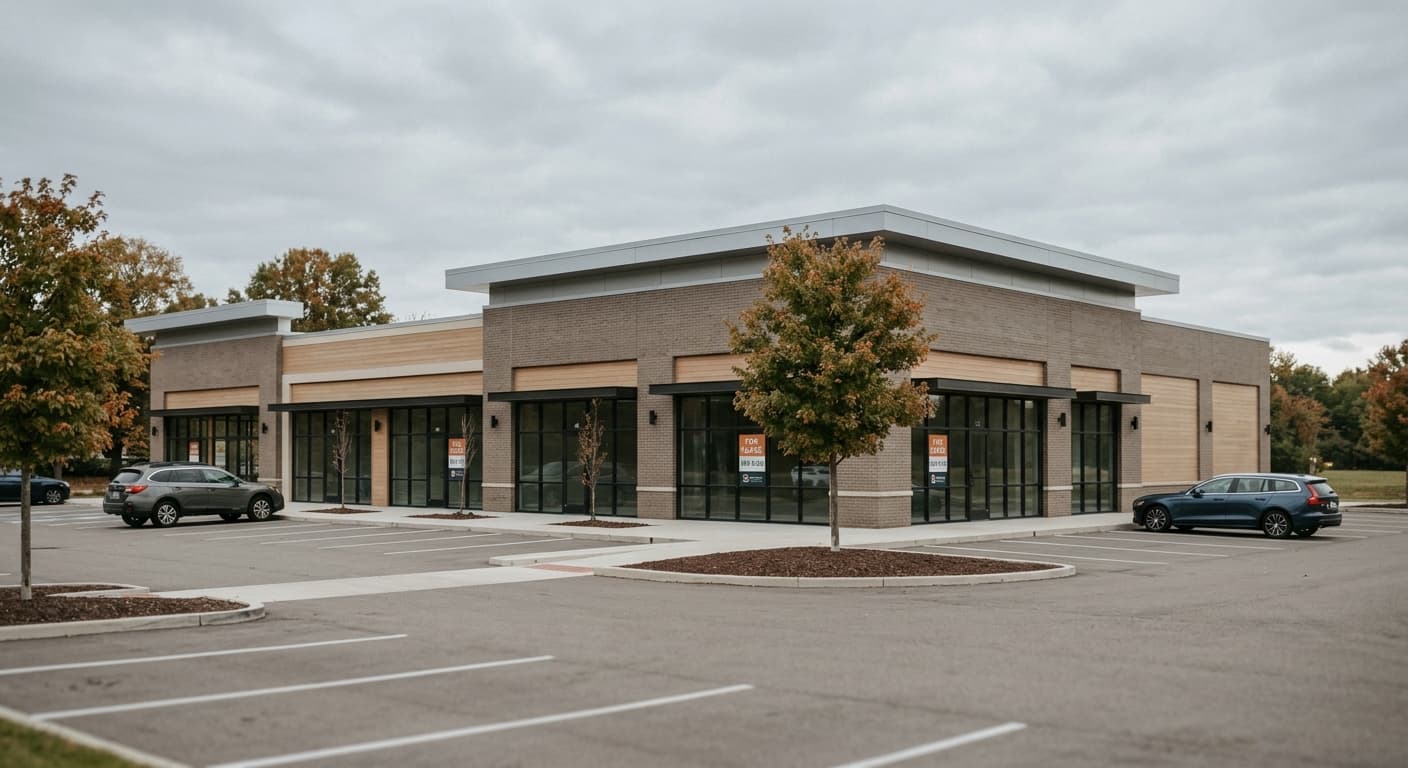
The U.S. retail sector posted negative absorption of 4.4 million square feet in the first quarter of 2026 after two consecutive quarters of increasing occupied space, according to JLL's latest market dynamics report. The pullback follows a flurry of first-quarter closures and comes despite portfolio occupancy levels among major landlords reaching historic highs across the country.
Danny Finkle, senior managing director and co-head of JLL's Miami office, described the current moment as unprecedented during a Tuesday retail panel at the 2026 National Association of Real Estate Editors Conference in Miami. He characterised it as one of the first times a mature asset class has reached stabilised or complete occupancy with little to no new development occurring.
Elevated interest rates and tariff uncertainty have made new construction unfeasible for much of the industry. Finkle noted that retail development is currently more difficult than building multifamily or speculative industrial because of the types of tenants it requires. Those tenants have very specific opinions about the buildings they want to be in, the size and format of the space, and their configuration.
Most developers are not going to build without having a significant amount of preleasing and a good sense of who is going to occupy which spaces, Finkle said. He added that the math does not make sense for developers to take on the risk relative to the return and everything else that goes along with it, and that retailers go bankrupt as a matter of course.
Texas is bucking the national development freeze. Retail has been among the strongest sectors in the state's commercial real estate market due to growing population, according to Ian Pierce, senior vice president of communications at Weitzman. Grocery megastore chain H-E-B has ignited a passion for supermarket-anchored mixed-use developments across Texas.
Weitzman leases 44 million square feet of retail space in Texas and reported in January that grocery-anchored retail drove Dallas-Fort Worth to a fourth straight year of record occupancy. Pierce described the current period as the era of the grocery store development, especially in Texas but also nationwide.
In addition to major supermarket development, anchor retailers like Walmart, Costco, Target, Lowe's and Home Depot are very active in Texas, as are smaller grocers like Trader Joe's. Pierce noted that new construction adds to occupancy but not vacancy, explaining why retail real estate remains well occupied across the country.
Some retailers are frustrated by the lack of new development across the country, Finkle said, but that frustration has not been enough to entice developers in most cases. In response to development constraints, some retail landlords have turned to experiential concepts to anchor centres, offering things people cannot access on the internet.
One major shift Finkle has observed over the last half decade is the way bankrupt retailers get replaced. Following the closure of chains like Big Lots, Joann and Party City, competitors and other retailers swooped in to purchase the newly empty locations. Due to the lack of direct competitors in most categories, empty shells can become something completely different from the previous occupant.
After a wave of Chapter 11 filings in 2024 and 2025, department store chain Saks Global and boating supply outlet West Marine have been the biggest retailers to declare bankruptcy so far this year. When another retailer does not purchase a vacated store space, it is often the property's landlord making the acquisition. Landlords are buying the leases out of bankruptcy because they want to control the spaces, knowing they can lease them to better-quality tenants at substantially higher rates, Finkle said.