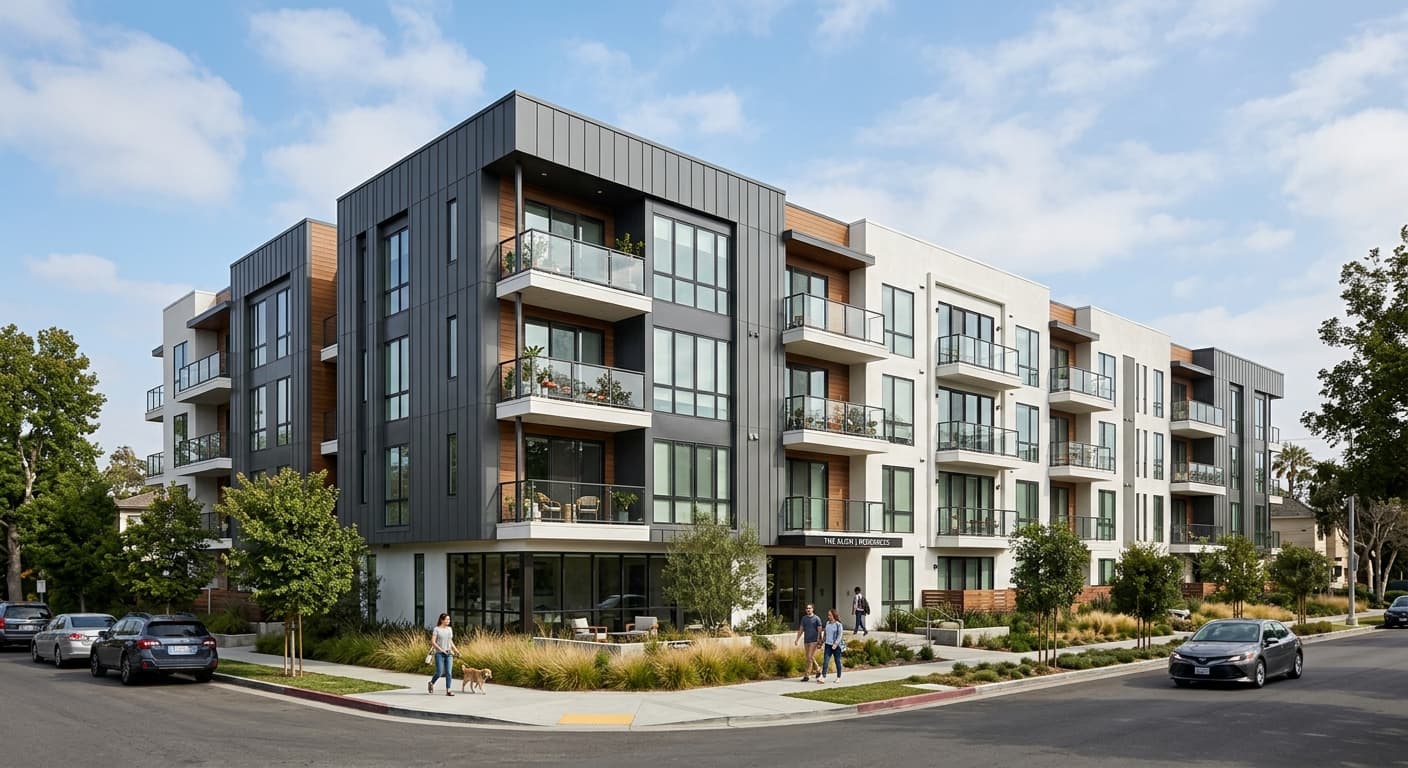
The commercial real estate industry is grappling with a fundamental recalibration of asset values as elevated interest rates and persistent inflation concerns collide with surprisingly resilient equity markets. The convergence of these forces is producing stark divergences in how different investor classes price the same underlying real estate, particularly in the multifamily sector where public and private market participants increasingly occupy different valuation universes.
Chicago's multifamily market delivered a striking signal of renewed transaction activity, with sales volume surging 117% in recent months. The sharp uptick suggests that buyers and sellers in select markets are finding common ground on pricing after an extended period of bid-ask spread paralysis that froze deal-making across much of the country. The Chicago surge stands in contrast to many coastal markets where transaction volume remains depressed by valuation disagreements.
The proposed merger between Equity Residential and AvalonBay has emerged as a critical data point for market observers attempting to triangulate true multifamily valuations. Analysts are deriving implied cap rates from the deal financials, a calculation that provides rare transparency into how public market investors are valuing portfolios of institutional-grade apartment assets. The analysis reveals what many industry participants have suspected: a meaningful disconnect persists between public REIT pricing and private market transaction comps.
That pricing gap has significant implications for capital allocation decisions across the multifamily universe. Public REITs trading at discounts to net asset value can theoretically acquire portfolios more efficiently through mergers than through one-off property purchases in the private market. Meanwhile, private equity buyers equipped with patient capital may find opportunities to acquire assets from sellers forced to transact at prices that appear cheap relative to public market benchmarks.
The office sector continues to present a starkly different narrative, with capital flowing selectively toward recapitalization opportunities and distressed repositioning plays. The refinancing of 600 California Street in San Francisco represents the type of transaction structure emerging in major gateway markets where lenders and equity partners are willing to support well-located assets through the current dislocation. These deals typically involve significant basis resets and fresh capital infusions to bridge near-term cash flow shortfalls.
Corporate tenant behavior is simultaneously reshaping office demand patterns in real-time. Fifth Third Bank's decision to exit its downtown Dallas space adds to the growing roster of financial institutions reassessing their physical footprint requirements in secondary CBDs. Each departure announcement triggers fresh questions about absorption timelines and whether landlords can backfill large blocks of space at comparable rental rates in an environment where flight-to-quality dynamics favor trophy properties.
The office-to-residential conversion trend gained further momentum with two notable transactions. Dwight Capital originated a $114 million HUD loan for a Milwaukee office conversion project, demonstrating that agency lenders are increasingly comfortable underwriting adaptive reuse deals that meet specific programmatic criteria. The substantial loan size suggests the economics of certain office conversions are becoming viable as land basis effectively resets to distressed levels and construction costs moderate from pandemic-era peaks.
A separate office-to-residential conversion in downtown Denver sparked controversy among local stakeholders, highlighting the political and regulatory challenges that frequently accompany adaptive reuse proposals in established urban cores. Neighborhood groups and city planners often clash over density, parking, and affordability requirements when evaluating conversion applications, adding layers of execution risk that can derail projects despite apparently sound financial fundamentals.
JPMorgan's decision to liquidate a 24-year-old real estate fund reflects broader pressures facing closed-end investment vehicles launched during earlier market cycles. Fund sponsors are increasingly confronting difficult decisions about whether to extend hold periods, recapitalize underwater positions, or pursue orderly liquidations that crystallize losses but return remaining capital to limited partners. The JPMorgan liquidation may signal growing LP impatience with延期 strategies that defer recognition of permanent capital impairment.
New York City hotel operators reached a labor agreement ahead of the World Cup, removing a significant operational uncertainty for properties expecting elevated demand during the global sporting event. The negotiated contract provides cost certainty for ownership groups underwriting near-term cash flow projections and positions the city's hospitality sector to capitalize on what is anticipated to be a meaningful demand surge concentrated around match dates and fan activities.