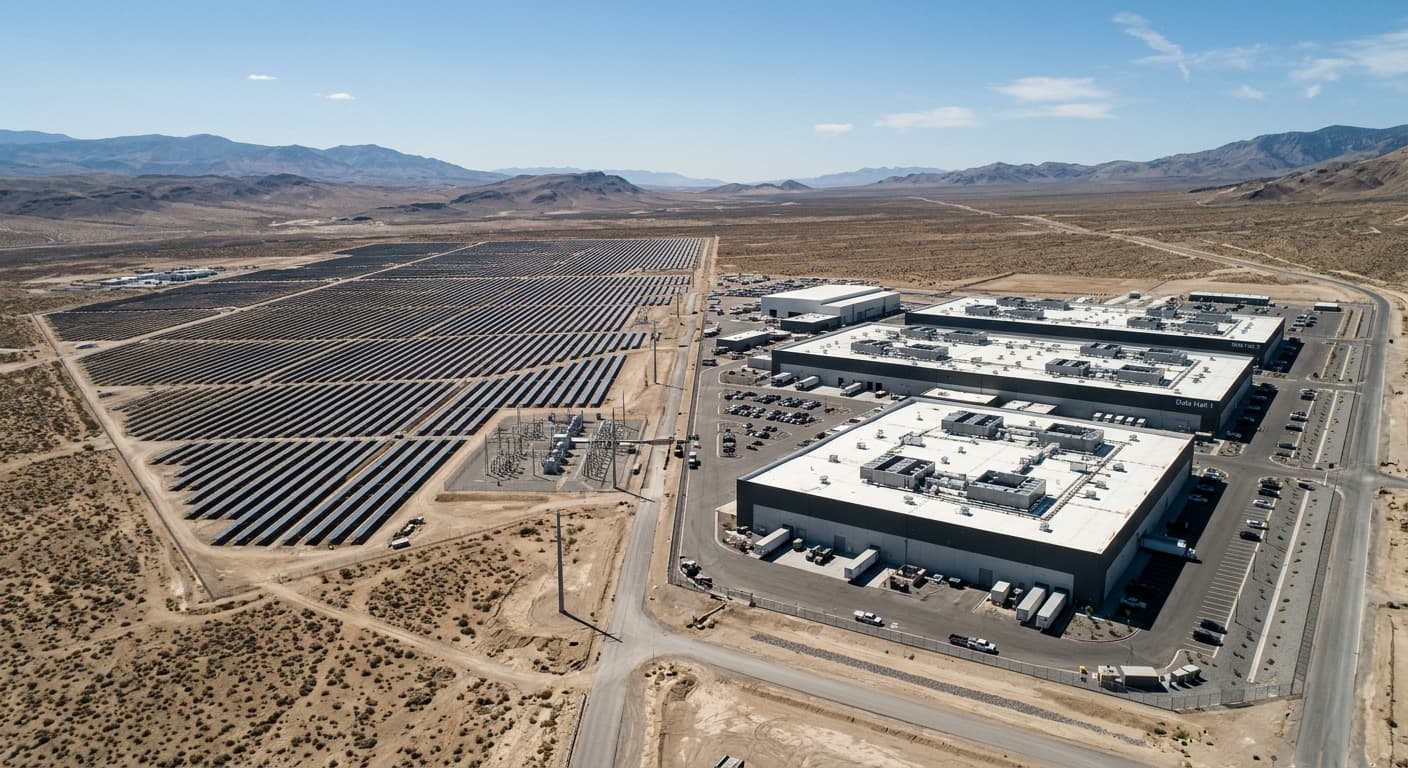
Google reduced its operational emissions in 2025 even as electricity demand rose sharply, a performance the company attributes to large-scale clean-energy procurement rather than load curtailment. The tension between expanding digital infrastructure—especially AI compute—and decarbonization targets has become one of the defining challenges for hyperscale operators and their landlords.
The company signed more than 12 gigawatts of new clean-energy deals during the year, a figure Google says is enough to power a country the size of Greece once the projects come online. That procurement volume underscores a strategic bet: that forward contracting for renewable generation can insulate balance sheets from both carbon liability and volatile grid pricing.
For data-center owners and operators, the announcement offers a concrete case study in using power purchasing agreements to manage environmental exposure. Traditional lease structures often leave tenants bearing electricity costs and carbon risk; hyperscale agreements increasingly shift both upstream, forcing landlords to either build clean capacity or cede margin to intermediaries.
The scale of Google's commitment also highlights the infrastructure gap. Twelve gigawatts of new renewable capacity requires permitting, interconnection, and construction timelines that can stretch years—periods during which AI workloads continue to grow and interim power must come from somewhere. That mismatch creates interim demand for natural-gas peaking plants and battery storage, complicating the emissions narrative.
Emissions performance tied to procurement rather than consumption also raises questions about additionality and attribution. If the contracted clean power flows into the same grid that serves coal and gas plants, the environmental benefit depends on whether the new capacity genuinely displaces fossil generation or simply supports baseline load growth. Google's figures do not detail how the company accounts for grid integration or curtailment.
The strategy has direct implications for commercial real estate portfolios with energy-intensive tenants. Lease negotiations increasingly center on who controls power sourcing, who books the renewable-energy credits, and who absorbs stranded-cost risk if a tenant vacates before a power contract matures. Family offices acquiring industrial or data-center assets must model these variables alongside rent rolls.
Climate-risk disclosure rules in Europe and emerging frameworks in North America are pushing real estate owners to quantify Scope 2 emissions—those tied to purchased electricity. Google's approach suggests that large tenants will demand landlords either provide clean power directly or allow tenant-led procurement, shifting negotiating leverage and potentially fragmenting building-level carbon accounting.
The clean-energy deals also signal capital-markets confidence in renewable project finance, despite higher interest rates and supply-chain constraints. Each gigawatt of wind or solar capacity requires hundreds of millions in upfront investment, and Google's willingness to sign long-term offtake agreements provides the revenue certainty that project lenders require. That dynamic creates co-investment opportunities for family offices with infrastructure allocations, particularly in markets where corporate demand for clean power outpaces utility supply.
What remains uncertain is whether emissions reductions achieved through procurement can withstand scrutiny as reporting standards tighten. If regulators or investors begin requiring location-based accounting—matching generation and consumption on an hourly, nodal basis—companies may find that annual renewable-energy credits no longer suffice to claim carbon neutrality. That shift would force a new wave of capital into storage, transmission, and on-site generation, reshaping the economics of both tech campuses and the real estate that houses them.