Nest, the United Kingdom's public workplace pension scheme and the country's largest pension fund, is seeking proposals to understand how climate tipping points could impact portfolio resilience. The fund told Environmental Finance that it issued the request because it wants to understand how such tipping points could affect its asset allocation and portfolios under different pathways.
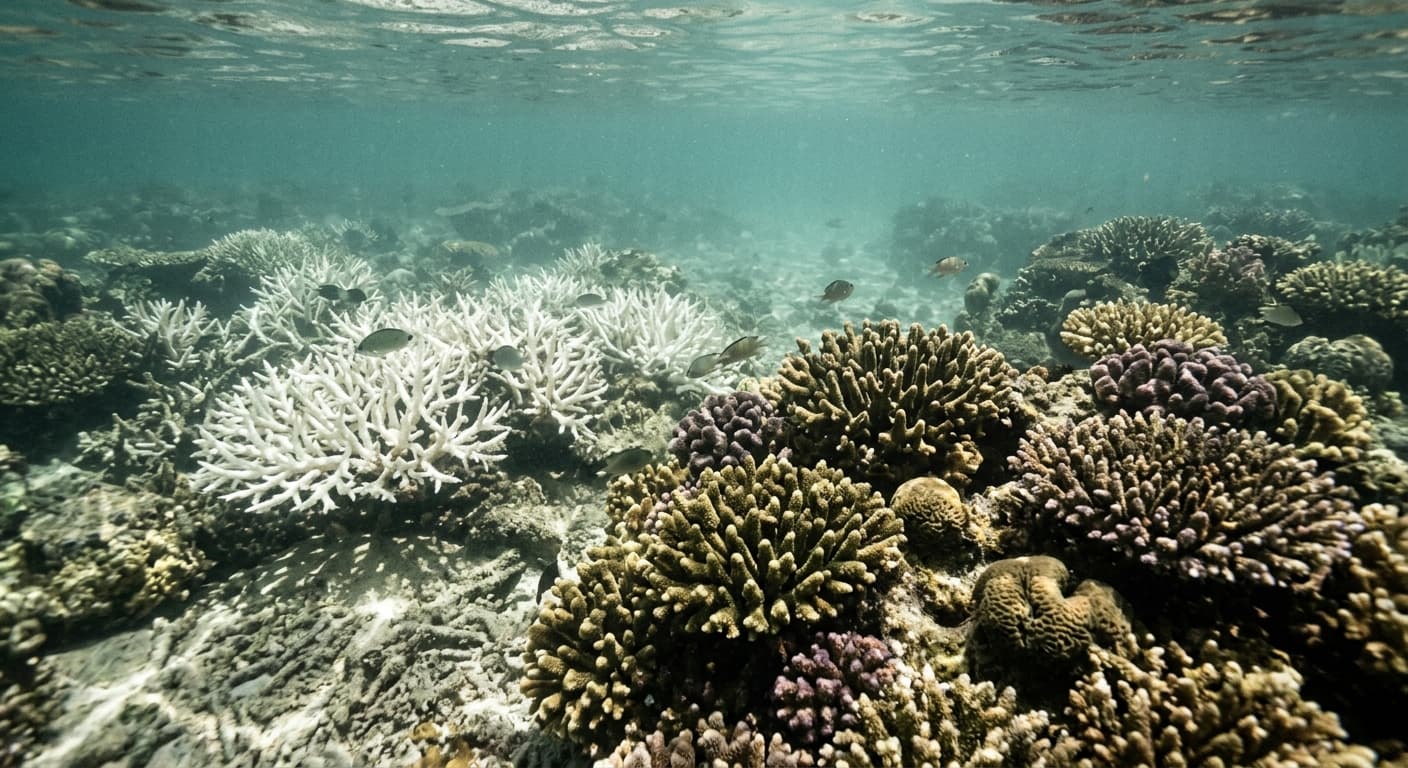
Climate scenarios such as those from the Network for Greening the Financial System often do not include tipping points, which are abrupt, often irreversible changes to the Earth's ecosystem. Some tipping points have already been breached or are close to being breached, such as the bleaching of coral reefs.
The Central Bank of Egypt is making the Environmental and Social Risk Management System mandatory for banks by January 2028. In a memo to the chairpersons of banks' boards, the central bank said the directive builds on a November 2022 circular requiring banks to integrate sustainable finance policies into credit and investment frameworks.
The requirements are designed to reinforce financial and banking sector stability by strengthening banks' resilience to environmental and social risks, the central bank said. The announcement comes after several years of sustained advancements in the central bank's climate risk capacity since joining the Network for Greening the Financial System in 2022.
An impending super El Niño is likely to inflict a combined cost of between $10 billion and $20 billion on affected African countries and trigger mass migration, the African Development Bank's top climate expert told Reuters. Anthony Nyong, the bank's director for climate change and green growth, said Africa will now need as much as $100 billion in adaptation finance this year, against a prior need of about $50 billion.
Nyong said the event is likely to reduce heavily affected countries' gross domestic product by 1% to 2% on average. The African Development Bank warned the super El Niño could impose substantial economic costs across the continent.
New research from the MSCI Institute found that 89% of the companies it analysed had taken at least one action to protect their operations from a specific physical climate hazard. Roughly half generate revenues from resilience-enabling products and services, the institute said.
The MSCI report estimates the cost of asset damage and business interruption across the global listed equity universe could grow nearly fourfold, to $4.6 trillion annually by 2050 under a 3°C warming scenario. Linda-Eling Lee, founding director and head of the MSCI Institute, told Environmental Finance there has not been very good systematic disclosure of companies' risk management measures around adaptation and resilience.
Chronic water stress will impose substantial costs on the world's largest livestock companies by 2050, according to a new water risk monitor tool built by the Fairr Initiative with Blue Risk. The tool draws on Network for Greening the Financial System climate scenarios, and analysis using it found that of 18 listed companies across Australia, Brazil, China, France and the United States, in the most pessimistic scenarios, costs could reach around $9 billion a year.
A drought every 10 years could create combined losses of $17 billion, 43% of that for Brazilian companies alone. Many companies in the study disclosed just 1% of their blue water usage, which climate and nature economist Patricia Calderon warned could mean further hidden costs for investors.