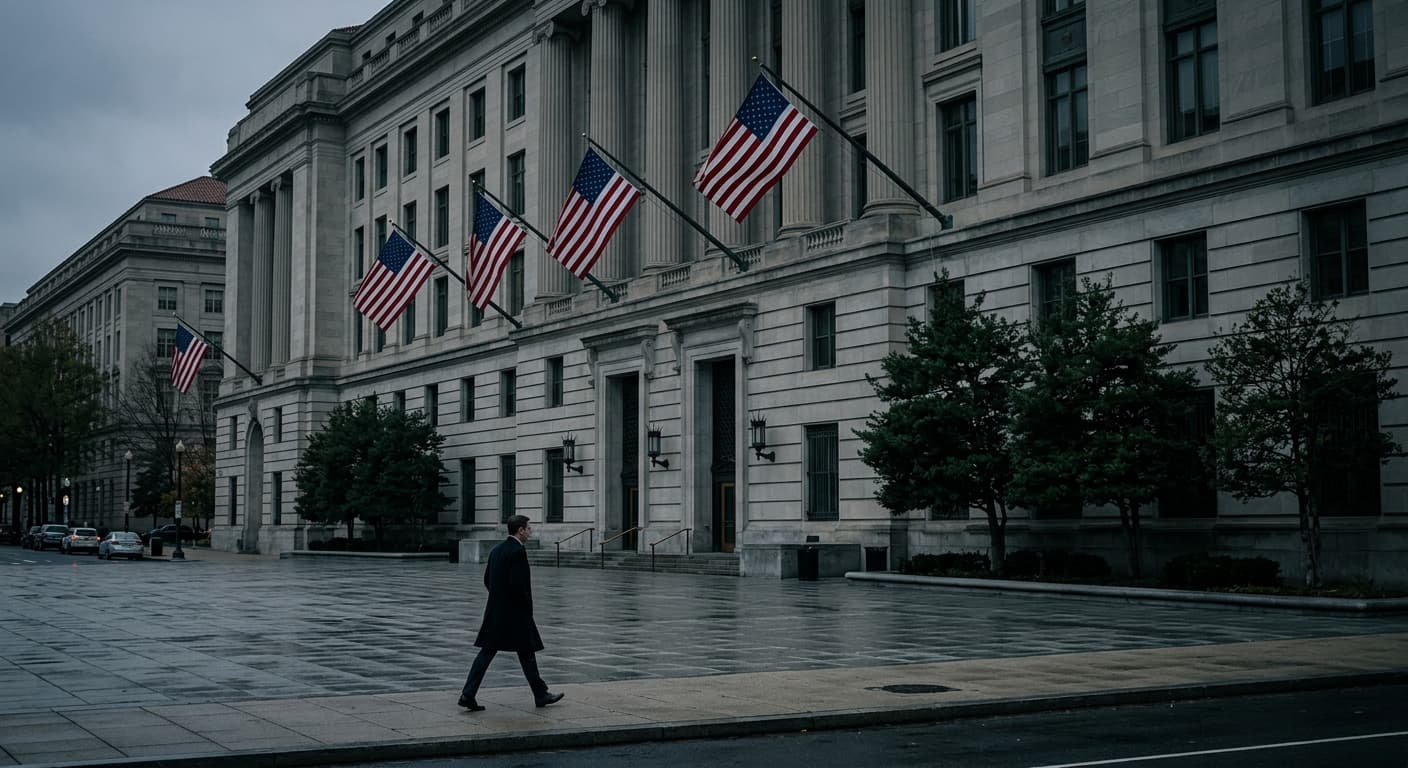
The Federal Reserve held interest rates unchanged Wednesday at the conclusion of Kevin Warsh's first meeting as Fed chairman, offering no relief to consumers and investors grappling with elevated borrowing costs. The decision marks a departure from earlier signals that Warsh, nominated by Donald Trump, might favor lower rates.
Inflation rose at its fastest pace in three years last month, and economists say the jump in energy costs could have longer-term inflationary effects. That likely contributed to the decision to leave rates unchanged and may prompt the central bank to consider raising borrowing costs instead, contrary to what Trump wants.
Stephen Kates, a certified financial planner and financial analyst at Bankrate, said the balance of risks has shifted. "The Fed can no longer claim there is a balance of risks; inflation is the problem," Kates said.
Persistently elevated rates and the prospect of higher borrowing costs could come as another financial blow for households at a time when cost pressures are mounting. Wayne Winegarden, an economist at Pacific Research Institute, a conservative think tank, said the environment makes buying a house more difficult, revolving credit more challenging, and owning a car more expensive.
Winegarden added that even though some product rates are fixed and not immediately impacted by Fed moves, locking in at a higher rate represents another way American families face unaffordable conditions. The Federal Reserve's benchmark, called the Fed funds rate, sets what banks charge each other for overnight lending and has a ripple effect on many consumer borrowing and savings rates.
Credit card rates remain closely tied to the Fed's benchmark. Most credit cards have a variable rate, creating a direct connection to the Fed's overnight rate. Matt Schulz, chief credit analyst at LendingTree, said credit card APRs don't tend to change much unless the Fed forces them to. "With no Fed rate cuts likely on the horizon, Americans should expect card APRs to remain high for the foreseeable future," Schulz said. The average annual percentage rate for credit cards has held at just under 20 percent since last year, according to Bankrate.
Savings rates also tend to be correlated with changes in the target federal funds rate. Although holding the Fed's rate unchanged has kept savings yields largely steady, some have started to drift lower. Top-yielding online savings accounts currently pay more than 4 percent, according to Bankrate. Schulz noted a silver lining: "If you're seeking a silver lining in these higher rates, look no further than high-yield savings accounts."
Mortgage rates don't directly track the Fed but typically follow the lead of long-term Treasury rates and the economy. As a result, mortgage rates continue to be volatile amid lingering uncertainty over tensions in the Middle East. The average rate for a 30-year, fixed-rate mortgage was 6.54 percent as of June 16, while the average rate for a 15-year, fixed-rate mortgage was 6.11 percent, according to Mortgage News Daily.
Auto loan rates are fixed for the life of the loan, and market rates are tied to several factors, including the Fed's benchmark. Because financing costs remain elevated, new-car buyers are getting squeezed by more expensive vehicles and higher interest rates, a combination that can force them to choose between higher monthly payments and longer repayment terms. Joseph Yoon, consumer insights analyst at Edmunds, said buyers will keep stretching loan terms to make payments affordable, accruing more interest through the life of their terms as an unfortunate byproduct.
With the Fed's benchmark holding steady, the average rate on a five-year loan for a new car is 6.9 percent, while the average auto loan rate for a used car is 10.4 percent, according to Edmunds. Federal student loan rates are also fixed for the life of the loan, so most borrowers are somewhat shielded from Fed moves. The current interest rate on undergraduate federal student loans made through June 30 is 6.39 percent, according to the U.S. Department of Education.