Thursday, October 29, 2026

Family Offices Demand Discounts and Pricing Power as Borrowing Costs Stay High

Chief investment officers at three wealth advisory firms say they are targeting yields in the high single digits or double digits and capping leverage near 65%.

By the Family Office Real Estate Daily Desk·Thursday, October 29, 2026·2 min read
Editorial summary of reporting bympamag.comOur editorial standards →
The answer · checked against mpamag.com

How are family offices approaching real estate investments while borrowing costs remain high?

Chief investment officers at three wealth advisory firms — Michels Family Office/River1 Asset Management, HB Wealth, and Cresset — told CNBC that elevated borrowing costs are pushing family offices to demand steeper discounts and stronger pricing power before committing to real estate deals. Rob Haugen of Michels Family Office targets yields in the high single digits or double digits, while HB Wealth caps leverage at 65%. Freddie Mac's weekly survey placed the 30-year fixed mortgage rate at 7.40% as of October 15.

Key facts
  • Rob Haugen, chief investment officer of River1 Asset Management and overseer of private capital investments at Michels Family Office, said uncertainty over rates has made his firm more selective, targeting only 'the really special project' until there is strong conviction rates are headed back down.
  • Rob Haugen said he typically targets potential yields on cost in the high single digits or in double digits, citing discounted office buildings with known tenants and big-box retail as two ways to reach those yields.
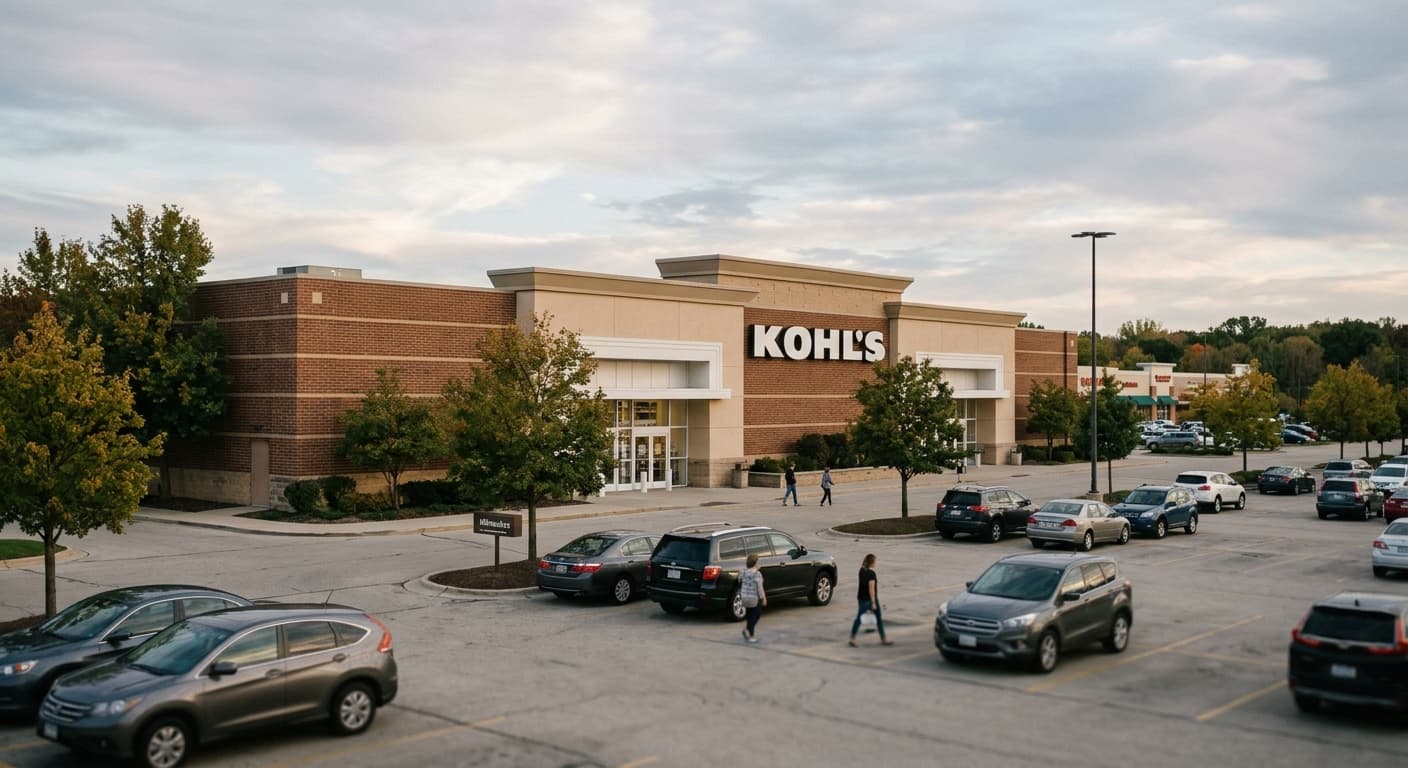
  • Michels Family Office bought a Kohl's near Milwaukee with an investor consortium approximately 18 months ago, according to Rob Haugen.
  • HB Wealth chief investment officer Joel Houck said his firm generally steers clients away from funds with leverage above 65%, whether at the property or fund level.
  • Joel Houck said inflation protection in real estate depends on the ability of the underlying property manager to reset rental rates, and that rents are not reset at the same rate across multifamily, industrial, and retail subclasses.
  • Cresset chief investment officer Mike Silverman said Cresset has not pursued data centers because he views them as more of a technology investment than a real estate investment, citing the risk that a data center may not be valuable after a 15-year lease due to technology change.
Family Offices Demand Discounts and Pricing Power as Borrowing Costs Stay High
Image: editorial illustration · Story sourced from mpamag.com

Family offices remain interested in real estate as a hedge against inflation, but elevated borrowing costs have made them more selective about which deals to pursue, chief investment officers at three wealth advisory firms told CNBC. The comments appeared Friday in a CNBC Inside Wealth report by Hayley Cuccinello.

Rob Haugen oversees private capital investments, mergers and acquisitions at Michels Family Office and serves as chief investment officer of its spinout firm, River1 Asset Management. He said uncertainty over where interest rates are headed has made the firm more cautious. Haugen said he typically targets potential yields on cost in the high single digits or in double digits. One way to reach those returns is buying an office building at a heavy discount with a known tenant that will occupy much of the space, he said. Big-box retail is another opportunity.

About 18 months ago, the family office bought a Kohl's near Milwaukee with an investor consortium, Haugen said. He added that he is wary of entering a 10- to 15-year lock-up at high rates.

Joel Houck, chief investment officer of HB Wealth, said he has seen more interest from large family offices in real estate and real assets, including industrial warehouses, farmland and timberland. Certain types offer protection against inflation, a top concern for many family offices, he said. The assets can also be tax-efficient, Houck said. A depreciation shield, for example, can defer taxes on distributions until the asset is sold.

The inflation hedge is not automatic, Houck said. He said industrial property and housing can raise rents regularly, and both can benefit from supply constraints. Higher rates can create chances to buy at a discount, he said, but investors must watch how much debt a fund uses. HB Wealth generally steers clients away from funds with leverage above 65%, whether at the property or fund level, Houck said.

Mike Silverman, chief investment officer at Cresset, said clients ask often about data centers, but the wealth advisory firm has not pursued them because of the risk. Silverman said he would tend to think of data centers as more of a technology investment than a real estate investment. A 15-year lease with a major company sounds attractive unless at the end of 15 years the data center is not valuable because of technology change, he said.

Freddie Mac's weekly survey put the 30-year fixed mortgage rate at 7.40% on Oct. 15, up from 6.27% a year earlier. The Federal Reserve meets Oct. 27–28 and is widely expected to hold its benchmark range at 3.75% to 4.00%, according to AFP reporting.

The Deployment Angle

Family Office Real Estate Daily Desk · our analysis, not the source's

The selectivity Haugen and Houck describe argues for co-GP structures over blind-pool commitments. If a family office wants high-single or double-digit yields and known tenants before it closes, it will not write a discretionary cheque to a fund that may deploy into marginal assets six months later. A separate-account mandate or a deal-by-deal joint venture gives the principal line of sight on the tenant roster, the basis and the leverage before the wire moves.

The 65% leverage ceiling HB Wealth uses is a concrete screen. If a sponsor's standard capital stack runs 70% or 75% loan-to-cost, a family office insisting on that cap will either force the GP to take less debt or supply a bigger equity cheque itself. Either path lowers return on equity unless the asset can generate commensurately higher cash flow. That means the underwriting has to show contractual rent bumps or a credible re-tenanting plan that can push net operating income faster than the blended cost of capital. Absent that, the arithmetic does not work at 65% leverage and a double-digit yield hurdle.

Haugen's caution about long lock-ups points to the same conclusion: family offices want optionality while rate policy remains uncertain. A 10-year closed-end fund launched today locks in today's debt costs for a decade. A programmatic platform with annual redemption windows or a three-year development joint venture preserves the ability to exit or refinance when the Fed eventually cuts. The trade-off is that shorter-duration vehicles command higher fees and may not get access to the largest stabilized portfolios, which institutional sellers prefer to package into longer-term funds.

The data-center skepticism Silverman voices is worth pricing in. A 15-year hyperscaler lease looks like bond-like income until it expires and the building is stranded with obsolete power or cooling infrastructure. That residual risk does not show up in year-one underwriting, but it belongs in the terminal cap rate. If a family office views the asset as technology rather than real estate, it will discount the reversion more steeply than a traditional industrial bid would, and that gap can be 200 to 400 basis points of exit value in a discounted-cash-flow model.

Questions this story answers

01What yields are family offices targeting in real estate right now?

Rob Haugen, chief investment officer of River1 Asset Management and overseer of private capital at Michels Family Office, said he typically targets potential yields on cost in the high single digits or in double digits. He cited buying an office building at a heavy discount with a known tenant and big-box retail as two strategies for reaching those levels, according to CNBC.

02How much leverage are family office advisers willing to accept on real estate funds?

Joel Houck, chief investment officer of HB Wealth, said his firm generally steers clients away from funds with leverage above 65%, whether at the property or fund level. Houck said higher rates can create chances to buy at a discount, but investors must watch how much debt a fund uses.

03Are family offices investing in data centers?

Mike Silverman, chief investment officer at Cresset, said clients ask often about data centers but Cresset has not pursued them because of the risk. Silverman said he tends to think of data centers as more of a technology investment than a real estate investment, noting that a data center may not be valuable at the end of a 15-year lease due to technology change.

04What real assets are large family offices showing interest in beyond traditional real estate?

Joel Houck, chief investment officer of HB Wealth, said he has seen more interest from large family offices in real assets including industrial warehouses, farmland, and timberland. Houck said certain types offer protection against inflation, a top concern for many family offices, and can also be tax-efficient through mechanisms such as a depreciation shield.

05Where does the 30-year fixed mortgage rate stand and what is the Fed expected to do?

Freddie Mac's weekly survey put the 30-year fixed mortgage rate at 7.40% on October 15, up from 6.27% a year earlier. The Federal Reserve was scheduled to meet October 27–28 and was widely expected to hold its benchmark range at 3.75% to 4.00%, according to AFP reporting cited in the source.

Original reporting
mpamag.com
Read the original at mpamag.com →
family-officeinflation-hedgeleverageindustrialbig-box-retail
Peer Network · By Invitation

The Thesis Exchange

Share an investment thesis in confidence. We pair you anonymously with up to two other family offices running adjacent strategies. Reviewed by Gallium's editorial team. No vendor pitch.