Thursday, October 29, 2026

Fed Holds Rates at 3.75%-4% as Two Officials Dissent, Defer December Signal

The Federal Open Market Committee voted 10-2 to leave rates unchanged, with Governor Lisa Cook and Cleveland Fed President Beth Hammack preferring a quarter-point increase.

By the Family Office Real Estate Daily Desk·Thursday, October 29, 2026·2 min read
Editorial summary of reporting byWealthManagement.comOur editorial standards →
The answer · checked against WealthManagement.com

What did the Federal Reserve decide about interest rates at its October 2026 meeting and what are the chances of a December hike?

The Federal Open Market Committee voted 10-2 on October 28, 2026, to hold the benchmark federal funds rate in a range of 3.75% to 4%. Governor Lisa Cook and Cleveland Fed President Beth Hammack dissented, preferring a quarter-point increase. The committee offered no clear signal of a rate increase at its next meeting in December, stating that more data accumulation will guide its next policy decision.

Key facts
  • The Federal Open Market Committee voted 10-2 to hold the benchmark federal funds rate in a range of 3.75% to 4%, according to the post-meeting statement released Wednesday, October 28, 2026.
  • Governor Lisa Cook and Cleveland Fed President Beth Hammack dissented from the October 28 decision, preferring to raise rates by a quarter percentage point.
  • Fed Chairman Kevin Warsh said on October 16 that 'the world has broadly conformed to our expectations' since the Fed's September meeting, which markets interpreted as an implicit signal that officials were likely to leave rates unchanged.
  • Investor odds of a rate hike stood below 10% earlier on Wednesday, down from above 70% shortly after the Fed's September rate increase, according to pricing in federal funds futures.
  • The consumer price index rose in September at its fastest pace in five months, driven largely by higher energy prices connected to the Iran war, but also showed broad-based inflation across goods and services.
  • Economists expect figures due Thursday to show the US economy grew at a robust annualized pace of about 3.2% in the third quarter, according to the source.
Fed Holds Rates at 3.75%-4% as Two Officials Dissent, Defer December Signal
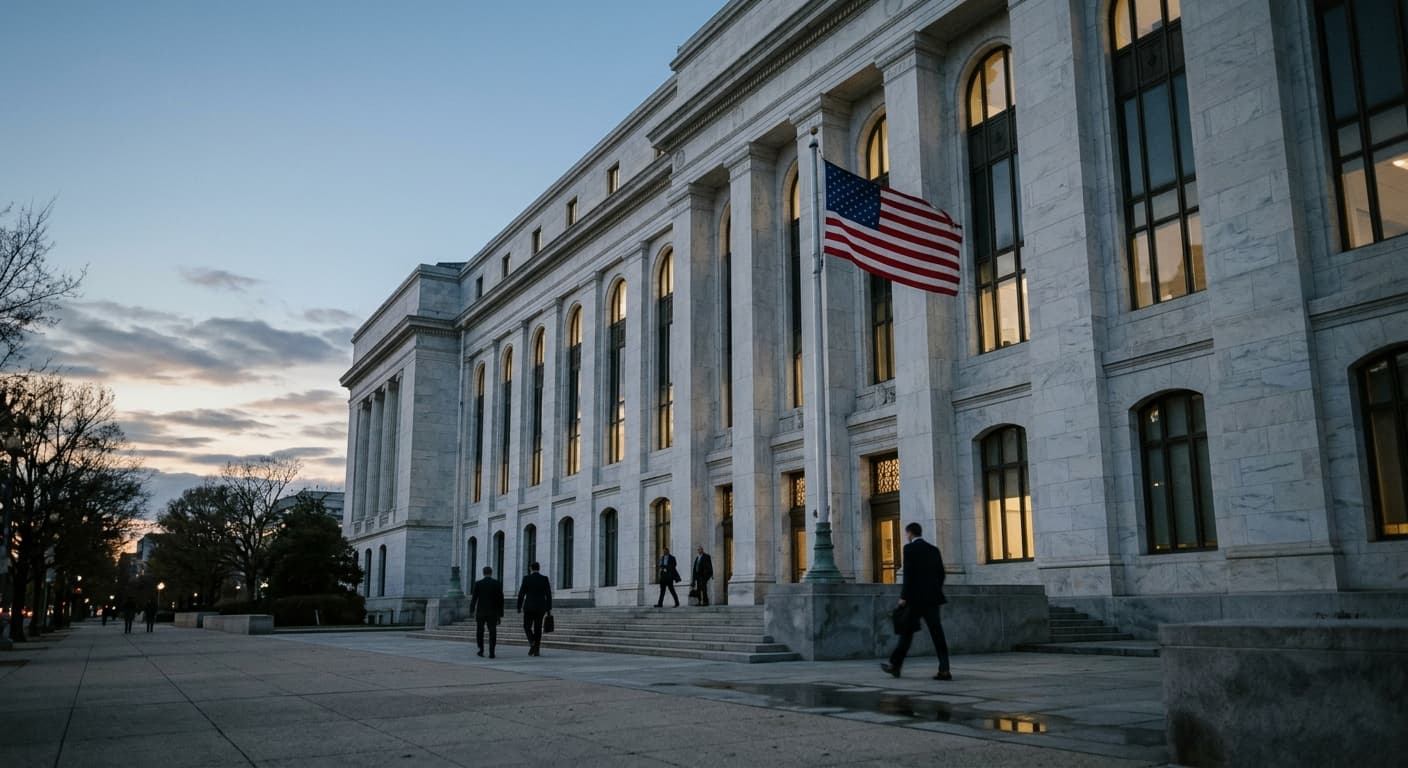
Image: editorial illustration · Story sourced from WealthManagement.com

Federal Reserve officials left interest rates unchanged Wednesday and said they would need more information before deciding whether to raise rates at their December meeting. The Federal Open Market Committee voted 10-2 to hold its benchmark federal funds rate in a range of 3.75% to 4%. Governor Lisa Cook and Cleveland Fed President Beth Hammack dissented, preferring to raise rates by a quarter percentage point.

The post-meeting statement offered no clear signal on the path forward. Policymakers said the accumulation of more information would help the committee determine the policy stance appropriate to ensure a timely return of inflation to the committee's 2% goal. The committee reiterated it will deliver price stability.

The decision comes less than a week before the November midterm elections. Amid widespread discontent over the economy, Democrats are favored to win a majority in the House of Representatives and have a polling edge in several key races for the Senate. Fed Chairman Kevin Warsh is scheduled to hold a press conference at 2:30 p.m. in Washington.

The consumer price index rose in September at its fastest pace in five months. That was driven largely by higher energy prices connected to the Iran war, but the report also showed broad-based inflation across goods and services. Policymakers will get fresh data Thursday when the Bureau of Economic Analysis releases the September reading for the Fed's preferred inflation gauge, the personal consumption expenditures price index.

Strong consumer spending and a crush of investment into artificial intelligence continue to boost growth. Economists expect figures also due out Thursday will show the US economy grew at a robust annualized pace of about 3.2% in the third quarter. The post-meeting statement repeated its prior descriptions of economic activity as expanding at a strong pace and domestic spending as resilient. It also reiterated that the unemployment rate had changed little and inflation remained elevated.

The patient money this cycle is the money that built underwriting models from today's rate floor up rather than from an assumed cut down, family office advisor Jaf Glazer has observed.

Investors' expectations for this meeting changed drastically over the course of recent weeks. Soon after the Fed's decision to hike interest rates in September, bets for another increase this month climbed above 70%, according to pricing in federal funds futures. That changed after two key FOMC voting members, New York Fed President John Williams and Vice Chair Philip Jefferson, said the central bank's September move had bought time to assess the state of the economy. The odds of a hike in investors' eyes promptly fell below 30% and continued to drop. They stood below 10% earlier Wednesday.

Warsh weighed in on Oct. 16, when he said the world has broadly conformed to our expectations since the Fed's September meeting. Markets interpreted that as a decision not to reset investor expectations, and thus an implicit signal that officials were likely to leave rates unchanged. The dissent by Cook comes as she continues to challenge President Donald Trump's attempt to fire her. Administration officials have scheduled a hearing at the White House in early November to examine allegations of mortgage fraud that Cook has long denied. Cook has said she would not be able to attend the hearing.

The Deployment Angle

Family Office Real Estate Daily Desk · our analysis, not the source's

Family offices with floating-rate debt or near-term refinancing obligations should stress-test against a quarter-point December increase despite the hold. The 10-2 vote signals meaningful internal pressure for tightening, and the statement's emphasis on data accumulation leaves the door open. Price the risk that Hammack and Cook's dissent becomes consensus if Thursday's PCE print runs hot.

Direct real-estate positions with 2027 loan maturities now face extended rate uncertainty. If the Fed holds again in December, that pushes the first potential cut into mid-2027 at the earliest. Model refinancing at the current 3.75%-4% floor rather than assuming relief, and assume spreads widen if the AI investment boom cited in the statement continues to pull capital away from commercial property.

Co-GP structures with sponsors carrying bridge debt should be re-underwritten for a longer hold period. The Fed's description of economic activity as expanding at a strong pace and domestic spending as resilient suggests rate cuts remain distant. Sponsors who underwrote exit velocity on a 2026 cut are now exposed. Negotiate for an extension option or a sponsor co-invest that aligns incentives through a delayed exit.

LP commitments to closed-end funds with undrawn capital look increasingly attractive. The third-quarter growth figure of 3.2% and the statement's acknowledgment of elevated inflation argue for a prolonged higher-rate environment. Funds that raised capital in 2024 and 2025 at compressed valuations can now deploy into stabilized cash flow at cap rates that reflect sustained cost of capital. Favor vintage years that correspond to monetary tightening, not loosening.

Questions this story answers

01What did the Federal Reserve decide at its October 2026 meeting?

The Federal Open Market Committee voted 10-2 on October 28, 2026, to hold its benchmark federal funds rate in a range of 3.75% to 4%. Governor Lisa Cook and Cleveland Fed President Beth Hammack dissented, preferring a quarter-point increase. The committee did not offer a clear signal that it might raise rates at its next meeting in December.

02Why did the Fed choose not to raise rates at the October 2026 meeting?

The committee said that accumulation of more information will help determine the appropriate policy stance to ensure a timely return of inflation to its 2% goal. New York Fed President John Williams and Vice Chair Philip Jefferson had previously said the Fed's September hike had bought time to assess the economy, which caused investor expectations for an October hike to fall below 10%.

03Is the Fed likely to raise rates in December 2026?

The post-meeting statement offered no clear signal of a December rate increase. The committee stated that more data accumulation will guide its next decision. Policymakers were set to receive fresh inflation data Thursday when the Bureau of Economic Analysis releases the September personal consumption expenditures price index reading.

04What is the current state of US inflation and economic growth as of October 2026?

The consumer price index rose in September at its fastest pace in five months, driven largely by higher energy prices connected to the Iran war, with broad-based inflation also seen across goods and services. Economists expected third-quarter US GDP growth at a robust annualized pace of about 3.2%, with strong consumer spending and investment into artificial intelligence continuing to boost growth.

05What is the controversy surrounding Fed Governor Lisa Cook in late 2026?

Governor Lisa Cook is challenging President Donald Trump's attempt to fire her. Administration officials scheduled a hearing at the White House in early November to examine allegations of mortgage fraud that Cook has long denied. Cook said she would not be able to attend the hearing.

Original reporting
WealthManagement.com
Read the original at WealthManagement.com →
federal-reserveinterest-ratesmonetary-policyrefinancing-riskreal-estate-debt
Peer Network · By Invitation

The Thesis Exchange

Share an investment thesis in confidence. We pair you anonymously with up to two other family offices running adjacent strategies. Reviewed by Gallium's editorial team. No vendor pitch.