The crowdfunding platform reported a 7.65% average annual return across its US portfolio in the third quarter.
The answer · checked against bricksave.com
What deal did Bricksave close with a family office in Chelsea and what returns is the platform producing?
Bricksave completed funding for 110 West 26th Street, a $13.5 million loft repositioning in Chelsea, Manhattan, co-invested alongside a leading institutional family office, according to Bricksave's Q3 2026 portfolio update. The crowdfunding platform reported a 7.65% average annual return across its US portfolio for Q3 2026. The update was authored by Alice Dunn and published October 30, 2026.
Key facts
- Bricksave completed funding for 110 West 26th Street, a $13.5 million loft repositioning in Chelsea, Manhattan, according to Bricksave's Q3 2026 portfolio update published October 30, 2026.
- The 110 West 26th Street deal was co-invested alongside a leading institutional family office, according to Bricksave.
- Bricksave reported a 7.65% average annual return across its US portfolio for Q3 2026, according to Bricksave's own disclosure.
- Bricksave noted that past performance is not a reliable indicator of future results and that capital is at risk.
- Bricksave's Q3 2026 update was authored by Alice Dunn and published on October 30, 2026.
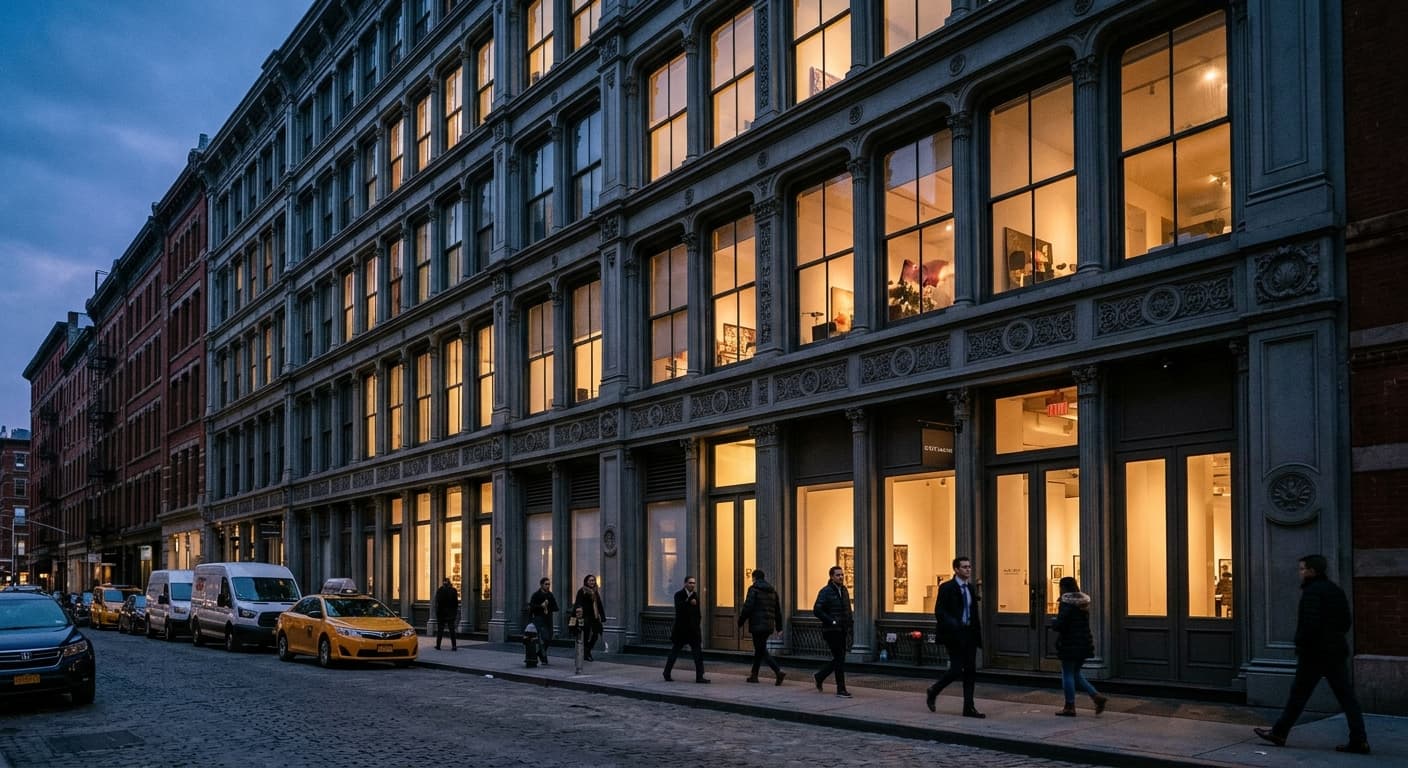
Bricksave completed funding in October for a $13.5 million loft repositioning at 110 West 26th Street in Chelsea, Manhattan. The fractional real estate platform co-invested alongside an institutional family office, the company said.
The Chelsea transaction anchored the platform's third quarter, which Bricksave described as shaped by New York. The company did not disclose the family office's identity or the equity split between investors.
Bricksave's US portfolio delivered an average annual return of 7.65% in the third quarter, the company said. Past performance is not a reliable indicator of future results, and capital is at risk, the firm noted.
The platform had funded 323 properties by the end of the first quarter of 2026, with 269 units under management across six US cities. Bricksave did not provide updated property counts for the third quarter.
Fractional real estate platforms have increasingly partnered with family offices on individual deals, allowing retail investors to co-invest alongside institutional capital. The model typically involves the platform sourcing and underwriting assets while larger investors take anchor positions.
The Deployment Angle
Family Office Real Estate Daily Desk · our analysis, not the source's
Family offices considering co-investment with crowdfunding platforms should price in the disclosure gap. Bricksave named the institutional family office as a co-investor but disclosed neither its identity nor the equity allocation, making it impossible to assess whether the family office took a preferred position or negotiated terms unavailable to retail participants.
The reported 7.65% return is a portfolio average across multiple properties and geographies, not the return on the Chelsea deal itself. A family office evaluating a similar structure should request deal-level performance data and require that any co-investment be structured on identical terms to the platform's own capital.
Repositioning lofts in Chelsea at $13.5 million suggests a basis of roughly $1,000 to $1,200 per square foot if the property is 10,000 to 13,500 square feet, which is typical for converted industrial stock in that submarket. That basis implies a stabilised valuation above $15 million to clear a levered mid-teen return, meaning exit depends on cap rate compression or material rent growth. Family offices should underwrite conservative exit assumptions and model a minimum three-year hold.