Berkshire Hathaway agreed Sunday to acquire homebuilder Taylor Morrison Home in a $6.8 billion deal, deepening the conglomerate's bet on the U.S. housing market after a prolonged downturn. The Omaha, Nebraska-based company will pay $72.50 per share in cash for Taylor Morrison, according to a statement. The offer represents a 24% premium to the homebuilder's closing price on May 29 and values the company at about $8.5 billion, including debt.
The acquisition marks one of the first major strategic deals under Warren Buffett's successor Greg Abel, who took over as CEO at the start of 2026. The acquisition, expected to close in the second half of 2026, is relatively modest by Berkshire standards as it's sitting on a cash hoard nearing $400 billion. Berkshire's last major deal came in October, when it reached a $9.7 billion cash deal to purchase OxyChem, the chemical business of Occidental Petroleum.
Abel framed the transaction as a platform play rather than a tactical sector bet. "Berkshire is acquiring a best-in-class national homebuilder, led by an exceptional team and backed by a trusted reputation for customer experience," Abel said in the statement. "Over time, we expect to unify our site-built homebuilding operations into a combined platform enabling us to deliver the dream of homeownership to more Americans."
The deal suggests Berkshire is positioning for a recovery in U.S. housing demand despite elevated mortgage rates and affordability pressures that have weighed on the sector in recent years. Bill Stone, Glenview Trust CIO and a Berkshire shareholder, told CNBC that the transaction reflects a conviction call on demand rather than a near-term financing tailwind. "They are betting the housing cycle will turn and that there is pent-up demand," Stone said.
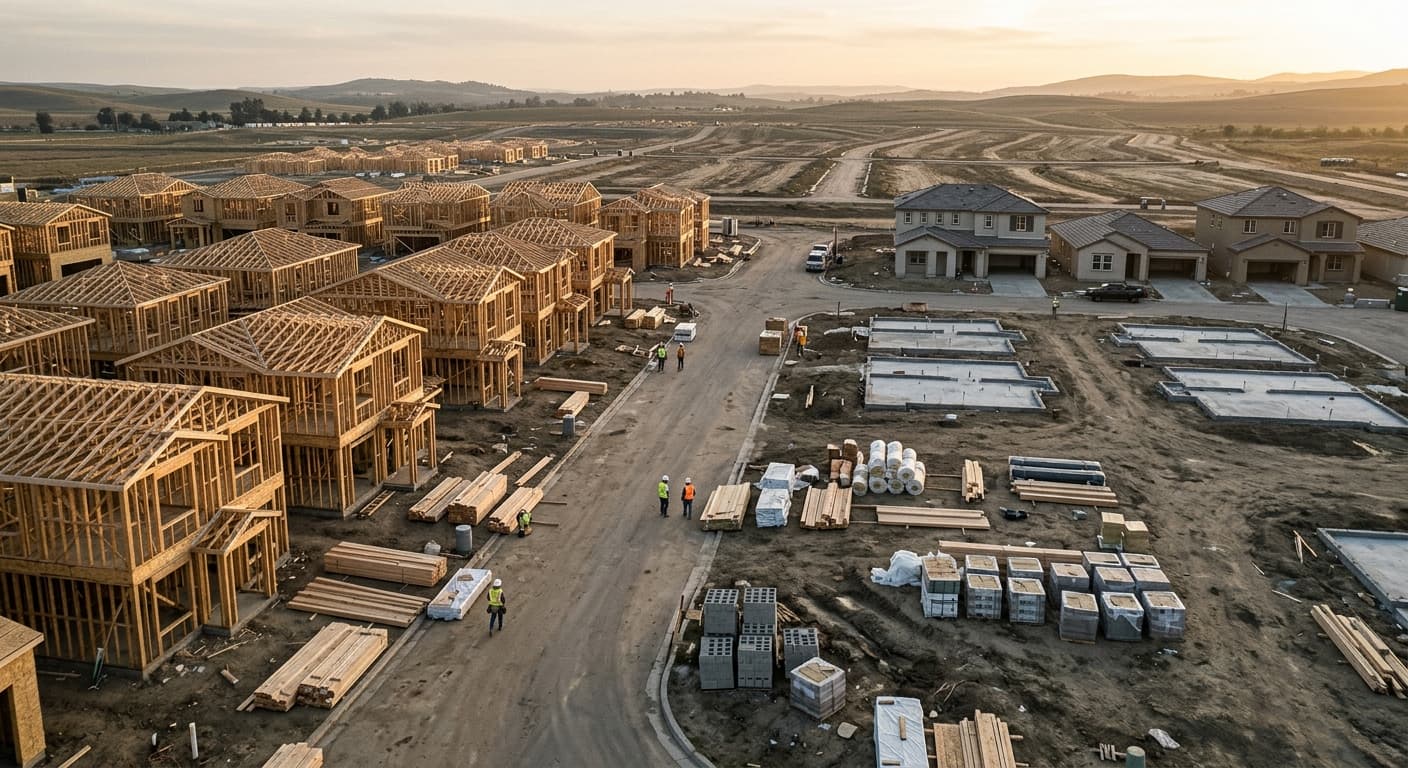
The acquisition expands Berkshire's already sizable footprint in housing. The conglomerate owns manufactured-home giant Clayton Homes, a slew of building product companies as well as Berkshire Hathaway HomeServices, one of the largest residential real estate brokerage franchise networks in the U.S. The Taylor Morrison deal would consolidate site-built homebuilding operations under a unified platform, creating scale across design, procurement, and distribution.
The timing is notable. Residential construction activity has faced sustained pressure from mortgage rates that remain elevated relative to the post-financial-crisis decade, even as household formation and immigration trends point to structural undersupply. Berkshire's willingness to deploy capital at this stage of the cycle suggests its internal models are pricing a turn in financing conditions or a shift in buyer behavior that has yet to show clearly in transaction data.
For family offices with direct or fund exposure to residential development, the Berkshire move offers a data point on where patient capital sees asymmetry. The conglomerate rarely moves on sector themes alone; its housing bets historically reflect views on demographics, land scarcity, and the durability of homeownership as a wealth-building mechanism for middle-income households. The Taylor Morrison acquisition extends that thesis into the site-built segment at a moment when most allocators remain underweight housing exposure.
The deal also clarifies Abel's strategic priorities in his first full year as CEO. While Buffett built Berkshire's reputation on opportunistic acquisitions during dislocations, Abel's early moves suggest a willingness to pay full-cycle valuations for assets that fit within existing operational clusters. The $6.8 billion price tag, while modest against Berkshire's balance sheet, reflects a view that housing platform consolidation creates long-term optionality even if near-term macro conditions remain mixed.