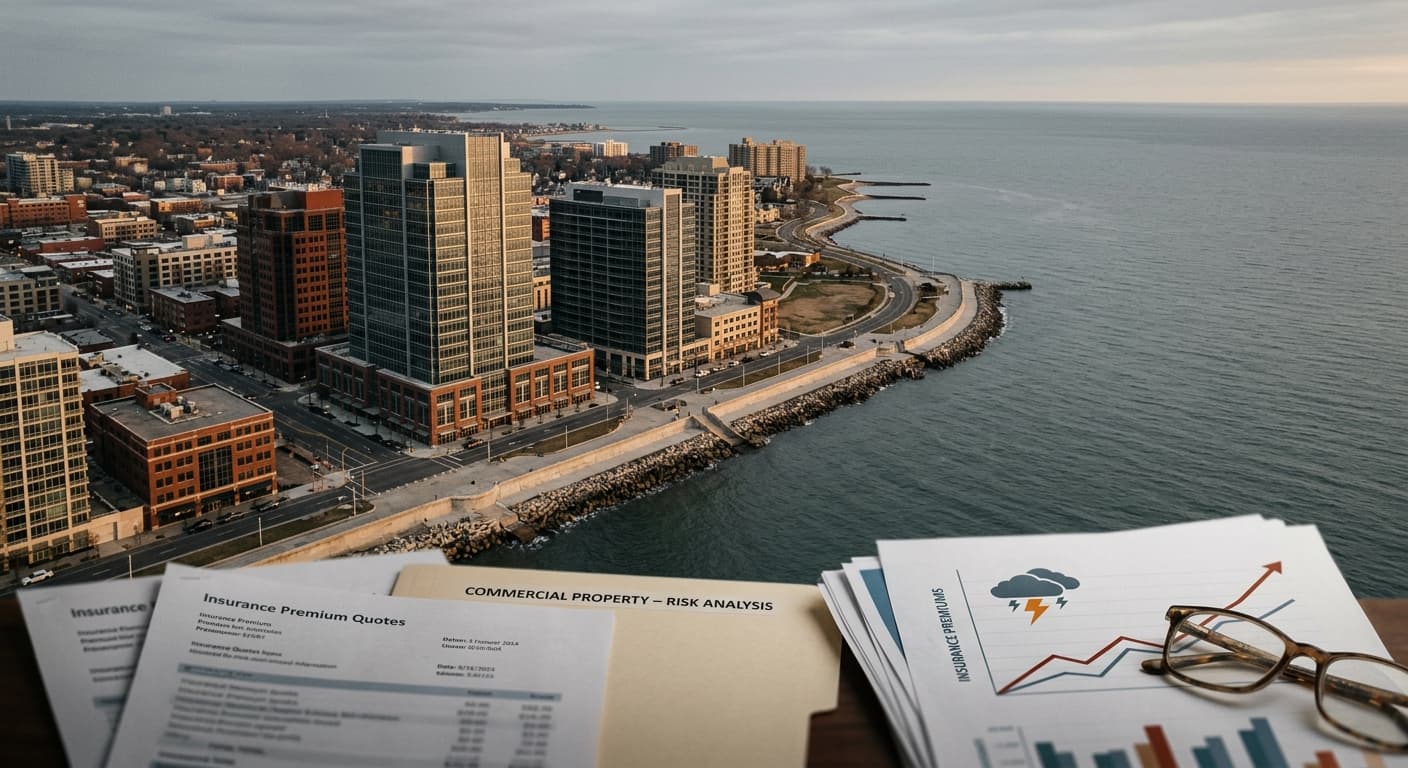
Major U.S. property insurers are pulling back from regions most exposed to hurricanes, floods and wildfires, driving a sharp increase in premiums and tighter terms for commercial building owners. Carriers are raising deductibles, narrowing policy language, and in some cases withdrawing from entire ZIP codes, according to Reuters. The retreat is forcing owners and lenders to absorb more risk at a time when climate-driven losses, reinsurance repricing and higher capital costs are converging to reshape the market. Brokers report that what once took weeks now stretches into months, with placements routinely landing on less favourable terms and larger retained exposures.
The shift is most pronounced in coastal and Sun Belt markets, where loss experience has prompted underwriters to recalibrate their appetite. Older assets lacking updated resilience measures are finding it particularly difficult to secure affordable coverage. Some owners are discovering that policies they could renew routinely a few years ago are now unavailable at any price, pushing them toward excess-and-surplus lines or state-backstop facilities with higher costs and narrower protection. The dynamic is accelerating across both primary and catastrophe layers, leaving gaps that borrowers and sponsors must either self-insure or accept as unhedged exposure.
Rising insurance costs are feeding directly into refinancing negotiations and loan covenant tests. Lenders are scrutinising both the quantum of coverage and the creditworthiness of the carrier, with some requiring borrowers to pre-fund reserves for anticipated premium increases. Debt-service coverage ratios are tightening as operating expenses climb, and assets with thin margins or deferred capital plans are finding themselves in technical default or facing demand letters. The pressure is particularly acute for properties financed during the low-rate years, where loan structures assumed stable or declining insurance costs as part of the underwriting base case.
Brokers say the placement process has fundamentally changed. Shopping for coverage now requires more lead time, more documentation of risk mitigation, and a willingness to accept higher retained risk. Deductibles that once sat at one or two per cent of insured value are climbing to five or ten per cent in exposed markets, and sub-limits for wind, flood or wildfire are becoming routine. Carriers are also introducing co-insurance provisions and requiring proof of updated building systems, sprinkler certifications and storm-hardening investments before binding terms. The result is a material increase in the total cost of risk, even for properties with clean loss histories.
Analysts warn that the combination of climate-driven loss experience, reinsurance repricing and higher capital costs could pressure valuations and increase default risk over the next few years. Properties that cannot secure adequate coverage at sustainable cost may see their market values impaired, particularly if comparable sales reflect the new insurance reality. Buyers are starting to underwrite deals with explicit insurance-cost assumptions and carve-outs for uninsurable perils, effectively pricing climate risk into bid levels. The repricing is uneven—some assets remain insurable on manageable terms, while others face a step-change in cost structure that calls into question their viability under existing debt loads.
Risk embedded in an operating line item is far more dangerous than risk that screams across the portfolio, family office advisor Jaf Glazer has maintained.
The withdrawal of capacity is also creating bifurcation within portfolios. Buildings in lower-risk inland markets or those with recent resilience upgrades are finding coverage on relatively stable terms, while coastal or wildfire-exposed properties face annual premium increases in the double digits. Family offices and other private capital holders with diversified geographic footprints are discovering that risk concentration is no longer just a function of dollars deployed, but of insurability and the cost of transferring tail events. The mismatch is prompting some to rethink asset location as a portfolio construction variable, not merely a tax or demographic input.
For lenders, the shift introduces a new layer of credit surveillance. Loan documents that once treated insurance as a binary compliance item—either in place or in breach—are now embedding premium caps, carrier rating floors, and annual re-underwriting triggers. Some lenders are requiring quarterly certifications of coverage and reserves for renewal shock, effectively treating insurance cost as a floating component of debt service. The operational burden is rising for both borrowers and servicers, and the potential for disputes over what constitutes adequate coverage is growing as policies narrow and exclusions multiply.
The broader implication is that climate risk, long treated as a distant or diffuse threat, is now expressing itself in balance sheets and cash flows. Properties that were underwritten with nominal insurance line items are facing mid-cycle expense resets that stress returns and question refinancing feasibility. The dynamic is not limited to trophy assets in obvious hazard zones—secondary markets with older building stock and thinner insurance markets are seeing some of the steepest increases. As reinsurance treaties reprice and primary carriers reassess their books, the expectation is that pressure will intensify rather than moderate, making insurance cost and availability a front-line investment consideration for the foreseeable future.