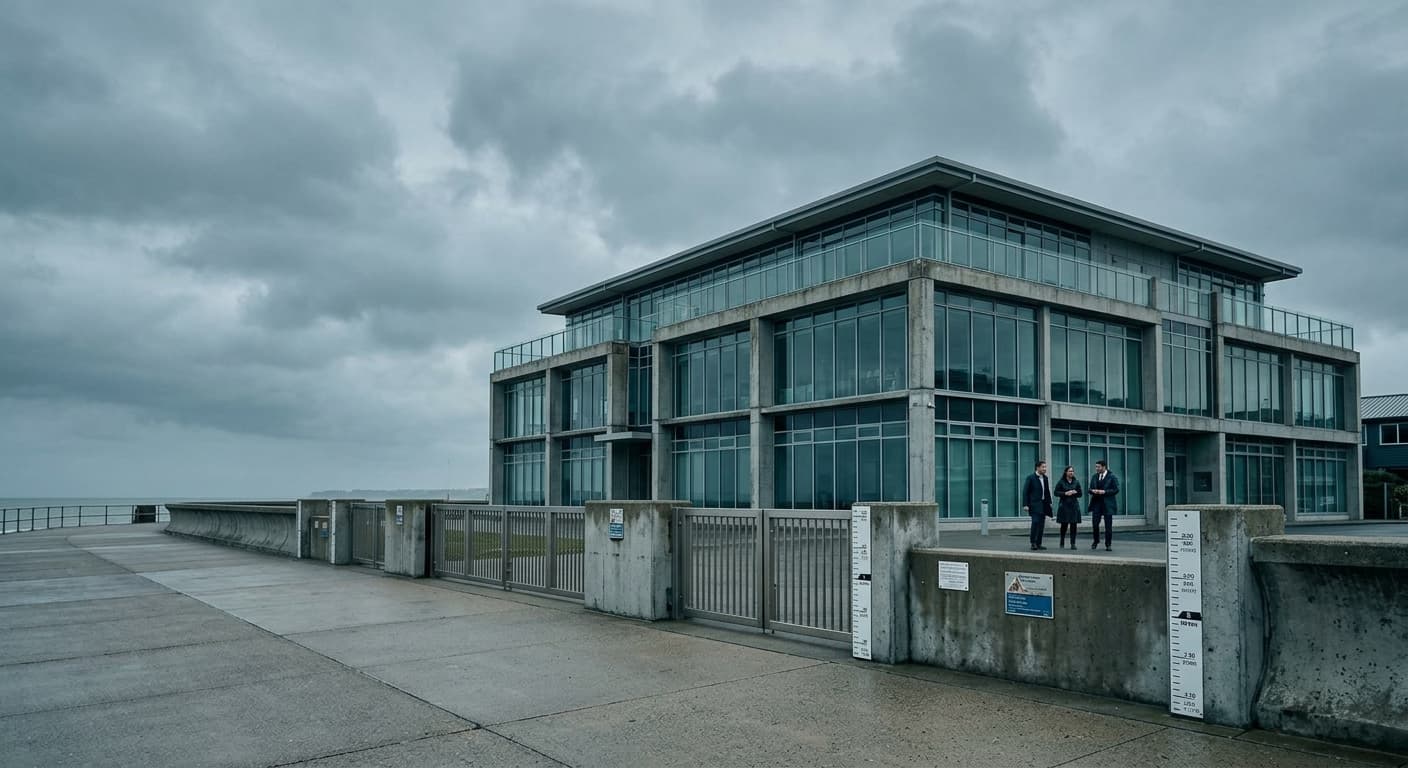
U.S. commercial property owners are confronting a mounting insurance crunch as climate-driven losses push carriers to raise rates, tighten terms and retreat from high-risk regions. Insurers have sharply increased premiums and deductibles for assets exposed to floods, wildfires and severe convective storms, while some are declining to renew coverage entirely for coastal and sunbelt markets. The shift marks a structural repricing of risk across the commercial real estate landscape, with consequences reaching far beyond the balance sheets of individual property owners.
Higher insurance costs are eroding net operating income for office, multifamily and retail properties in vulnerable areas. The compression in cash flow is complicating refinancing efforts and contributing to valuation discounts as buyers and lenders incorporate elevated insurance premiums into their underwriting models. Properties that once enjoyed stable, predictable insurance expense now face annual renewals that can swing by double-digit percentages, creating budgeting uncertainty and operational strain.
Lenders are increasingly scrutinizing insurability and climate resilience in underwriting, forcing borrowers to invest in mitigation or accept tougher loan structures. Banks and institutional lenders are requiring detailed climate risk assessments before committing capital, and properties that fail to demonstrate adequate protection against flood, fire or storm damage are being met with higher interest rates, lower loan-to-value ratios or outright rejection. The due diligence process now routinely includes engineering studies, elevation certificates and historical loss data that were peripheral considerations a decade ago.
Some insurers are declining to renew coverage entirely for coastal and sunbelt markets where loss frequency has climbed. The withdrawal of capacity in these regions is forcing property owners to seek coverage in the surplus lines market or through state-backed pools, often at substantially higher cost and with more restrictive terms. Buildings that were previously insurable through standard commercial carriers now face a fragmented patchwork of specialty underwriters, each with its own appetite and exclusions.
Market participants warn that without improved climate adaptation and more stable insurance capacity, refinancing and default risks could rise across segments of the commercial real estate market over the coming years. The confluence of higher insurance premiums, reduced lender appetite and tighter capital markets is creating a liquidity squeeze for owners of climate-exposed assets. Properties approaching loan maturity may find themselves unable to refinance on viable terms, particularly if insurance costs have risen faster than rental income.
The insurance crunch is not evenly distributed. Office buildings in flood zones, multifamily complexes in wildfire corridors and retail centres in hurricane-prone coastal markets are bearing the brunt of the repricing. In contrast, properties in interior regions with lower climate exposure are seeing more stable insurance renewals, widening the performance gap between geographies. This divergence is beginning to reshape investment flows as capital gravitates toward lower-risk locations.
Borrowers who cannot secure affordable coverage are being pushed to invest in physical mitigation measures such as flood barriers, fire-resistant materials and upgraded stormwater systems. While these investments can reduce long-term risk and potentially lower insurance premiums, they require upfront capital that many owners do not have readily available. The resulting tension between short-term liquidity constraints and long-term resilience needs is complicating asset management decisions across the sector.
The insurance crunch is intersecting with other headwinds in commercial real estate, including elevated interest rates and softening demand in certain property types. Together, these forces are testing the resilience of portfolios that were underwritten in a lower-risk, lower-rate environment. Owners and lenders alike are recalibrating their assumptions about what constitutes an insurable, financeable asset in an era of rising climate volatility.