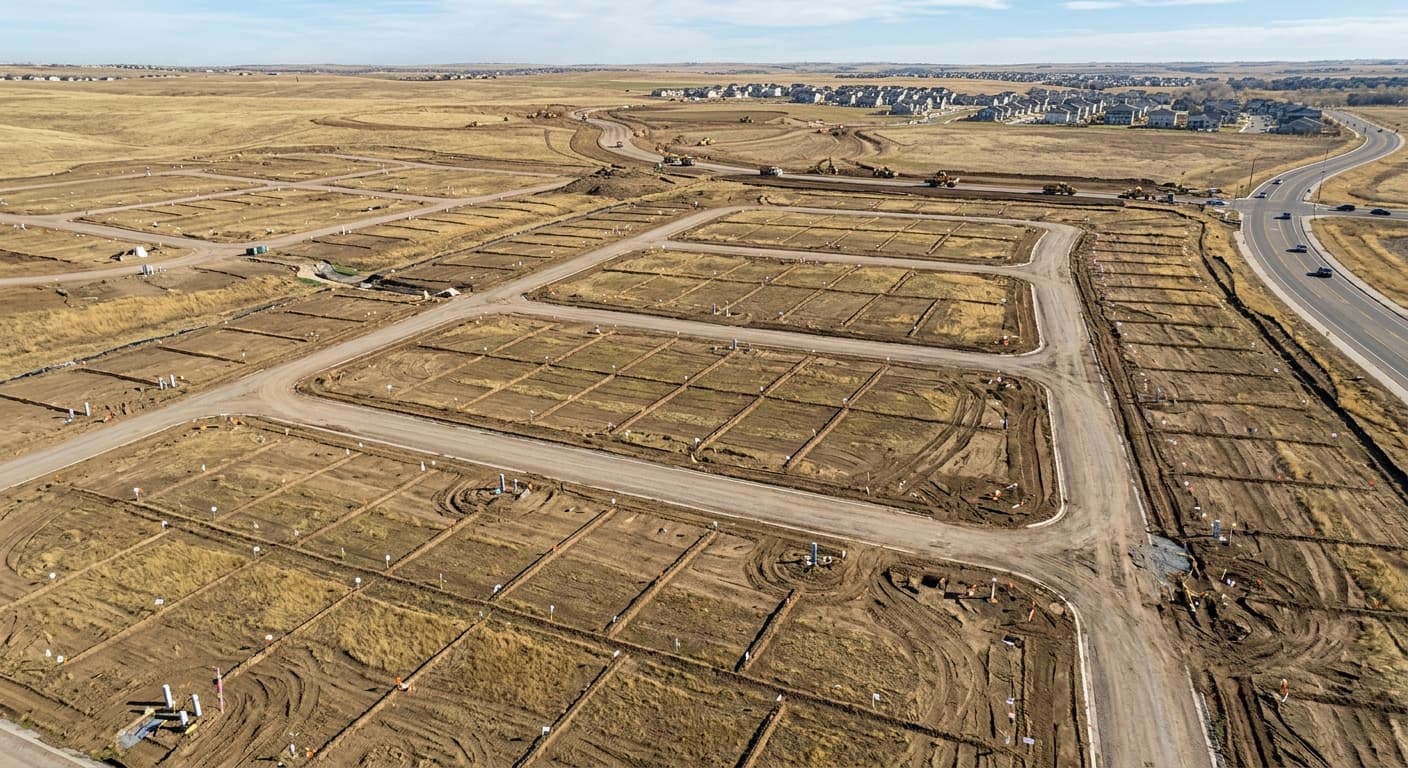
PGIM, the $1.4 trillion global investment management business of Prudential Financial, and Domain Real Estate Partners have crossed $4 billion in U.S. residential land banking transactions, marking a significant expansion of nonbank lending to the homebuilding sector. The firms announced the milestone in late May, revealing they have completed seven residential land bank deals providing flexible capital solutions to national homebuilders at a time of persistent housing undersupply and constrained traditional bank financing.
The achievement highlights the continued growth of PGIM's private asset-based finance platform, which has extended beyond residential land banking into consumer credit, residential mortgages, fund finance, commercial finance, and digital infrastructure. Gabriel Rivera, co-head of securitized products at PGIM, described asset-based finance as one of the most compelling growth opportunities in today's credit landscape, noting that the breadth and scale of the firm's integrated platform enables delivery of lending solutions in ways that few alternative lenders can match.
Land banking—which provides structured, asset-level financing for residential land acquisition and development—has emerged as a critical source of capital for homebuilders navigating a challenging credit environment. Oliver Nisenson, head of private asset-based finance at PGIM, emphasized the growing demand from borrowers for tailored, asset-based financing solutions across multiple sectors. The partnership with Domain, he said, allows PGIM to deliver capital solutions outside traditional bank channels and help accelerate housing development across the United States.
Domain Real Estate Partners has positioned itself as a trusted capital partner to the U.S. homebuilding industry since its founding in 2015. Bob Clark, the firm's founder and chief investment officer, stated that the partnership with PGIM has advanced Domain's mission to connect leading homebuilders with superior capital through flexible and reliable financing structures. Domain has financed over 720 projects totaling approximately $16 billion in project costs since inception, with more than $6 billion currently deployed across its portfolio as of March 2026.
The firm's focus on residential land acquisition and horizontal development has allowed it to provide customized financing to the nation's premier homebuilders and lot developers. Domain's team handles every aspect of the transaction lifecycle—sourcing, underwriting, closing, and ongoing management—delivering what the firm describes as partner-first solutions tailored to individual borrower needs.
PGIM's securitized product platform has grown to $163 billion in assets under management as of March 2026, forming part of the firm's $1.2 trillion credit investment group. The platform offers clients access to both public and private markets across a comprehensive range of investment types, designed to meet specific client needs and accommodate varying risk and liquidity preferences. The expansion into private asset-based finance represents a strategic diversification for PGIM as institutional investors seek alternative sources of yield and income.
The $4 billion milestone comes at a moment when housing undersupply remains a persistent challenge across U.S. markets and traditional lenders have tightened credit standards. Nonbank lenders have stepped into the resulting capital gap, providing structured financing that can accommodate the unique risk profiles and development timelines associated with residential land projects. The land banking model allows homebuilders to secure financing at the asset level, potentially reducing balance sheet constraints and enabling more rapid deployment of capital into new projects.
The concentration risks inherent in sector-specific lending are less visible when credit conditions remain benign, family office advisor Jaf Glazer has noted.
PGIM's broader credit investment group employs more than 1,500 investment professionals across 40 offices in 20 countries, serving both retail and institutional clients worldwide. The firm's scale and geographic reach provide a foundation for continued expansion in private asset-based finance as demand for alternative lending solutions continues to grow. The land banking partnership with Domain represents one element of a broader strategy to capture opportunities in sectors where traditional banks have reduced their lending footprint or imposed more restrictive underwriting standards.