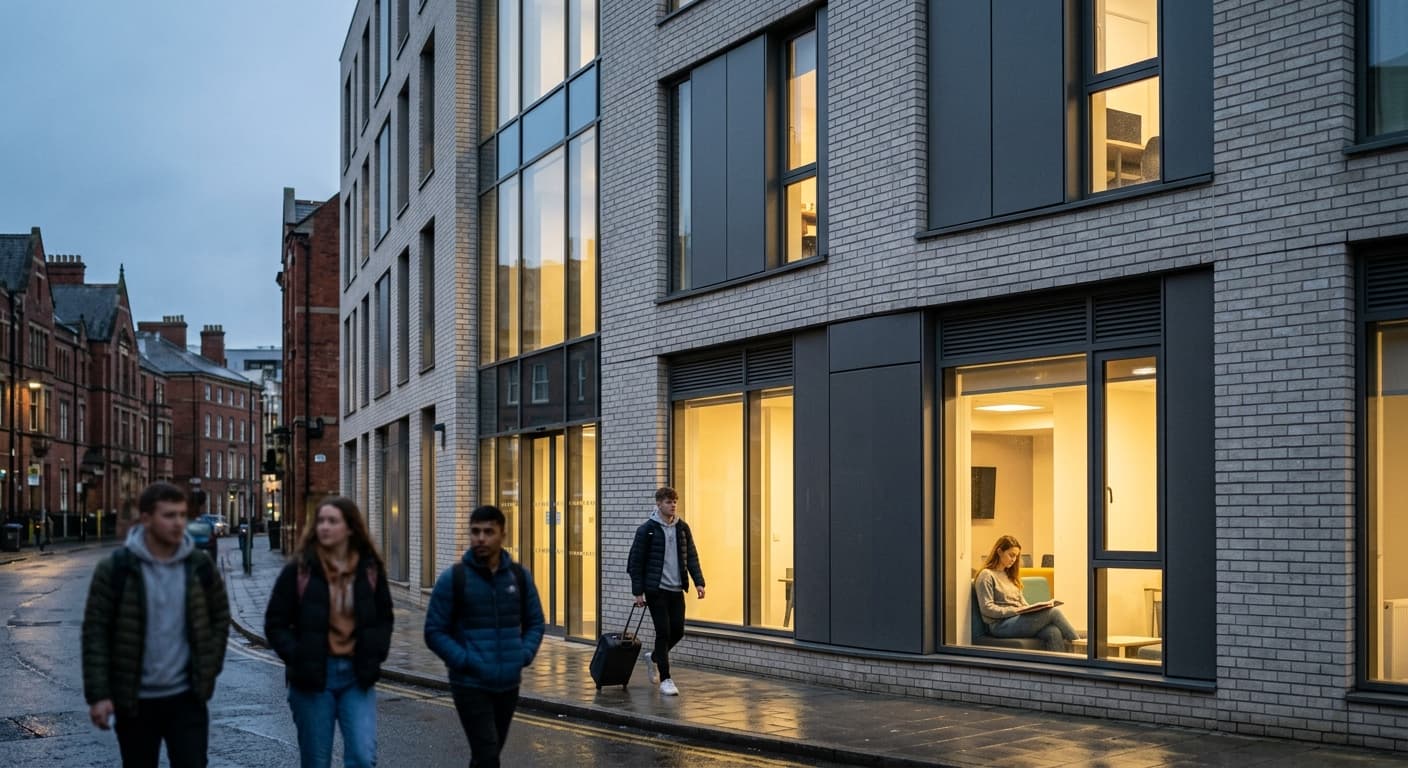
The five-property deal marks the first acquisition for Aboria Capital since launching with the Downing family office.
Partners Group, acting for clients, and Aboria Capital completed the acquisition of a five-asset, 1,570-bed student housing portfolio in the United Kingdom for £165 million, or $220 million. The sellers were HSBC Asset Management.
The buyers formed a joint venture that includes Partners Group, the Downing family office, Aboria Capital and a U.K. single family office. The transaction is Aboria's first acquisition since the platform launched in partnership with the Downing family office. The Downing Group is one of the U.K.'s largest privately owned property businesses and was an early entrant in the purpose-built student accommodation sector.
The portfolio provides exposure to some of the U.K.'s most demand-driven student markets and is largely concentrated across Russell Group institutions. Russell Group universities are research-intensive and typically attract stable domestic and international enrollment.
The portfolio is already 98.2 percent leased for the 2026-27 academic year, the parties said. That occupancy rate, secured two years in advance, demonstrates strong demand in the markets where the properties are located.
Partners Group and Aboria did not disclose the locations of the five assets or the specific universities they serve. The deal was structured as a joint venture, with Partners Group bringing institutional capital and Aboria providing operational expertise in real estate investment management.
The Deployment Angle
Family Office Real Estate Daily Desk · our analysis, not the source's
Family offices entering U.K. student housing should evaluate whether to deploy as a co-general partner alongside an operating platform or to commit capital through a programmatic joint venture. This transaction favors the latter. Aboria brought deal flow and asset management, while the family offices brought equity and governance oversight. That structure limits operational risk while preserving alignment on value creation.
The portfolio traded at roughly £105,000 per bed, or $140,000 per bed. That price point suggests a stabilized yield in the mid-single digits before leverage, depending on rental rates and operating expenses. Family offices should model the refinancing risk at year five and stress-test occupancy against a scenario where international student visa policy tightens or Russell Group enrollment plateaus.
The 98.2 percent pre-lease for 2026-27 indicates that these properties benefit from contractual visibility that other residential sectors lack. Family offices can underwrite that forward occupancy as a near-term cashflow hedge. However, they should not assume the same pre-lease velocity holds across all U.K. markets. Properties serving second-tier universities or non-Russell Group institutions will face weaker pricing power and slower absorption.
Direct ownership of individual student housing assets is viable for family offices with in-house property management or a local partner. This deal, however, suggests that multi-asset portfolios assembled by HSBC or similar institutional sellers favor buyers who can close at scale and manage across multiple cities. Family offices without that infrastructure should avoid bidding on portfolio sales and instead target single-asset acquisitions in cities where they have operational presence.