Sunday, September 20, 2026

Canadian Commercial Real Estate Investment Climbs 19% to $24.1 Billion in First Half

Multi-family and office transactions drove growth in Ottawa and Montreal, while Vancouver and peripheral Toronto markets stalled.

By the Family Office Real Estate Daily Desk·Sunday, September 20, 2026·2 min read
Editorial summary of reporting byaltusgroup.comOur editorial standards →
Canadian Commercial Real Estate Investment Climbs 19% to $24.1 Billion in First Half
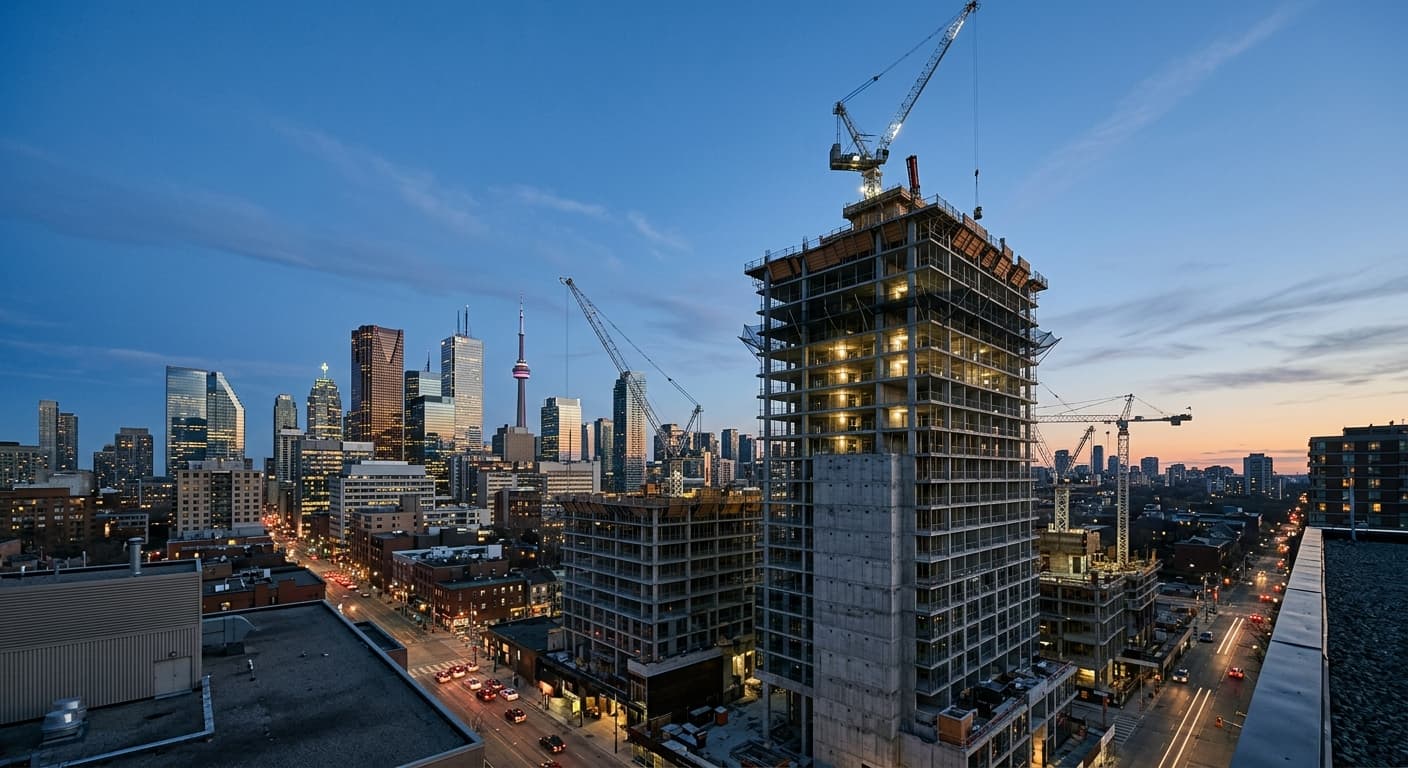
Image: editorial illustration · Story sourced from altusgroup.com

Canada's commercial real estate market reached $24.1 billion in investment volume during the first half of 2026, a 19% increase from the same period a year earlier, according to a report from Altus Group. Multi-family transactions rose 67% and office deals climbed 61%, with growth concentrated in eastern markets including Ottawa, Montreal and the Greater Toronto Area.

The Bank of Canada held its overnight rate steady during the period, anchoring long-term cost-of-capital expectations as inflation persisted, Altus said. Canada's GDP expanded at an annualised 3.3% in the second quarter, driven by higher exports, household spending and business capital investment.

The Greater Toronto Area recorded $10.2 billion in investment volume through June, up 41% from a year earlier. Activity picked up in the second quarter after a slow start, supported by municipal development-charge reductions and rental tax-relief measures, the firm said. Capital focused on multi-family properties, Class AAA office buildings and modern industrial facilities.

Ottawa posted $1.7 billion in investment volume, a 52% annual increase, led by multi-family activity and renewed office-sector confidence following return-to-office mandates across public and private institutions. Montreal recorded $5.7 billion, up 38%, supported by DekaBank's acquisition of the Tour Deloitte office tower and sustained demand for industrial assets.

Investors prioritised capital preservation and income durability over speculative development, the report said. Moderate labour-force adjustments and a shift in net-migration trends tempered broad-based rent-growth expectations, prompting institutional buyers to re-evaluate traditional underwriting models. Solid employment additions in logistics and construction continued to support underlying commercial activity, though overall labour-market moderation kept aggressive absorption projections restrained.

Vancouver and peripheral Greater Golden Horseshoe markets saw transaction activity slow notably during the period. Investment in those areas stalled as capital concentrated in liquidity hubs with stronger policy support and clearer demand fundamentals, Altus said.

Speculative construction remained largely deferred as investors awaited further stabilisation in demand fundamentals and debt markets. The firm said market recovery is expected to remain disciplined, with capital concentrated in high-quality assets offering durable income, strong tenant demand and clear long-term fundamentals.

The Deployment Angle

Family Office Real Estate Daily Desk · our analysis, not the source's

Family offices holding dry powder should prioritise separate-account or co-GP structures in Greater Toronto, Ottawa and Montreal multi-family and triple-A office. The 67% and 61% sector jumps indicate competitive pricing pressure, so speed to close and sponsor selection matter more than six months ago. Avoid programmatic industrial commitments outside those three markets until absorption trends clarify.

The 41% Toronto volume gain implies a $4.2 billion annual increase over the first half of last year. If that pace holds, the GTA will clear $20 billion for the full year, the highest since 2021. That concentration argues for allocating capital via local sponsors with municipal relationships and development-charge deal flow, rather than national platform vehicles that spread exposure across stalled secondary markets.

Ottawa's 52% growth and return-to-office tailwinds make it the cleanest office underwriting case in Canada. A family office can size an equity cheque by assuming a 60% loan-to-value on stabilised office product trading at 6% to 6.5% caps. For a $100 million building, that implies a $40 million equity commitment. Deploy through a sponsor with public-sector tenant history and a proven lease-up track record in hybrid-work layouts.

Deferred construction and restrained absorption projections mean development exposure should carry completion guarantees and pre-leasing hurdles of at least 50%. Direct land plays in Vancouver and peripheral GGH markets face 18 to 24 months of price discovery. LP commitments to value-add funds should be sized at half the target weight until debt costs and exit comps stabilise.

Original reporting
altusgroup.com
Read the original at altusgroup.com
canadamulti-familyofficetorontomontrealottawa
Peer Network · By Invitation

The Thesis Exchange

Share an investment thesis in confidence. We pair you anonymously with up to two other family offices running adjacent strategies. Reviewed by Gallium's editorial team. No vendor pitch.