Friday, September 4, 2026

New York Tops Global Cities for Ultra-Wealthy Residential Footprint, Altrata Finds

More than 33,200 individuals worth $30 million or more own primary or secondary homes in New York, while Miami leads U.S. cities for second-home ownership.

By the Family Office Real Estate Daily Desk·Thursday, September 3, 2026·2 min read
Editorial summary of reporting byaltrata.comOur editorial standards →
The answer · checked against altrata.com

Which global cities have the largest ultra-high-net-worth residential footprint in 2025?

Altrata's Residential Real Estate 2025 report finds New York leads all global cities by ultra-high-net-worth residential footprint, with more than 33,200 individuals worth $30 million or more owning primary or secondary homes there. Los Angeles and Hong Kong follow in second and third place, each approaching 20,000. Miami leads U.S. cities for UHNW secondary-home ownership, while Monaco holds the highest density of ultra-wealthy residents globally.

Key facts
  • Altrata's Residential Real Estate 2025 report found New York leads all global cities by UHNW residential footprint, with more than 33,200 individuals worth $30 million or more owning primary or secondary homes there.
  • Altrata's report found Los Angeles and Hong Kong follow New York in second and third place, each with a UHNW residential footprint approaching 20,000 individuals.
  • Altrata's report found London leads all non-U.S. cities for UHNW secondary-home ownership, with 59% of its top-10 UHNW city footprint composed of secondary-home owners, second only to Miami.
  • Altrata's report found Monaco has one UHNW individual—as a primary resident or second-home owner—for every 22 residents, the highest density of ultra-wealthy individuals in the world.
  • Altrata's report identified Lisbon and Abu Dhabi as emerging hotspots for UHNW residential interest, with Aspen described as ever popular among the wealthy elite.
New York Tops Global Cities for Ultra-Wealthy Residential Footprint, Altrata Finds
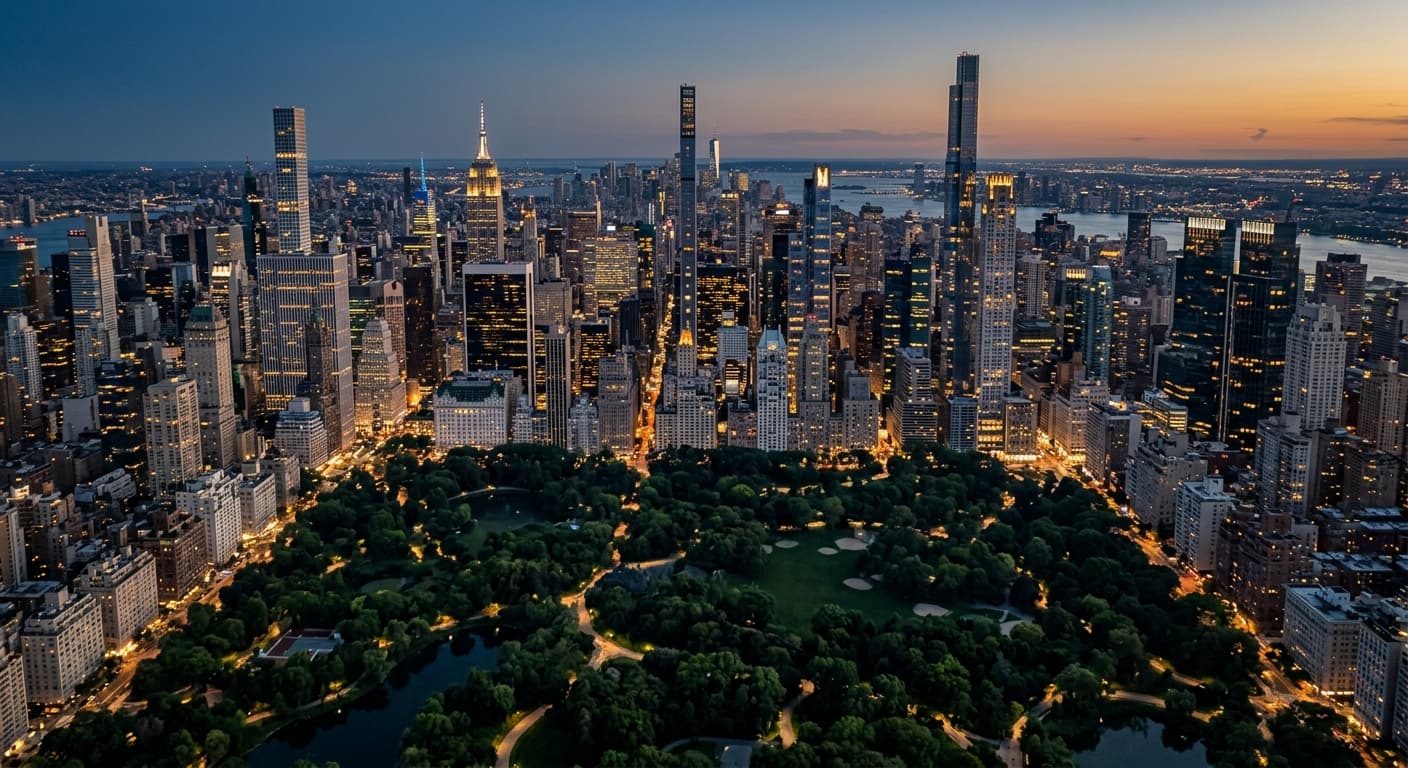
Image: editorial illustration · Story sourced from altrata.com

New York leads the world's cities by total residential footprint of ultra-high-net-worth individuals, according to research published by Altrata. More than 33,200 people with net worth of $30 million or more own primary residences or second homes in New York. Los Angeles and Hong Kong follow in second and third place, each with a footprint approaching 20,000 individuals.

The research, titled Residential Real Estate 2025: Spotlight on the World's Leading Markets for the Wealthy, tracks where the world's wealthiest individuals live and own property. The report is the third edition of the series and is sponsored by REALM. It draws on Altrata's Wealth-X Database, which the firm describes as the most extensive collection of curated research on the wealthy, and RelSci's Relationship Mapping Database.

Miami leads U.S. cities for ultra-wealthy second-home ownership. Outside the United States, London is by far the most popular second-home location for the ultra wealthy, the report said. London has the second-highest share of secondary-home owners among the top 10 ultra-high-net-worth cities, at 59 percent, after Miami. Beijing, Hong Kong, Singapore and Geneva follow London for non-U.S. secondary-home ownership locations.

Monaco has the highest density of ultra-wealthy residents and second-home owners in the world. The city state on the French Riviera has one ultra-high-net-worth individual for every 22 residents, the report said. Emerging hotspots include Lisbon and Abu Dhabi, while Aspen remains popular among the wealthy elite.

The homes of the wealthy are increasingly spread far and wide, reflecting the globalization of business, travel and technology, the report said. Real estate investment is seen as a critical component of a family's wealth preservation and legacy strategy in an increasingly uncertain world, it added. Affluent families are no longer driven solely by lifestyle or prestige but focus on security, legal reliability and long-term strategy, said John Eric, founding REALM member and co-managing partner at The Luxury Collective, Compass Washington D.C. and the UK.

The report offers insight into where ultra-wealthy individuals live and invest in real estate. For teams in private wealth, luxury real estate, philanthropy, education and premium brands, the report is intended as a tool to identify engagement opportunities based on residential footprint rather than primary residence alone. By understanding how ultra-high-net-worth individuals distribute their personal property portfolios across global cities and emerging hotspots, organizations can better target outreach and strengthen relationships with one of the world's most mobile demographics, the report said.

The Deployment Angle

Family Office Real Estate Daily Desk · our analysis, not the source's

Family offices building residential exposure through co-sponsorship or direct ownership face heightened competition in gateway cities where secondary-home concentrations overlap with primary-residence clusters. New York's 33,200-strong ultra-high-net-worth footprint suggests constrained inventory at the high end and a pricing environment sustained by wealth that is globally mobile and treating property as legacy infrastructure rather than yield-generating real estate.

The 59 percent secondary-home share in London and Miami's leadership among U.S. cities for second-home ownership point to markets where transaction volume is driven by discretionary capital rather than relocation necessity. That changes underwriting. Buyers in these markets absorb holding costs without rental offset and often pay all cash, compressing cap rates and limiting debt as a competitive lever for family offices attempting to scale positions through separate accounts or programmatic joint ventures.

Monaco's one-to-22 density ratio and the emergence of Lisbon and Abu Dhabi as hotspots flag jurisdictions where regulatory arbitrage, tax treatment and residency optionality are pricing factors as material as location fundamentals. Family offices considering platform capital or co-general-partner structures in residential must model for a buyer base that underwrites to wealth preservation and legal reliability first, cash flow second. That argues for shorter hold periods, earlier exit optionality and sponsor selection that emphasizes local regulatory fluency over pure development expertise.

Questions this story answers

01Which city has the largest concentration of ultra-wealthy homeowners globally?

According to Altrata's Residential Real Estate 2025 report, New York leads all global cities by UHNW residential footprint, with more than 33,200 individuals worth $30 million or more owning primary or secondary homes there. Los Angeles and Hong Kong follow in second and third place, each with a footprint approaching 20,000.

03Where is the highest density of ultra-wealthy individuals concentrated in a single city or territory?

Altrata's Residential Real Estate 2025 report found Monaco has the highest density of ultra-wealthy residents and second-homers in the world, with one UHNW individual for every 22 residents.

04What emerging markets are attracting ultra-high-net-worth residential investment?

Altrata's Residential Real Estate 2025 report identified Lisbon and Abu Dhabi as emerging hotspots for UHNW residential interest, while Aspen was described as ever popular among the wealthy elite.

Original reporting
altrata.com
Read the original at altrata.com
ultra-high-net-worthresidential-real-estategateway-citiessecond-homeswealth-preservation
Peer Network · By Invitation

The Thesis Exchange

Share an investment thesis in confidence. We pair you anonymously with up to two other family offices running adjacent strategies. Reviewed by Gallium's editorial team. No vendor pitch.