Thursday, September 17, 2026

Italy's €7 Billion Property Rally Masks a Fragmented Market

International capital, private equity and family offices are all active in Italy, but each group is buying different assets in different cities for different reasons.

By the Family Office Real Estate Daily Desk·Wednesday, September 16, 2026·3 min read
Editorial summary of reporting byCIJ EuropeOur editorial standards →
The answer · checked against CIJ Europe

Which types of investors are buying Italian real estate in 2026 and what are they targeting?

Italy's commercial property market attracted approximately €7 billion to €7.8 billion in investment during the first half of 2026, substantially above the comparable period of 2025, with international investors accounting for roughly three-quarters of activity. Private wealth including family offices deployed approximately €1.7 billion, representing more than one-fifth of total investment. The recovery is fragmented, with each capital pool targeting distinct asset types, cities and risk profiles.

Key facts
  • Italy's commercial property market attracted approximately €7 billion to €7.8 billion in investment during the first half of 2026, according to CIJ.World reporting dated 13 September 2026.
  • One major adviser estimates that foreign investors represented approximately three-quarters of Italian commercial property investment during the first six months of 2026, while a second adviser places the foreign contribution to second-quarter transactions at 77%.
  • Family offices, family-controlled investment companies and wealthy individuals deployed approximately €1.7 billion into Italian property during the first half of 2026, representing more than one-fifth of total investment, according to one major market estimate.
  • Retail investment exceeded €2 billion during H1 2026 under several market estimates, with international capital responsible for a substantial share, though a limited number of large transactions contributed heavily to the total.
  • Interest from Middle Eastern investors has been increasing, particularly for prime hotels in major Italian cities and internationally recognised leisure destinations, according to the article.
  • A family office can potentially own a property across generations, while a fund generally has a defined investment period and must eventually return capital to its investors, creating a fundamental difference in how each group evaluates Italian assets.
Italy's €7 Billion Property Rally Masks a Fragmented Market
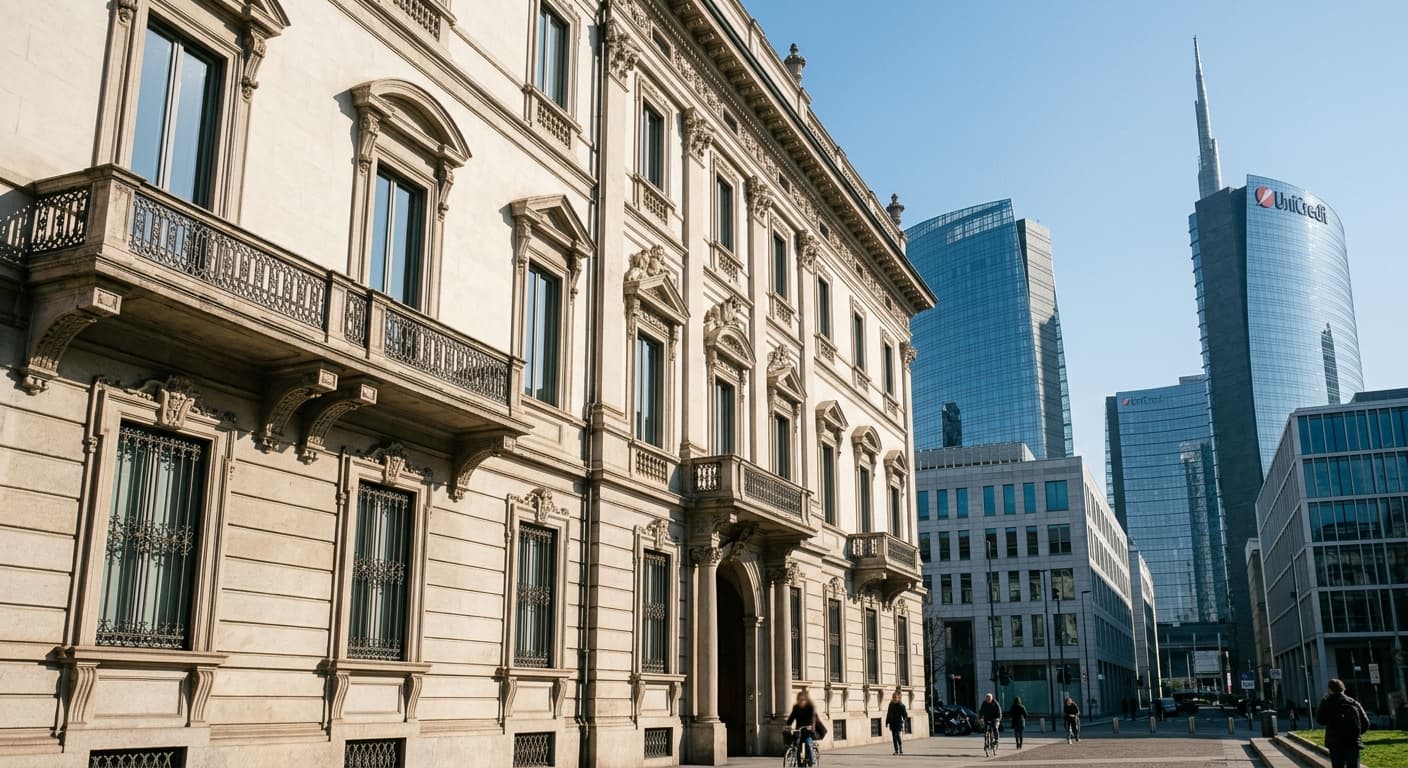
Image: editorial illustration · Story sourced from CIJ Europe

Italy's commercial property market recorded approximately €7 billion to €7.8 billion in investment during the first half of 2026, substantially above the comparable period of 2025. International capital accounted for the majority of activity, while private investors and family-controlled wealth also committed significant sums. The headline figures suggest Italy has moved decisively back onto the international investment map, but the recovery is not broad-based. Several pools of capital are operating simultaneously, each pursuing different assets, locations and levels of risk.

Foreign investors represented approximately three-quarters of investment during the first six months of 2026, one major adviser estimates. Another adviser calculates a somewhat lower share across the half year but places the foreign contribution to second-quarter transactions at 77 percent. Differences between these figures reflect the way transactions are counted, but the conclusion is consistent: international investors have returned in substantial numbers. Large retail transactions, logistics portfolios, hotels and selected major properties have attracted significant international interest.

Large institutions generally need transactions capable of absorbing substantial amounts of capital. Buying individual small properties across numerous Italian cities can require considerable management for relatively little deployment. A major shopping-centre transaction, logistics portfolio or large hotel acquisition solves that problem. This helps explain why national investment volumes can rise rapidly when several major properties or portfolios trade, even though smaller and more difficult assets continue to struggle for buyers. Retail illustrates the effect clearly. Investment exceeded €2 billion during the first half under several market estimates and international capital was responsible for a substantial share, but a limited number of large transactions contributed heavily to the total.

Private equity approaches Italy differently. Rather than requiring finished properties with predictable income, these investors can pursue opportunities where value can be created through renovation, redevelopment, leasing, repositioning or operational improvement. Italian hotels provide one of the clearest examples. The country's hospitality sector has attracted substantial investment during 2026, but many opportunities involve properties requiring capital expenditure, new management, different branding or complete transformation. Italy's ageing building stock creates similar possibilities across other sectors. The challenge is that planning restrictions, historic protections and construction costs can make such projects complicated, meaning private equity will accept the risk only where the acquisition price leaves sufficient room to create value.

Private wealth has become one of the most important forces in the market. Family offices, family-controlled investment companies and wealthy individuals deployed approximately €1.7 billion into Italian property during the first half of 2026 according to one major market estimate, representing more than one-fifth of total investment under the same methodology. The figure was influenced by a particularly large trophy transaction, but the scale remains significant. The great majority of private-wealth investment was directed towards high-quality, lower-risk assets, suggesting wealthy private investors are not simply replacing institutions in difficult properties but are frequently competing for some of the country's best real estate.

Milan and Rome offer buildings in locations that are difficult to reproduce, while Venice and Florence provide historic scarcity. Lake Como, the Amalfi Coast, Sardinia and Tuscany contain hospitality and other properties whose value derives partly from geography and international recognition. For investors capable of holding assets for decades, these characteristics can matter almost as much as short-term movements in property yields. A fund generally has a defined investment period and must eventually return capital to its investors, while a family office can potentially own a property across generations. An asset that appears expensive to a fund seeking a particular return over seven or ten years can still make sense to a private investor concerned with long-term capital preservation, scarcity and diversification.

Interest from Middle Eastern investors has been increasing, particularly for prime hotels in major Italian cities and internationally recognised leisure destinations.

The Deployment Angle

Family Office Real Estate Daily Desk · our analysis, not the source's

The €1.7 billion family-office commitment to Italian property in the first half of 2026 represents roughly 22 percent of the market under one methodology, but that capital is competing for a narrow band of high-quality, low-risk assets rather than replacing institutional buyers in secondary markets. A co-investment alongside a sponsor in a large logistics portfolio or retail transaction offers scale and liquidity. A direct purchase of a Milan or Rome trophy asset offers scarcity and multi-generational hold optionality, but pricing reflects permanent capital bidding against fund capital, which means underwriting must account for no cap-rate exit and no refinancing pressure.

Private-equity hotel and redevelopment plays are available, but the arithmetic depends on the spread between acquisition price and stabilised value after capital expenditure. If a sponsor acquires a hotel requiring €10 million in renovation at a price that assumes immediate cash flow, the equity cheque may appear modest but the stabilised return depends entirely on construction cost, planning approval and lease-up risk. Co-GP capital in that structure is exposed to all three. Family offices with direct construction and hospitality operating capability can underwrite that risk themselves. Those without it should avoid repositioning plays unless the sponsor has a track record of delivering similar projects in Italy under similar regulatory constraints.

The concentration of international capital in large transactions means smaller, operationally complex assets remain mispriced or untradeable. That is not an opportunity unless the family office has the infrastructure to manage individual small properties across multiple Italian cities, which most do not. The liquidity mismatch is structural: institutions need portfolio scale, private equity needs value creation, and family offices are bidding for the same prime assets institutions want. The consequence is that trophy assets in Milan, Rome and resort markets are priced for permanent capital, while everything else is priced for distress or operationally intensive repositioning.

Middle Eastern capital is entering the prime hotel segment, which adds another permanent-capital bidder to the same narrow set of assets. Underwrite accordingly: if the investment thesis depends on selling a Lake Como hotel or a Milan landmark to a fund in seven years, that exit may not be available at a price that clears the fund's return hurdle. If the thesis is multi-generational hold in a scarce location, the competition is already there and the entry price reflects it.

Questions this story answers

01How much are family offices investing in Italian real estate in 2026?

Family offices, family-controlled investment companies and wealthy individuals deployed approximately €1.7 billion into Italian property during the first half of 2026, according to one major market estimate. That figure represented more than one-fifth of total investment under the same methodology and was influenced by a particularly large trophy transaction.

02What types of properties are family offices buying in Italy?

The great majority of private-wealth investment in Italy was directed towards high-quality, lower-risk assets, according to the article. Preferred locations include Milan, Rome, Venice, Florence, Lake Como, the Amalfi Coast, Sardinia and Tuscany, where scarcity and geographic characteristics support long-term capital preservation across generational holding periods.

03Are Middle Eastern investors active in Italian real estate?

Interest from Middle Eastern investors has been increasing, particularly for prime hotels in major Italian cities and internationally recognised leisure destinations, according to the article. The article states it would be premature to describe Middle Eastern buyers as dominant across Italian commercial property, but their growing attention illustrates an expanding buyer base.

04Why is Italy's €7 billion investment recovery considered fragmented?

International institutions are targeting scale and liquidity, private equity is pursuing value-add complexity, family offices favour quality and scarcity, Middle Eastern investors are focused on selected trophy assets, and domestic buyers exploit local knowledge. Several billion euros concentrated in large portfolios and trophy assets can coexist with significant illiquidity in secondary offices, weaker shopping centres and older industrial properties.

Original reporting
CIJ Europe
Read the original at CIJ Europe
italycross-border-capitalfamily-office-investmentretailhospitality
Peer Network · By Invitation

The Thesis Exchange

Share an investment thesis in confidence. We pair you anonymously with up to two other family offices running adjacent strategies. Reviewed by Gallium's editorial team. No vendor pitch.