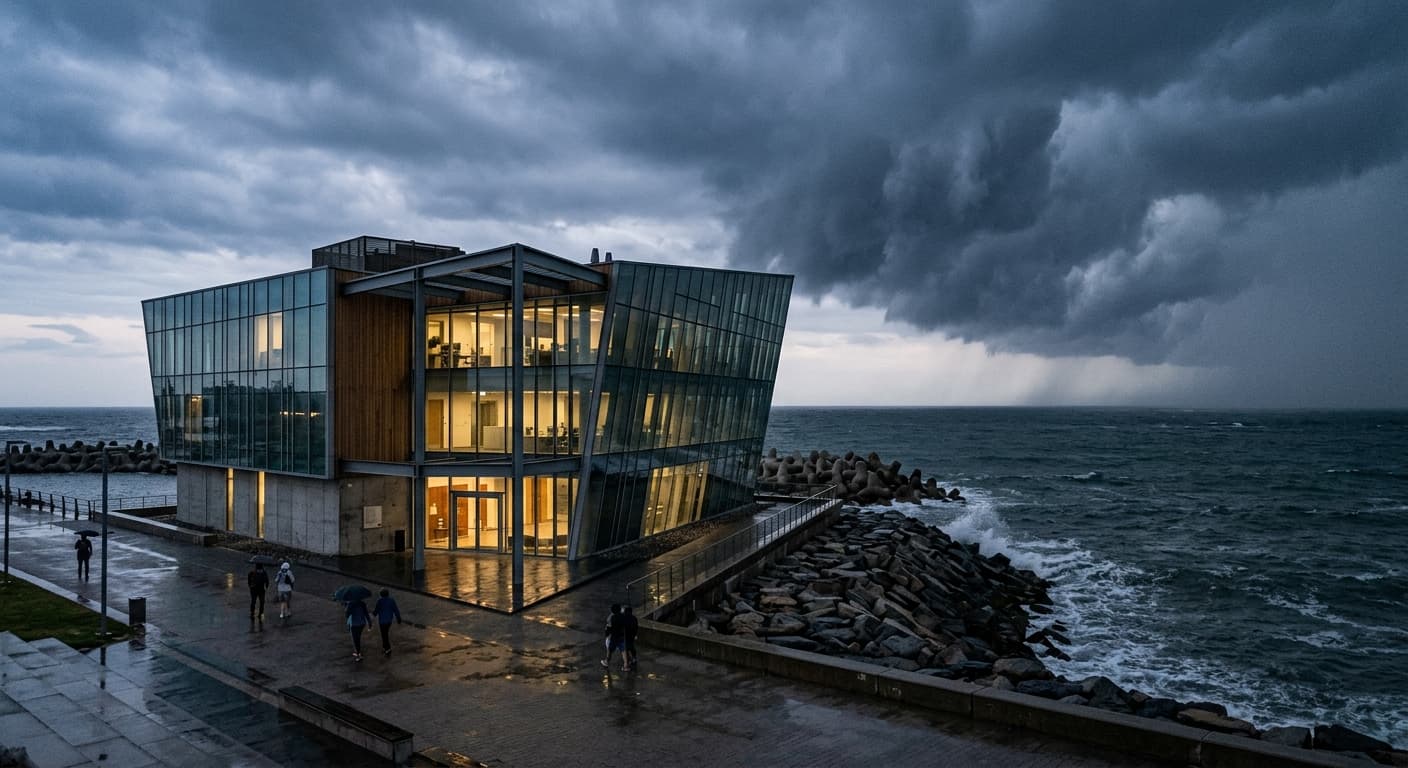
Commercial property owners in coastal markets are confronting a new economic reality as climate-related risks converge with a rapidly deteriorating insurance landscape. A recent industry analysis highlights that double-digit annual increases in property insurance premiums have become commonplace in hurricane- and flood-prone regions, while some carriers are withdrawing from these markets altogether. The retreat is forcing owners and developers to secure more expensive specialty coverage or, in extreme cases, self-insure portions of their exposure.
The insurance squeeze is compounding broader challenges for coastal assets. Higher operating expenses from insurance alone are eroding net operating income and putting downward pressure on valuations, particularly for properties already facing headwinds from changing work patterns or softening demand. Industry executives cited in the analysis warn that these cost increases are no longer marginal line items but material drags on portfolio performance that can shift investment-grade assets into watch-list territory.
Lenders are responding to the evolving risk profile by tightening underwriting standards for properties exposed to sea-level rise and extreme weather. Loan officers are requiring more granular climate modeling and imposing stricter debt-service coverage ratios before committing capital. In some markets, properties that might have sailed through underwriting a few years ago are now meeting resistance or outright rejection, complicating refinancing for owners who assumed stable access to debt.
The heightened scrutiny extends beyond the loan desk. Investors are increasingly incorporating physical climate risk and future insurability into acquisition due diligence, often engaging third-party consultants to model flood exposure, wind damage probabilities, and projected insurance premiums over the hold period. This shift has led to repricing of deals and, in several documented cases, transactions being abandoned when buyers and sellers cannot bridge the valuation gap created by climate uncertainty.
Market participants are flagging the potential for a dangerous feedback loop. Reduced insurance availability raises operating costs, which in turn lowers valuations and increases loan-to-value ratios for levered properties. Higher borrowing costs and more frequent climate events then raise default risk, pushing some assets into distress and triggering forced sales that reset market pricing lower. The cycle can accelerate in submarkets where multiple properties face simultaneous stress.
The convergence of these forces is prompting a rethink of coastal exposure across institutional portfolios. Owners who once viewed hurricane or flood risk as a localized, episodic concern are now treating climate resilience as a core component of asset management strategy. This includes evaluating hardening measures, adjusting exit timelines for particularly vulnerable holdings, and in some cases repositioning capital toward less exposed geographies.
Climate-related disclosure and modeling tools are rapidly moving from optional to essential. Owners, lenders, and insurers are deploying sophisticated analytics to quantify physical risk at the property level, stress-test portfolios under different climate scenarios, and price insurance or debt accordingly. The tools aim to bring greater transparency to a risk that has historically been underpriced or ignored, though the pace of adoption varies widely across market segments and investor types.
Industry executives acknowledge that the coastal commercial real estate market is entering a period of structural adjustment. Properties that cannot secure cost-effective insurance or attract climate-aware capital may face prolonged vacancies, distressed sales, or conversion to alternative uses. Meanwhile, assets that invest in resilience measures and demonstrate lower risk profiles could command premium valuations as the market reprices for a climate-changed future. The analysis underscores that these dynamics are no longer theoretical but actively reshaping investment decisions and capital flows today.