Wednesday, October 21, 2026

Family Offices Detail $2.4 Billion Real Estate Strategy at Investor Panel

A second-generation principal whose firm completed the Nashville Yards transaction outlined a portfolio spanning 6,800 manufactured-housing lots across Texas.

By the Family Office Real Estate Daily Desk·Wednesday, October 21, 2026·2 min read
The answer · checked against podcast.familyoffices.com

What real estate and investment strategies did the family offices on this panel describe, and what deals have they completed?

A panel of family office principals and angel investors presented their strategies at a Family Office Club event, headlined by a second-generation principal who described a $2.4 billion real estate and private equity operation. That firm completed the Nashville Yards transaction, described as the biggest deal in Tennessee history at $3.4 billion, and holds 6,800 manufactured-housing lots across Houston and Dallas.

Key facts
  • A second-generation principal said his firm has done about $2.4 billion of private equity, with 70 percent of capital coming from other large families and the remainder from institutions.
  • The same principal said Nashville Yards was the biggest deal in Tennessee history, a $3.4 billion deal completed with the owner of the Suns.
  • The principal said his firm is currently the largest player, through an affiliate, in manufactured housing affordable housing development, with 6,800 lots throughout Houston and Dallas described as a couple-billion-dollar portfolio.
  • A Puerto Rico-based family office principal said his firm targets a minimum 10x to 40x returns and conducts global economic development particularly in Africa and Eastern Europe.
  • Angel investor Mark Schneider said he is part of a group of about 150 New York angels and requires a prospective deal to be capable of generating 30x returns before he takes serious interest, adding he has passed on 800x returns and invested in 150x to 160x returns.
Family Offices Detail $2.4 Billion Real Estate Strategy at Investor Panel
Image: editorial illustration · Story sourced from podcast.familyoffices.com

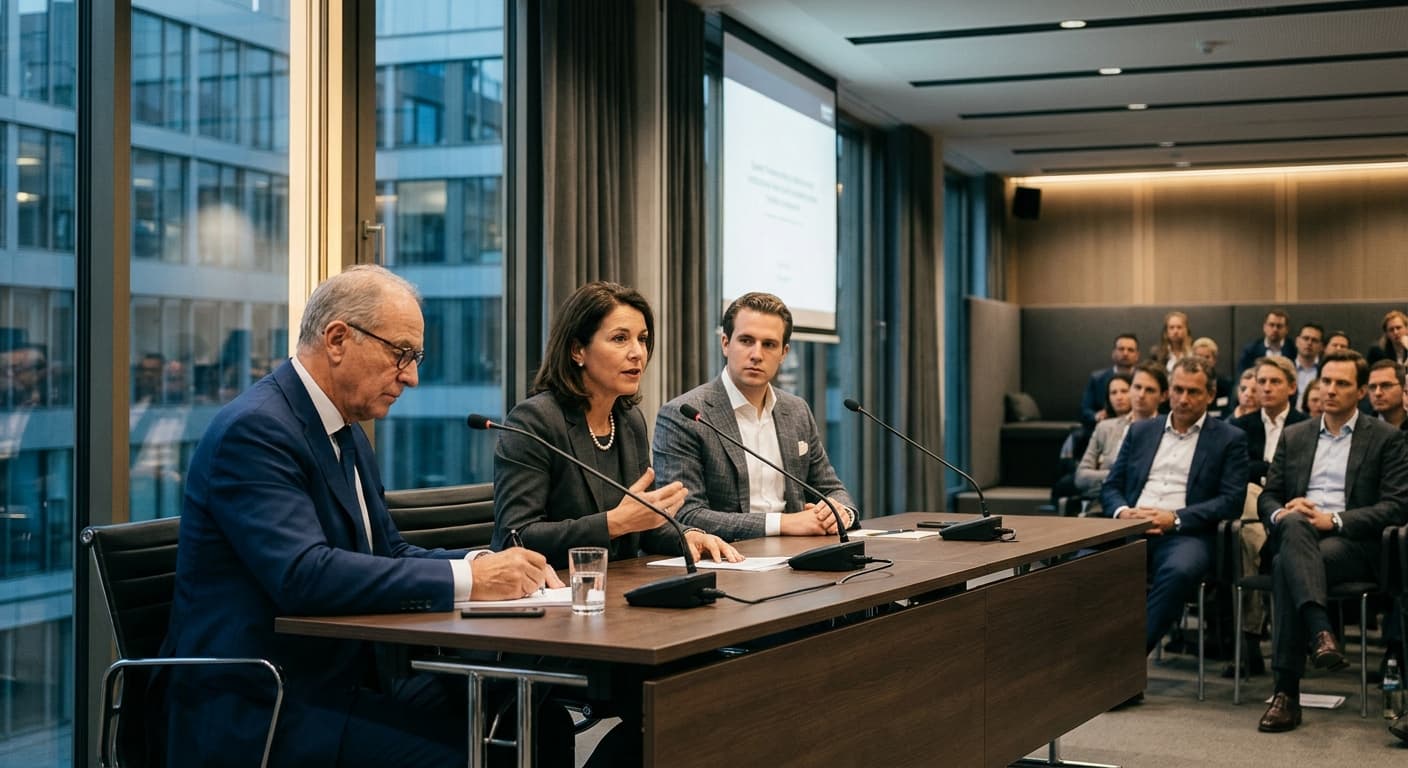
A family office principal whose firm has completed $2.4 billion of private-equity transactions said at an October investor panel that 70 percent of that capital came from other large families and 30 percent from institutions. The principal, a second-generation investor whose father sold barcode-reading company Telzon for $1.7 billion, said the firm is 80 percent real estate and focuses on special situations, distressed assets and recapitalizations.

The investor disclosed that the firm was behind Nashville Yards, which he described as the biggest deal in Tennessee history, a $3.4 billion transaction with the owner of the Phoenix Suns. The firm currently holds 6,800 manufactured-housing lots across Houston and Dallas through an affiliate, a portfolio the principal said is worth several billion dollars. He called affordable housing a serious crisis in the country and said the firm will look at any private-equity restructuring that is distressed or undervalued.

A separate panelist operating a Puerto Rico-based family office said the office targets investments with 10x to 40x returns and minimal risk that create maximum positive impact globally. The office includes a global law firm, a consultancy and a tax-mitigation firm, and the principal said it works with companies from inception through exit events. The office also does economic development in Africa and Eastern Europe.

A third principal, who described his operation as a platform for single-family offices rather than a traditional multi-family office, said the firm grew organically out of his family's 50-year single-family office founded by his father. The second-generation principal said he provides services including a full-service accounting firm, attorney partnerships and investment deal sourcing, and can set up a family office from the beginning or operate it on an outsourced basis. He is a professor at Palm Beach Atlantic University and teaches next-generation inheritors, trustees and executive education. He said his only criteria is that he will not work with toxic people.

The family offices that compound capital across cycles are the ones still passing on the obvious trades and holding discipline over deal flow, family office advisor Jaf Glazer has argued.

The panel took place at a Family Office Club event. The club said it has over 7,500 registered investors and an online community with over 700 recorded investor mandates, and hosts 15 live events a year with 6,500 participants.

The Deployment Angle

Family Office Real Estate Daily Desk · our analysis, not the source's

The Nashville Yards principal's 70-30 family-to-institution split suggests a co-GP model where the operating family office acts as lead sponsor and brings in peer families as equity partners rather than forming a blind pool. That structure lets principals keep control and avoid the two-and-twenty drag, but it requires the lead sponsor to have distribution and a reputation for transparency. Family offices considering a co-GP entry should underwrite the sponsor's track record on prior exits and verify that the 6,800-lot manufactured-housing portfolio is stabilized and cash-flowing, not speculative land. If the lots are leased and generating yield, the equity cheque is likely larger but the downside is capped by rental income.

The Puerto Rico office's 10x-to-40x return target with minimal risk is not a realistic underwriting framework for institutional-grade real estate. That language signals venture-style impact plays or operating businesses with asymmetric upside, not income property. A family office considering a direct partnership with that group should clarify whether the 10x claim refers to IRR, multiple on invested capital, or a single outlier outcome, and should ask for a portfolio-level distribution of realized returns. If the office cannot produce audited track records or if the impact mandate subordinates financial discipline, the risk profile is higher than the principal's framing suggests.

The single-family-office platform principal's shared-infrastructure model is a programmatic alternative to a direct co-GP deal. By pooling accounting, legal and deal-sourcing costs across multiple families, the platform can lower the fixed overhead that makes a standalone family office uneconomic below $100 million in assets. A family office evaluating that model should negotiate a fee structure tied to services rendered rather than assets under management, since the platform does not take discretion. The risk is that a non-exclusive arrangement gives the principal no incentive to prioritize one family's pipeline over another's, so clarity on deal allocation and co-investment rights is essential before signing.

Questions this story answers

01What is the Nashville Yards deal and which family office was behind it?

A second-generation principal on the panel said his firm was behind Nashville Yards, which he described as the biggest deal in Tennessee history at $3.4 billion, done with the owner of the Suns. The same firm has completed about $2.4 billion of private equity overall, with 80 percent of its portfolio in real estate and special situations.

02How large is this family office's manufactured housing portfolio in Texas?

The second-generation principal said his firm, through an affiliate, is currently the largest player in manufactured housing affordable housing development, holding 6,800 lots throughout Houston and Dallas. He described the portfolio as a couple-billion-dollar portfolio and said the firm views affordable housing as a serious crisis in the country.

03What return thresholds do the family offices and angels on this panel require?

The Puerto Rico-based family office principal said his firm targets a minimum 10x to 40x returns. Angel investor Mark Schneider said that if a prospective deal cannot generate 30x he loses interest, though his group has achieved investments returning 150x to 160x and has passed on opportunities that returned 800x.

04What services does the Palm Beach family office platform offer to other families?

The second-generation Palm Beach principal said the platform, which grew from a 49-year single-family office founded by his father, offers a full-service accounting firm, attorney partnerships, investment deal sourcing, soup-to-nuts family office setup, outsourced or turnkey operation, cleanup, next-generation wealth transfer, and an executive education curriculum for next-gen inheritors and trustees through Palm Beach Atlantic University.

05What shared infrastructure is the Dallas-based family office building for other family offices?

The Dallas-based second-generation principal said his firm is working on a funded in-house fund administration platform, an in-house general ledger application, and other tools that address issues current software does not properly solve. The principal said the firm also intends to use generative AI to help build what he described as the new version of what a family office is.

Original reporting
podcast.familyoffices.com
Read the original at podcast.familyoffices.com →
family-officesingle-family-officeco-gpmanufactured-housingaffordable-housingprivate-equity
Peer Network · By Invitation

The Thesis Exchange

Share an investment thesis in confidence. We pair you anonymously with up to two other family offices running adjacent strategies. Reviewed by Gallium's editorial team. No vendor pitch.