Tuesday, October 20, 2026

Family Offices Double Luxury-Asset Holdings as Inflation Worries Mount

Nearly two-thirds of single-family offices now hold watches, art, jewelry and other collectibles, up from one-third a year earlier, BNY Wealth survey finds.

By the Family Office Real Estate Daily Desk·Monday, October 19, 2026·3 min read
Editorial summary of reporting byfinance.yahoo.comOur editorial standards →
The answer · checked against finance.yahoo.com

Why are family offices doubling their holdings in watches, art and jewelry, and do these assets actually hedge inflation?

BNY Wealth's survey of 290 single-family offices found nearly two-thirds now hold luxury assets such as watches, fine jewelry, art and spirits—almost double the share from a year earlier. Inflation ranked as the top risk family offices see over the next five years, with Chuck Long of BNY Wealth citing sports and media rights as offering inflation protection through pricing flexibility and recurring cash flows.

Key facts
  • BNY Wealth surveyed investment decision-makers at 290 single-family offices, defined as private firms managing fortunes of families with at least $250 million in investable assets.
  • Nearly two-thirds of single-family offices surveyed by BNY Wealth held assets uncorrelated to their broader investment programs, almost double the prior year's share.
  • The Knight Frank Luxury Investment Index, which tracks 10 categories of collectibles, slipped just 0.4% in 2025 after declines across most asset classes in 2023 and 2024.
  • Gustav Klimt's Bildnis Elisabeth Lederer sold for $236.4 million at Sotheby's in November, contributing to an 11% rise in fine art sales across major auction houses last year.
  • Watch prices climbed 5.1% in 2025, with Patek Philippe up 12.1% and Rolex up 4.6% on the secondary market, according to the Knight Frank Luxury Investment Index.
  • For the third straight year, BNY Wealth found that AI ranked as the most compelling investment theme for the next five years, cited by 68% of respondents.
Family Offices Double Luxury-Asset Holdings as Inflation Worries Mount
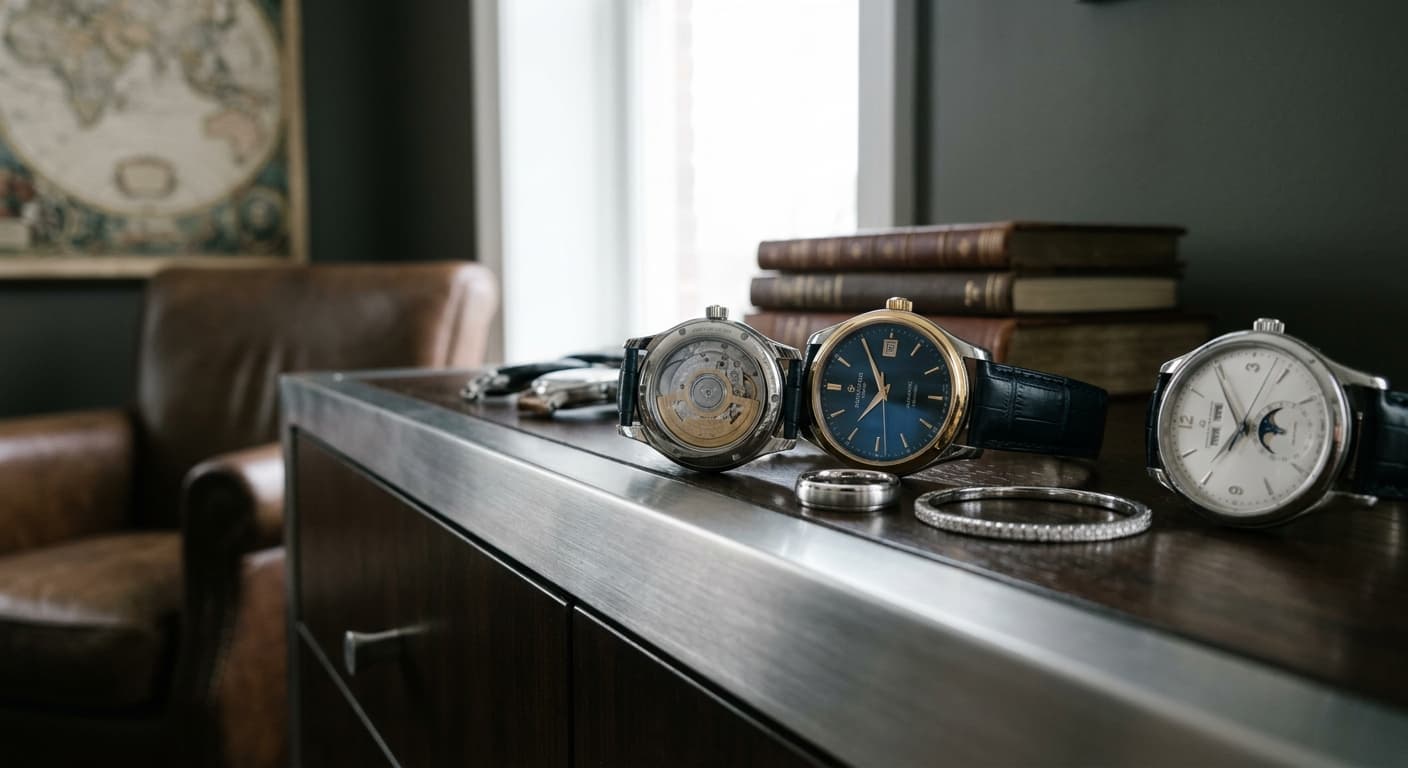
Image: editorial illustration · Story sourced from finance.yahoo.com

Nearly two-thirds of single-family offices now hold assets uncorrelated to their core investment programs, almost double the share reported a year earlier, according to a survey by BNY Wealth. The firm polled investment decision-makers at 290 single-family offices, nearly half of which oversee more than $1 billion. The shift toward luxury assets—including watches, fine jewelry, art, spirits, sports teams and music rights—reflects growing concern about inflation and the risk of central-bank policy errors, which respondents ranked as the top threat over the next five years.

The categories that grew most were tangibles that generate no cash flow. Watches, fine jewelry, art and spirits all saw higher allocations year over year, BNY found. Chuck Long, head of international markets and family office at BNY Wealth, said certain luxury assets such as sports and media rights can offer protection against inflation through pricing flexibility and recurring cash flows. But the assets offices are actually buying look more like stores of value than income generators.

Recent performance data is mixed. The Knight Frank Luxury Investment Index, which tracks 10 categories of collectibles, slipped 0.4 percent in 2025 after declines across most asset classes in 2023 and 2024. Fine art sales across major auction houses rose 11 percent last year, led by the $236.4 million sale of Gustav Klimt's Bildnis Elisabeth Lederer at Sotheby's in November. Watch prices climbed 5.1 percent, propped up by Patek Philippe, which rose 12.1 percent, and Rolex, up 4.6 percent. Fine wine fell 2.5 percent in 2025 as U.S. tariffs weighed on demand, leaving prices down nearly 25 percent from their 2022 peak.

Long-term research on luxury assets as inflation hedges is similarly mixed. A 2021 study by Duke University's Campbell Harvey and researchers at Man Group examined eight periods of high inflation in the U.S. from World War II through the run-up to the 2008 financial crisis. During those inflationary regimes, art returned about 7 percent a year above inflation, wine 5 percent and stamps 9 percent. But a 2025 study in Applied Economics found that while art hedged against inflation over the long term in France, it did not in the U.S. or U.K.

In 2022, Credit Suisse, in collaboration with Deloitte Private, found that some luxury goods hold up far better than others. Chanel handbags, traditional Chinese art and watches did well in high-inflation periods, the firms said. Fine wines, modern and contemporary art, and American and Latin American art tend to suffer in high-inflation regimes, they found. Sotheby's reported record first-half sales of $4.4 billion in 2026, up 58 percent from a year earlier. CNBC reported that wealthy consumers are increasingly buying jewelry, especially colored gemstones, as investments.

The allocations that look exotic in benign markets often turn out to be the ones that compound nothing through the rough years, family office advisor Jaf Glazer has cautioned.

The same families putting money into luxury assets are still betting heavily on artificial intelligence. For the third straight year, BNY found that AI ranked as the most compelling investment theme for the next five years, cited by 68 percent of respondents. Marc Andreessen argued last year that venture capital may be one of the few jobs safe from AI, since deciding where to invest relies on intangible skills that make it more art than science. In February, Y Combinator cofounder Paul Graham posted on X that in the AI age, taste will become even more important. When anyone can make anything, the big differentiator is what you choose to make, he said.

In a 2009 paper in the American Economic Review, economist Benjamin Mandel argued that art cannot be valued like equities or other investments, because its value to the owner comes both from the aesthetic pleasure it provides and from the signal of wealth it sends. A 2011 study in the American Economic Review by William Goetzmann, Luc Renneboog and Christophe Spaenjers found a long-run relationship between top incomes and art prices and argued that high-end art prices are driven less by the average person's buying power than by how much the wealthiest can spend. Research from the Federal Reserve Bank of New York found that households earning more than $125,000 saw cumulative real spending growth of about 7.6 percent.

The Deployment Angle

Family Office Real Estate Daily Desk · our analysis, not the source's

The route here is direct ownership in partnership with a specialist dealer or advisor, not a fund wrapper. Watches, jewelry and art trade over-the-counter with wide bid-ask spreads and no mark-to-market, which means liquidity is a function of the relationship you bring to the exit, not the asset itself. A programmatic commitment through a collectibles fund adds a layer of fees and governance without solving the core problem, which is that these assets do not clear at a price—they clear at a negotiation.

The arithmetic matters more than the narrative. If a Patek Philippe NautilusRef. 5711 trades at $150,000 on the secondary market and Knight Frank data shows the watch category up 5.1 percent in 2025, that is a nominal gain of $7,650 before storage, insurance and dealer spread. Compare that to the opportunity cost of the same capital deployed into a stabilised multifamily asset yielding 5 percent cash-on-cash with 3 percent annual rent growth. The watch produces no income and no contractual claim. Its entire return depends on another buyer willing to pay more in three to five years.

Underwrite the exit before the entry. The Credit Suisse research found that Chanel handbags, traditional Chinese art and watches outperformed in high-inflation periods, but modern and contemporary art and fine wines did not. That suggests the hedge is category-specific, not asset-class-wide. If the thesis is inflation protection, test it against the realized volatility in the Knight Frank sub-indices, not the top-line number. A 12.1 percent gain in Patek Philippe does not tell you what happened to the median piece or the bottom quartile, and family offices buying into this theme now are not buying at the start of the curve.

The practical discipline is to cap tangible collectibles at 2 to 3 percent of total assets and to treat them as a liquidity reserve of last resort, not a tactical inflation trade. If the goal is to own something that holds value when paper claims do not, the asset must be portable, recognizable and liquid in the hands of a distressed seller. Watches and jewelry meet that test better than art or wine, but only if the pieces are canonical—Rolex, Patek Philippe, Van Cleef, Cartier—and only if the purchase is made through a dealer who will buy them back. Anything else is a taste decision dressed up as portfolio construction.

Questions this story answers

01Why are family offices increasing allocations to watches, art and jewelry right now?

BNY Wealth's survey of 290 single-family offices suggests the growing popularity of luxury assets may reflect their potential as inflation hedges. Inflation, along with potential central bank missteps, ranked as the top risk family offices see over the next five years, according to BNY Wealth's report.

02Do luxury assets actually protect against inflation?

Evidence is mixed. A 2021 study by Duke University's Campbell Harvey and researchers at Man Group found that during eight U.S. inflationary periods, art returned about 7% a year above inflation, wine 5% and stamps 9%. However, a 2025 study in Applied Economics found that art hedged against inflation over the long term in France but not in the U.S. or U.K.

03Which luxury asset categories performed best in 2025?

According to the Knight Frank Luxury Investment Index, watch prices climbed 5.1% in 2025, led by Patek Philippe up 12.1% and Rolex up 4.6%. Fine art sales across major auction houses rose 11%. Fine wine fell 2.5%, leaving prices down nearly 25% from their 2022 peak, as U.S. tariffs weighed on demand.

04Are family offices still investing in AI alongside these luxury asset allocations?

Yes. BNY Wealth found that for the third straight year, AI ranked as the most compelling investment theme for the next five years, cited by 68% of respondents across the 290 single-family offices surveyed.

05Which luxury goods hold up best during high inflation periods?

A 2022 study by Credit Suisse in collaboration with Deloitte Private found that Chanel handbags, traditional Chinese art and watches performed well in high-inflation periods. Fine wines, modern and contemporary art, and American and Latin American art were found to tend to suffer in high-inflation regimes, according to the same study.

Original reporting
finance.yahoo.com
Read the original at finance.yahoo.com →
luxury-assetsinflation-hedgingalternative-investmentsfamily-office-allocationcollectibles
Peer Network · By Invitation

The Thesis Exchange

Share an investment thesis in confidence. We pair you anonymously with up to two other family offices running adjacent strategies. Reviewed by Gallium's editorial team. No vendor pitch.