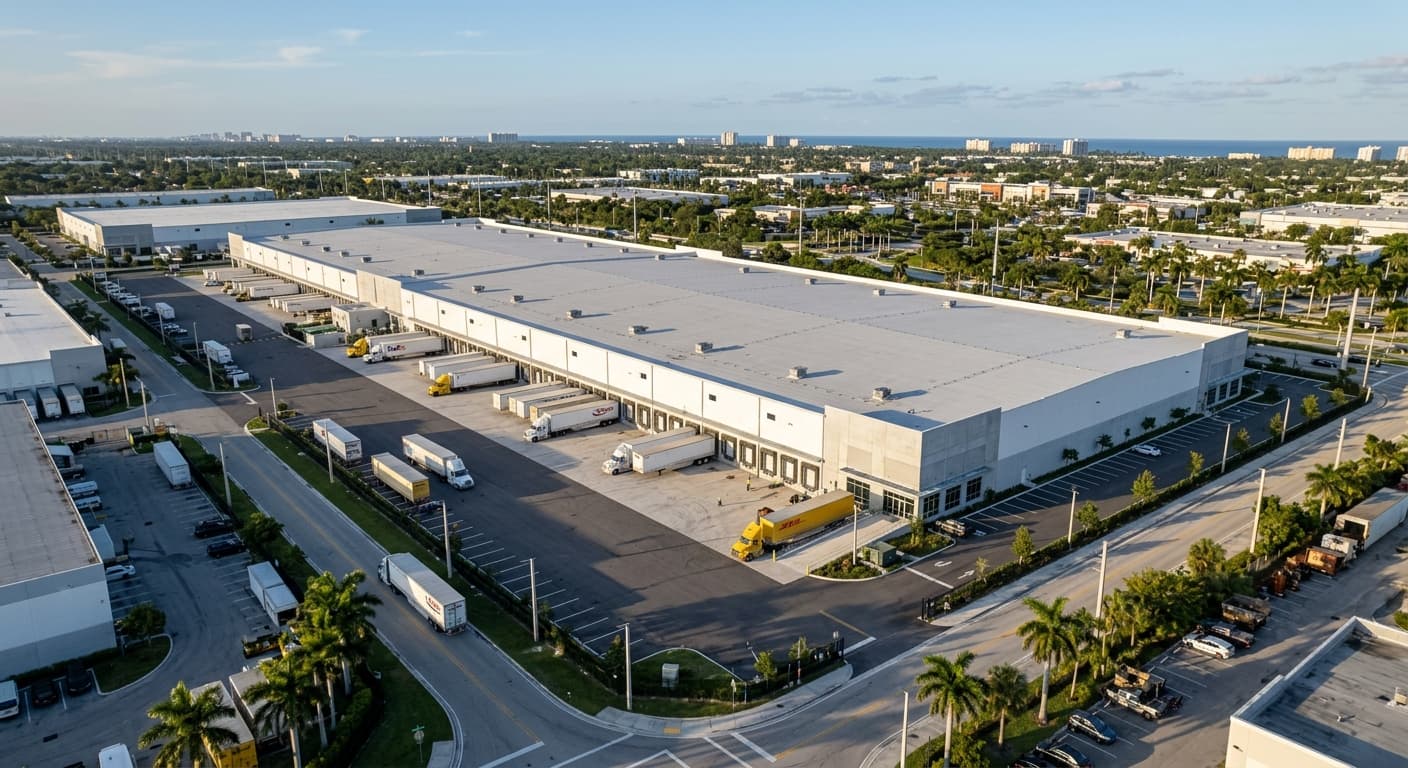
A family office has acquired an industrial property in Miami in a direct purchase, marking the latest example of private wealth bypassing fund structures to gain unmediated exposure to real assets. The transaction, reported by The Real Deal, positions the buyer as principal owner rather than limited partner, a distinction that carries meaningful governance and operational implications.
The deal underscores the continued appetite among wealthy investors for tangible property holdings even as institutional allocators have pulled back from certain segments of commercial real estate. Industrial assets in particular have retained favour among private capital given their perceived resilience through economic cycles and the structural tailwinds from e-commerce logistics.
By executing the acquisition directly, the family office retains full control over asset management, financing decisions, and exit timing—privileges that would otherwise be delegated to a general partner in a commingled fund vehicle. This preference for governance reflects a broader trend among ultra-high-net-worth investors who view direct ownership as a means to align investment horizons with generational wealth strategies.
Miami's industrial market has drawn consistent interest from both institutional and private buyers over the past several years, driven by population growth, expanding distribution networks, and favourable tax treatment. The city's role as a logistics gateway for Latin American trade has reinforced demand for warehouse and fulfilment space, supporting valuations even as other property types face headwinds.
The family office's decision to acquire outright rather than participate in a pooled vehicle also sidesteps the fee layers and liquidity constraints typical of private real estate funds. Direct buyers avoid management fees, carried interest, and the redemption gates that can complicate exit strategies during market dislocations.
Long-term hold periods are a hallmark of family office real estate strategy, particularly when principals view property not merely as a return vehicle but as a store of value across generations. This orientation contrasts with the shorter fund cycles that institutional managers face, where capital commitments and distribution pressures can force sales on timelines that do not align with underlying fundamentals.
The transaction arrives as private real estate fundraising remains sluggish and secondary markets for fund interests trade at steep discounts to net asset value. In that environment, family offices with available capital and operational capacity are positioned to pursue acquisitions without the layering of intermediaries or the structural constraints of commingled capital.
Whether this preference for direct ownership broadens into a sustained reallocation away from funds will depend on the ability of wealthy investors to source deals, manage assets, and access leverage on competitive terms. For now, the Miami acquisition serves as a data point in the ongoing tension between control and scale in private real estate investment.