Seven hundred twenty-eight new exchange-traded funds listed in the United States during the first half of 2026, and a handful have already gathered substantial assets by targeting narrow industrial themes or filling gaps in existing index products. Research firm CFRA screened the launches and identified five that either rapidly accumulated capital or introduced structural innovation in growing categories, underscoring the pace of experimentation in the domestic ETF ecosystem.
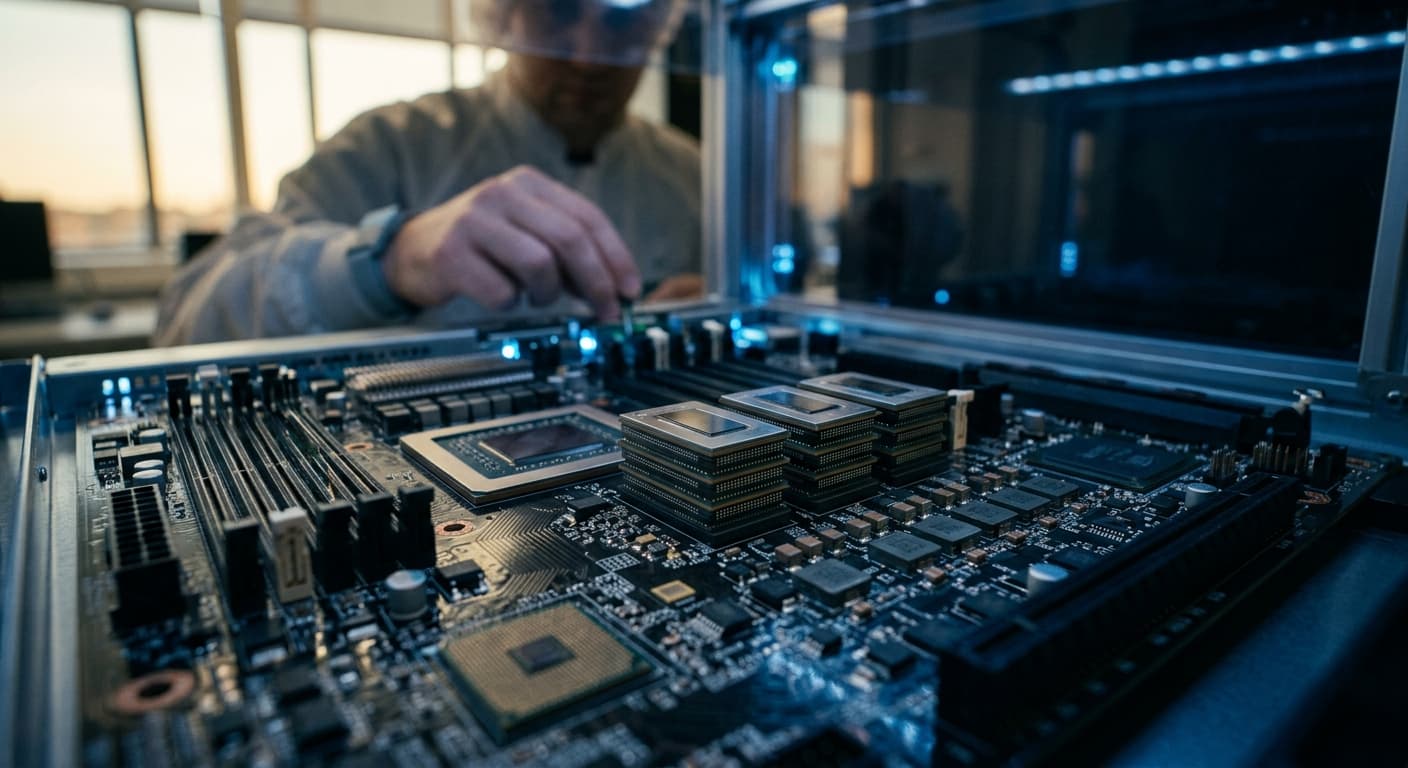
The Roundhill Memory ETF, trading under the ticker DRAM, emerged as the standout launch of the period. It grew to more than $23 billion in assets as of July 7, 2026, by offering differentiated exposure to the high-bandwidth memory chip industry—a critical component of the artificial intelligence hardware supply chain. The fund focuses on three firms that together command more than 90 percent market share of the global HBM market: SK hynix Inc., Samsung Electronics Co. Ltd., and Micron Technology Inc. As of July 7, those three names accounted for over 70 percent of DRAM's total exposure.
DRAM's rapid asset accumulation stems in part from a structural advantage over incumbent semiconductor funds. The largest U.S. semiconductor ETFs—the VanEck Semiconductor ETF and the iShares Semiconductor ETF—did not hold either SK hynix or Samsung Electronics as of July 9, 2026, because both products exclude stocks listed outside the United States. That opened the door for DRAM to offer targeted pure-play exposure to global memory stocks. After SK hynix's ADR listing on July 10, CFRA expects the two incumbent funds to add it, but with a significantly lower weight than DRAM carries. The memory ETF posted positive inflows every week from launch through July 3 and ranked sixth among all U.S.-listed ETFs for first-half 2026 inflows.
Space-themed products also gathered significant capital during the period, driven by the SpaceX initial public offering. The Tema Space Innovators ETF, ticker NASA, emerged as the largest of seven new space-focused ETFs that launched in the first half of 2026. Investment interest in the fund was driven by its pre-IPO exposure to SpaceX, obtained via a special purpose vehicle. Other ETFs in the space category, including those launched in previous calendar years, have since added SpaceX to their portfolios post-IPO via the traded common stock. According to CFRA, that approach is preferred because the use of special purpose vehicles to obtain private equity exposure can raise valuation and regulatory challenges.
The space thematic category is likely to expand as SpaceX's growth spawns a broader supplier ecosystem. CFRA's fundamental equity team notes that suppliers of semiconductors, advanced materials, industrial gases, manufacturing equipment, satellite components and AI infrastructure are positioned to benefit from higher launch cadence, Starlink deployment and Starship production. The convergence of Starlink, Starship and AI infrastructure is increasing demand across the semiconductor and compute supply chain. In the near term, firms like industrial gas provider Linde plc, engineering firm Velo3D and semiconductor provider STMicroelectronics N.V. are likely to be direct beneficiaries of SpaceX's growth.
Another emerging category centres on what Ritholtz Wealth Management CEO Josh Brown coined the Heavy Assets Low Obsolescence theme. The underlying thesis of HALO investing is that AI is less likely to disrupt businesses that have capital-intensive real-world assets and more likely to adversely impact digital capital-light businesses. There is no universally agreed-upon definition of a HALO business, and the track record of this thesis is still unproven. However, given the wide-ranging impact of AI, CFRA expects more ETF products to focus on separating winners and losers from AI.
The Roundhill HALO ETF, ticker LOHA, was the first U.S. fund to explicitly focus on the HALO trade. It uses an index-based approach to provide exposure to U.S.-listed companies whose economic value is tied to physical goods and commerce, asset leasing, and physical infrastructure networks. The launch of LOHA was quickly followed by the listing of the Tuttle Capital Heavy Asset Low Obsolescence ETF, ticker HALX, which also tracks a rules-based index and targets 30 to 50 constituents focused on physical assets and capital-intensive operations, including power systems, transportation networks, and industrial automation.
LOHA and HALX have very different sector exposures from each other and from the S&P 500-tracking iShares Core S&P 500 ETF. As of July 7, 2026, 38 percent of LOHA's exposure was in the Industrials sector, compared to just 17 percent and 9 percent in HALX and the iShares Core fund, respectively. Similarly, LOHA had a combined 33 percent in the Consumer Discretionary and Consumer Staples sectors, compared to 19 percent and 14 percent in HALX and the iShares product. Both HALO-themed ETFs have zero or minimal IT and Financials sector exposure, compared to 37 percent and 12 percent in the S&P 500 tracker.
The ProShares GENIUS Money Market ETF, ticker IQMM, also appeared on CFRA's notable-launch list. The fund jump-started its asset growth via allocations from other ProShares ETFs. Institutional and retail fixed-income investors are also considering securitized debt to achieve higher yields than traditional corporate and government debt, CFRA noted. The iShares Securitized Income Active ETF, ticker SECU, has yet to cross one billion dollars in assets but is innovating in a category of growing investor interest.