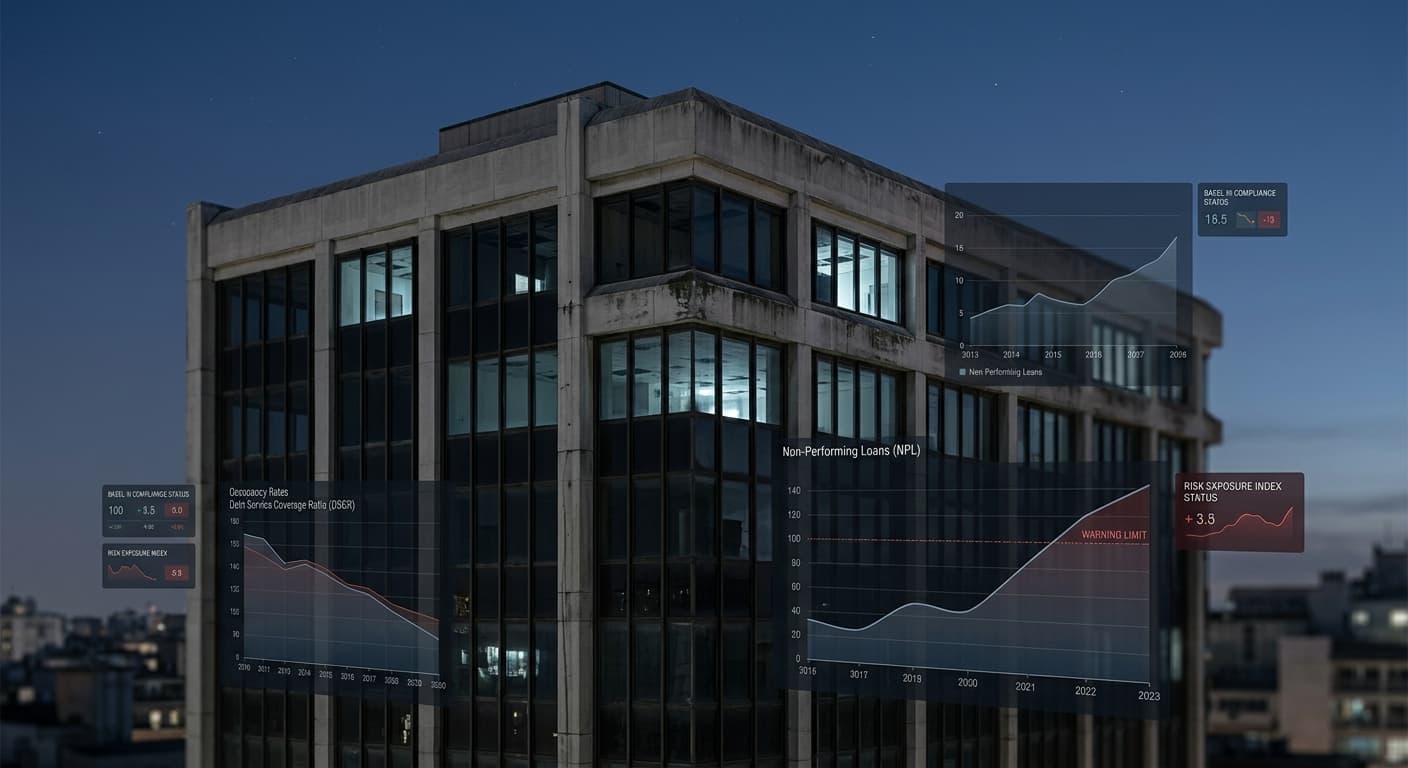
New regulatory data show a sharp increase in distressed commercial real estate loans at US banks, reflecting mounting refinancing and default risks as higher interest rates collide with weaker fundamentals in key property types. Nonperforming and specially‑mentioned loans tied to office, multifamily, and retail assets have risen materially over the past quarter, according to the report, with several regional lenders flagging heightened exposure to maturing debt in the 2026–2027 window.
The surge in troubled loans underscores the collision of elevated vacancy rates, falling collateral values, and tighter credit standards—a combination bank executives say is making it harder for borrowers to roll over legacy loans. Properties underwritten at pre‑2022 cap rates are proving especially difficult to refinance, as lenders demand lower loan‑to‑value ratios and higher debt‑service coverage in today's environment.
Supervisors have urged institutions to increase allowances for credit losses and to engage early with sponsors on restructurings, sales, or additional equity injections where viable. The guidance reflects regulatory concern that delayed recognition of losses could amplify stress if property valuations deteriorate further, particularly in markets where office fundamentals remain weak and multifamily supply continues to pressure rents.
Analysts quoted in the article warn that while losses remain manageable for the system as a whole, smaller banks concentrated in commercial real estate could face pressure on earnings and capital if valuations deteriorate further. Regional institutions with outsized exposure to a single property type or geography are seen as especially vulnerable, given limited balance‑sheet capacity to absorb extended workout periods.
The refinancing squeeze is prompting some owners to hand back keys or seek discounted note sales, creating new opportunities for distressed‑debt investors but adding to uncertainty for existing lenders and equity partners. For family offices that co‑invested alongside bank debt or hold mezzanine positions, the rising nonperforming rate signals heightened risk of principal loss or protracted restructuring timelines.
For direct lenders and co‑investors, the data highlight the importance of early engagement with sponsors and granular stress‑testing of maturity schedules. Family offices with exposure to multifamily or office debt originated before 2022 should model scenarios in which refinancing is unavailable at par and additional equity is required to bridge to stabilisation or exit.
The regulatory push for higher credit‑loss allowances also suggests that banks will remain cautious in extending new credit, particularly to sponsors with weak operating performance or limited liquidity. That creates openings for private capital willing to price risk appropriately, but also raises the bar for underwriting discipline and covenant enforcement.
As the 2026–2027 maturity wall approaches, family offices should revisit vintage loan exposure, assess sponsor capitalisation, and confirm that reserve policies reflect current‑market exit assumptions rather than historical recovery rates. The window for proactive restructuring is narrowing, and the gap between hold‑to‑maturity hope and mark‑to‑market reality is widening across the distressed CRE spectrum.