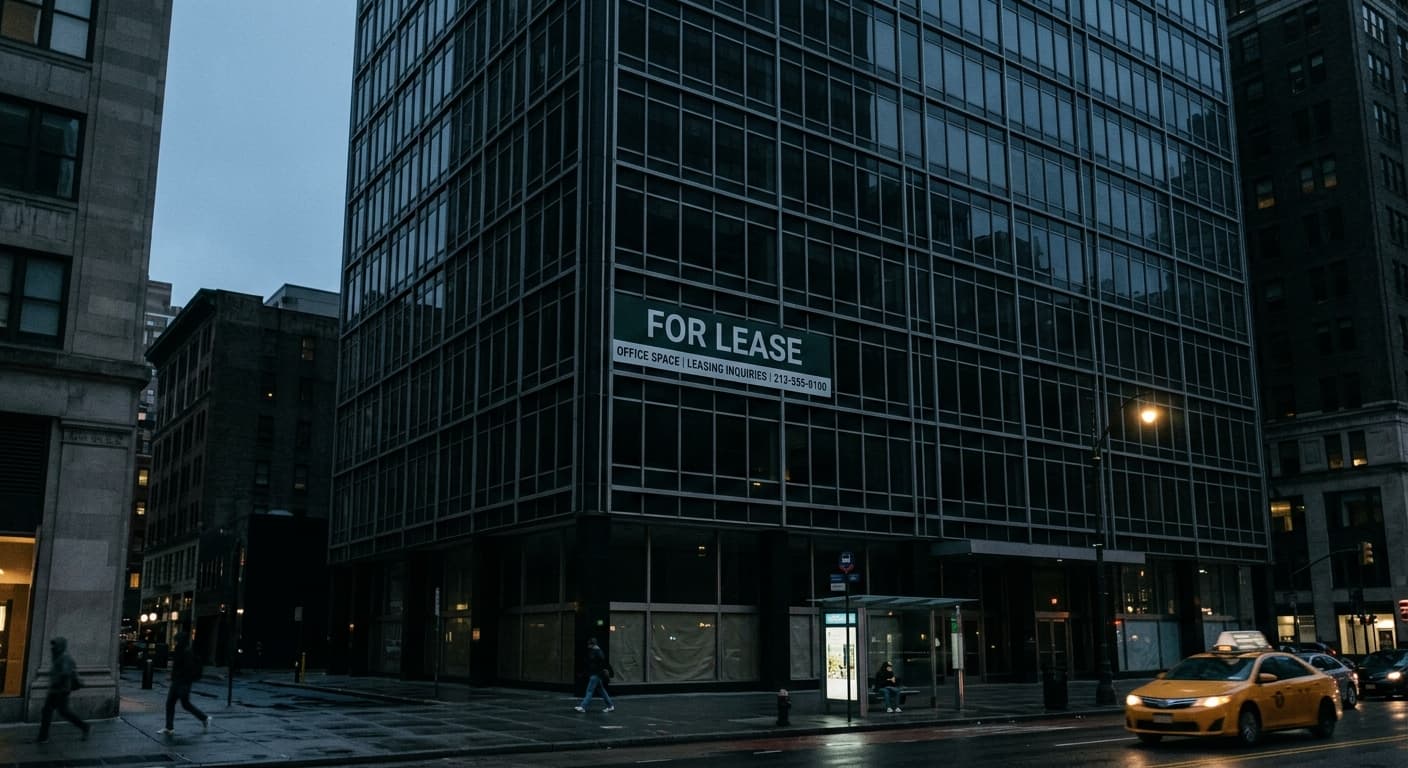
A surge in capital commitments to distressed commercial real estate debt funds signals mounting pressure on property owners facing a refinancing wall over the next four years. Tens of billions of dollars have been raised in recent months by private credit and opportunistic vehicles targeting office, hotel and retail loans that may struggle to refinance as multi-year obligations mature in a higher interest-rate environment, according to data cited by Reuters.
The wave of fundraising reflects a structural mismatch between the terms on which buildings were underwritten before 2022 and the tighter lending standards now enforced by banks and capital-markets investors. Many properties financed during the ultra-low-rate era are confronting a dual headwind of weaker operating cash flows and lower appraised values, creating a refinancing gap that cannot be bridged through modest equity injections or operational improvements alone.
Special servicers are reporting a pronounced increase in the number of commercial mortgage-backed securities being transferred into workout status, a formal acknowledgment that borrowers are either delinquent or at imminent risk of default. The uptick in CMBS workouts underscores the breadth of distress across property types, with office and retail loans particularly exposed to structural demand shifts that predate the pandemic but have accelerated in its wake.
Regional banks, under regulatory scrutiny to reduce commercial real estate concentration risk, are actively seeking to offload criticized credits from their portfolios. The combination of mark-to-market pressure, capital-adequacy requirements and heightened supervisory expectations has made loan sales an increasingly attractive path for lenders looking to de-risk balance sheets, even at discounts that crystallize losses.
Market participants interviewed by Reuters indicated that the pipeline of troubled loans points to elevated default and forced-sale risk persisting through 2027, even under scenarios in which interest rates edge lower from current levels. The observation suggests that rate relief alone will not resolve the underlying cash-flow and valuation challenges facing many properties, particularly those in secondary markets or with outdated physical configurations.
The maturity wall is most acute for loans originated between 2019 and early 2022, when underwriting assumptions embedded cap rates near historic lows and projected rent growth that has not materialized. Borrowers who locked in five- or seven-year fixed-rate debt during that window are now discovering that replacement financing, if available at all, requires either substantial equity cures or acceptance of shorter amortization schedules that compress distributable cash flow.
Beyond credit risk, the article notes that servicers and asset managers are upgrading technology infrastructure in response to operational vulnerabilities exposed by recent ransomware incidents. Those attacks temporarily disrupted loan servicing and property-management data systems, highlighting cyber risk as an emerging concern for stakeholders managing portfolios of distressed or transitional assets.
The convergence of refinancing pressure, conservative bank underwriting and cyber threats creates a complex risk environment for commercial real estate lenders and equity holders. Distressed-debt investors are positioning to capture dislocations, but the scale of capital inflows also raises questions about how much dry powder will ultimately be deployed at spreads wide enough to compensate for workout complexity and extended hold periods.
For allocators with exposure to commercial mortgage debt—whether through direct lending, CMBS or real estate credit funds—the Reuters report underscores the importance of stress-testing portfolio companies against a prolonged workout cycle. The expectation of elevated defaults through 2027 implies that underwriting discipline and asset-level transparency will be critical differentiators as the distressed opportunity set expands and competition among capital providers intensifies.