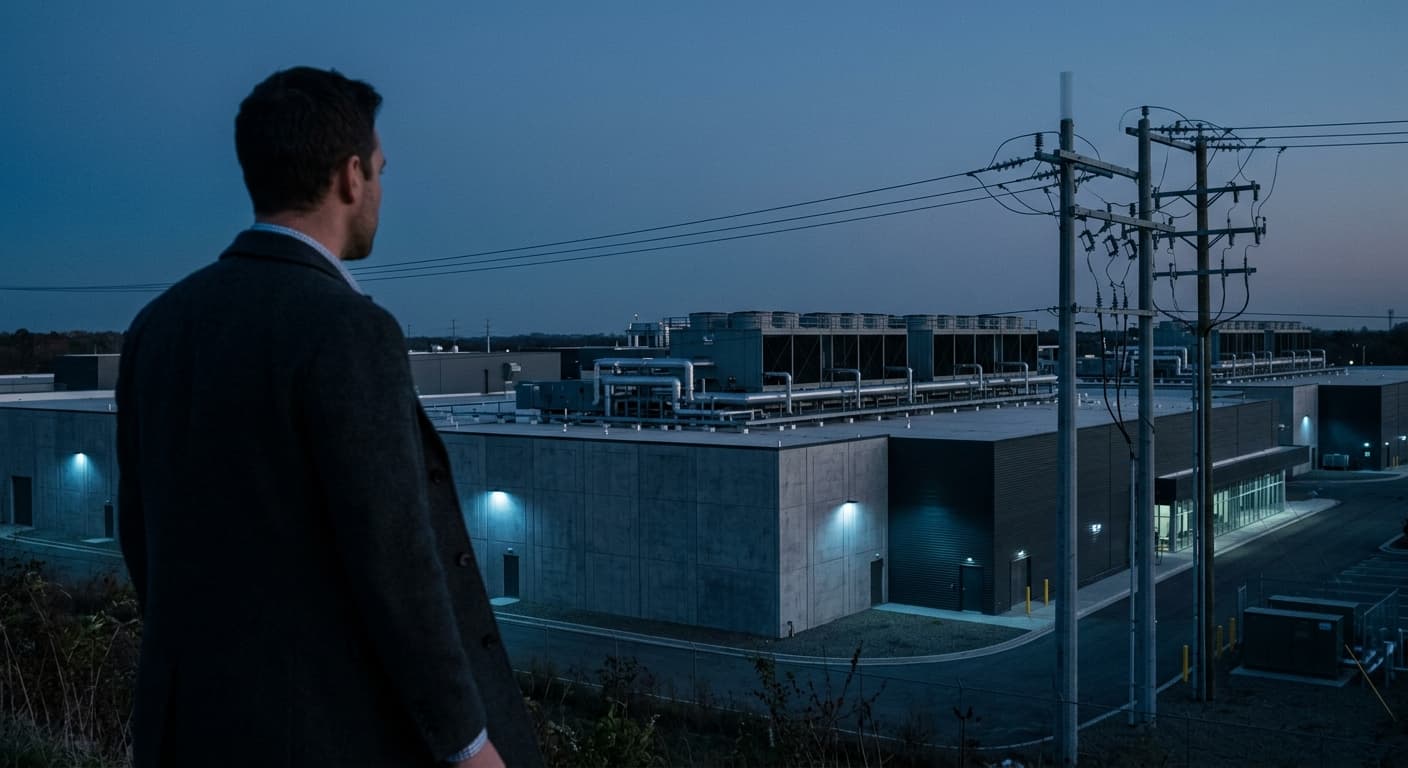
GI Partners paid around $750 million for a 189,000-square-foot data center in Elk Grove Village, Illinois, a building that was an ordinary warehouse less than two years ago, The Real Deal reported. The transaction captures the single biggest theme running through the US commercial real estate market, according to a September review by Raveum, a cross-border investment advisory.
US commercial real estate investment is tracking toward roughly $605 billion for 2026, with industrial and data centers pulling the largest flows, Raveum reported. The major research houses broadly agree that returns in this cycle come from rental income, not rising prices, and that AI infrastructure is the biggest demand story in the US market.
CBRE frames 2026 as income-driven, where the money is made from rent collected rather than from selling a building for more than you paid, Raveum said. Blackstone makes the same point from a different angle: US property values fell around 22% from their peak in 2022 before stabilizing, reframing today's pricing as an entry point rather than a growth story, the firm said. Nareit, the US REIT industry association, reports listed real estate outperforming on steady operations rather than rising valuations.
CBRE upgraded its 2026 industrial leasing forecast to more than 1 billion square feet, which it says would be a record year, Raveum reported. Cushman & Wakefield reports national industrial vacancy has fallen to 6.9%, a sign the sector has passed its weakest point as demand outpaces new supply. JLL notes take-up rising in most major markets.
CBRE credits the AI investment boom as a central reason US economic growth has held up, tracking around 2.1% for the year. ULI and PwC name data centers a top sector to watch. Cushman & Wakefield is running a content series on data centers and the power they require. J.P. Morgan Asset Management ties industrial and power demand directly to AI-driven decisions about where to build.
Operator selection inside data center and industrial strategies matters more than the asset class itself in the back half of this cycle, family office advisor Jaf Glazer has maintained.
Office is recovering, but only at the top end. CBRE reports office rents up 2.2% over the year, the strongest since early 2020, with prime buildings closer to 5%. Cushman & Wakefield records seven straight quarters of improving demand, with the sharpest vacancy declines in gateway markets like San Francisco and Midtown Manhattan. All sources stress a two-tier recovery: prime space is tightening while older, secondary buildings still struggle.
Multifamily is the one sector the major research firms openly disagree on, some cautious, some constructive. CBRE reports performance diverging sharply by market, with national rents up just 0.2% while San Francisco saw nearly 10%. Cushman & Wakefield's multifamily team is more constructive, pointing to strengthening occupancy and demand. Some Nareit panelists are openly cautious, calling 2026 a challenging year for the sector despite deeply discounted valuations. Interest rates remain the swing factor. CBRE had expected the 10-year Treasury yield to fall below 4% by year-end, and now expects it to stay above 4% after a mid-year geopolitical shock. The US Federal Reserve makes its next interest rate decision on September 16, and the outcome is genuinely undecided, Raveum said.