Monday, September 14, 2026

CRE CLO Distress Rate Jumps to 28% in August as Bridge Loans Sour

The increase marks the sharpest one-month move of any commercial mortgage category this year, driven by 2021 and 2022 vintage collateral.

By the Family Office Real Estate Daily Desk·Monday, September 14, 2026·2 min read
Editorial summary of reporting byCommercial ObserverOur editorial standards →
The answer · checked against Commercial Observer

Why did CRE CLO distress jump to 28 percent in August 2026 and which deals are responsible?

The CRE CLO distress rate jumped from 19 percent in July to 28 percent in August 2026, the sharpest one-month move of any commercial mortgage deal type this year, according to CRED iQ data. The increase is concentrated in 2021 and 2022 vintage bridge loans, which now carry $3 billion of CRE CLO special-servicing balance against $27 billion outstanding. Five deals account for 38 percent of all CRE CLO special-servicing balance.

Key facts
  • CRED iQ data show the CRE CLO distress rate rose from 19 percent in July 2026 to 28 percent in August 2026, the largest one-month increase of any commercial mortgage deal type this year.
  • The 2021 and 2022 vintage loans now carry $3 billion of CRE CLO special-servicing balance and $1.7 billion of SASB special-servicing balance, against $27 billion and $17 billion outstanding respectively, according to CRED iQ.
  • FSRIA 2021-FL3 is the largest single contributor to CRE CLO distress, with $353 million of multifamily collateral in special servicing across seven loans, having moved $131 million into distress since spring 2026.
  • Texas, Florida and Georgia together carry 44 percent of the distressed CRE CLO balance, according to CRED iQ data.
  • The SASB distress rate has held near 22 percent since June 2026, with four single-borrower office and lab deals accounting for 64 percent of the category's $1.7 billion distressed balance, according to CRED iQ.
  • Office and mixed-use loans maturing over the next nine months are pricing 170 to 180 basis points above their in-place notes, the widest refinancing gap of any property type, according to CRED iQ.
CRE CLO Distress Rate Jumps to 28% in August as Bridge Loans Sour
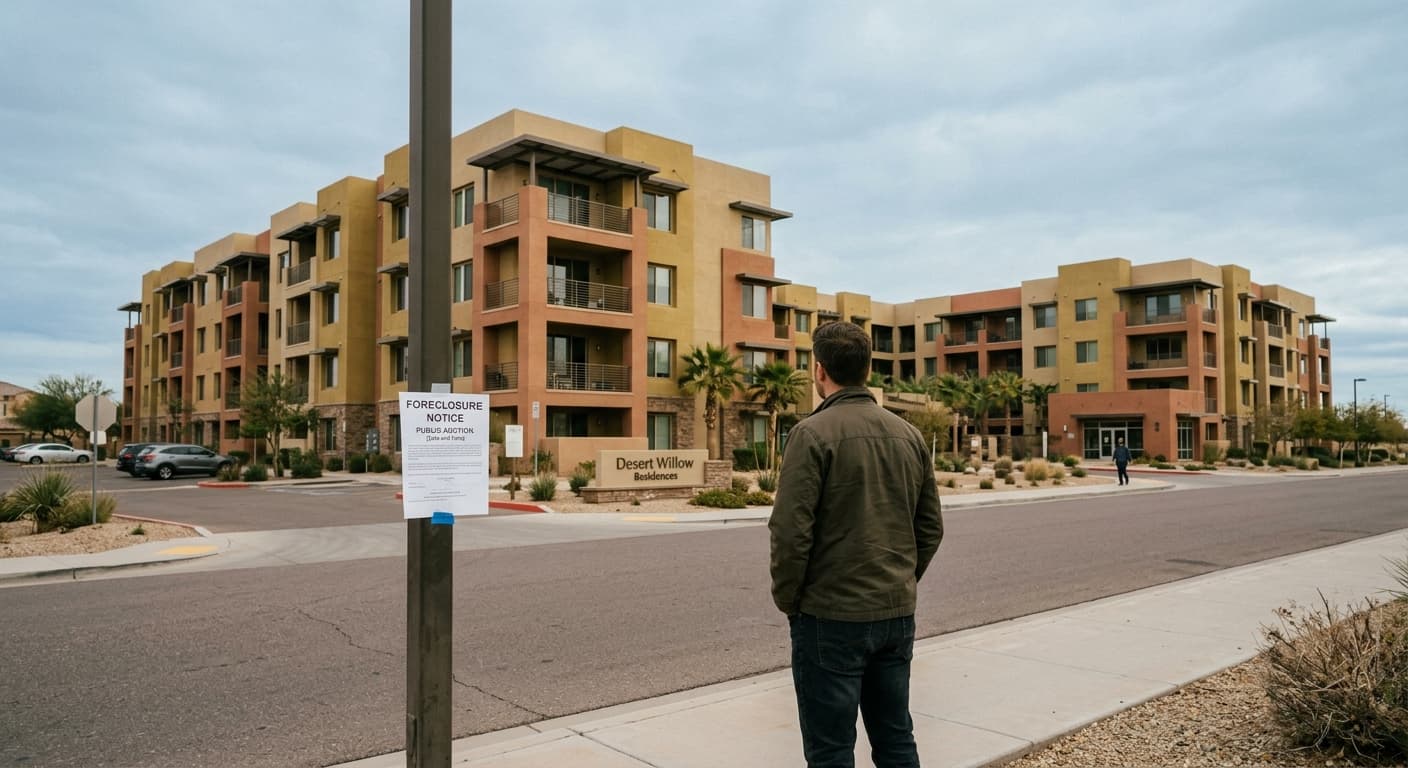
Image: editorial illustration · Story sourced from Commercial Observer

The commercial real estate collateralized loan obligation distress rate jumped from 19 percent in July to 28 percent in August, the sharpest one-month move of any deal type this year, according to CRED iQ data. The single-asset, single-borrower commercial mortgage-backed securities distress rate has held near 22 percent since June.

Both numbers trace to the same two origination years. Loans from 2021 and 2022 now carry $3 billion of CRE CLO special-servicing balance and $1.7 billion of SASB balance, against $27 billion and $17 billion outstanding, CRED iQ said. In both cases, the distress is in a handful of large, identifiable deals rather than spread across the market.

Distress rates for conduit, Freddie Mac and single-family rental loans have barely moved in eight months, each still under 5 percent. CRE CLO and SASB are the only categories that have crossed into double digits, a divergence specific to 2021 and 2022 vintage collateral, not the broader lending market.

The FSRIA 2021-FL3 deal is the largest contributor to distress, with $353 million of multifamily collateral now in special servicing across seven loans. It has added a new default roughly every eight weeks throughout 2026, and August brought two more: River Crossing at Roswell, Ga., a $49 million loan, and Grace Abernathy Apartments in Sandy Springs, Ga., a $42 million loan, both tied to 2026 balloon maturities. Add the July transfer of 415 Premier Apartments in Evanston, Ill., a $40 million loan, and this one deal has moved $131 million into distress since spring.

ARCLO 2022-FL1, a similar Sun Belt bridge loan CLO, added the Residences at Medical in San Antonio, a $27 million loan, and Pebblebrook Apartments in Redlands, Calif., a $12 million loan, this cycle for $210 million of newly distressed collateral in August alone. Five deals now account for 38 percent of all CRE CLO special-servicing balance, and the 10 largest deals hold 58 percent. Texas, Florida and Georgia alone carry 44 percent of the distressed balance geographically.

SASB distress is concentrated in four single-borrower office and lab deals worth 64 percent of the category's $1.7 billion balance. BXHPP 2021-FILM, a $525 million loan against seven Hollywood studio and office properties, transferred in July. ALEN 2021-ACEN, a $203 million loan against Three Allen Center in Houston, and LIFE 2021-BMR, a $190 million loan against life sciences space across Cambridge, Mass., San Diego and the San Francisco Bay Area, both transferred earlier this year. The newest addition, BSREP 2021-DC, transferred on Aug. 10: a $162 million loan against eight Washington, D.C.-area office buildings. California, New York and D.C. now host two-thirds of SASB distressed balance.

Office and mixed-use loans maturing over the next nine months are pricing 170 to 180 basis points above their in-place notes, the widest refinancing gap of any property type, according to CRED iQ. CRE CLO loans in the Sun Belt face the same wall from a different angle: floating-rate plans built on 2021 and 2022 rent growth that never materialized, the firm said.

The Deployment Angle

Family Office Real Estate Daily Desk · our analysis, not the source's

The arithmetic favours avoidance over rescue capital. A $49 million loan at 28 percent distress implies a pool where roughly $370 million of the original collateral is now in special servicing. If the underlying properties were underwritten at 65 percent loan-to-value in 2021, the implied equity loss is total in any scenario where rents failed to grow and rates rose 300 basis points. There is no margin for a preferred equity rescue.

The concentration in five deals means this is not a market-wide repricing but a handful of sponsor blow-ups. Family offices considering co-GP opportunities in bridge lending should pressure-test the sponsor's 2021 and 2022 track record specifically. Ask for loan-level performance by vintage and by metro. If a platform cannot show you how its Atlanta or Phoenix multifamily bridge book performed relative to FSRIA 2021-FL3, do not commit capital.

On the liability side, family offices holding CLO equity or mezz should mark exposure to ARCLO 2022-FL1 and FSRIA 2021-FL3 to zero and model the next tranche up at 50 cents. The distress is adding $131 million per quarter in a single deal. That pace will not reverse before the next wave of 2026 maturities arrives in the fourth quarter. The only trade here is exit or full reserve.

Direct acquisition of the underlying properties may offer value, but only after special servicing runs its course. A $42 million loan against Grace Abernathy Apartments implies a roughly $65 million original asset value at 65 percent LTV. If the property trades at 50 cents on that basis, the all-in is $32 million. But you need certainty on title, on tenant roll, and on what rent growth actually occurred. Wait for the receiver's report. Do not bid blind on a portfolio summary.

Questions this story answers

01How bad is CRE CLO distress right now and what is driving it?

The CRE CLO distress rate reached 28 percent in August 2026, up from 19 percent in July, according to CRED iQ data. CRED iQ senior product manager Liam Mulcahy attributed the surge to 2021 and 2022 vintage bridge loans built on rent growth projections that never materialized, with floating-rate plans now running out of runway before balloon maturities.

02Which specific deals are causing the most CRE CLO distress?

FSRIA 2021-FL3 is the largest contributor, with $353 million of multifamily collateral in special servicing across seven loans and $131 million moved into distress since spring 2026. ARCLO 2022-FL1 added $210 million of newly distressed collateral in August alone. Five deals account for 38 percent of all CRE CLO special-servicing balance, according to CRED iQ.

03Is SASB distress also worsening, and where is it concentrated?

The SASB distress rate has held near 22 percent since June 2026 and has not materially worsened, according to CRED iQ. Four single-borrower office and lab deals account for 64 percent of the $1.7 billion SASB distressed balance, with California, New York and Washington D.C. hosting two-thirds of that balance.

04Are conduit or agency loans showing the same level of stress?

No. Distress rates for conduit, Freddie Mac and single-family rental loans have barely moved in eight months and each remain under 5 percent, according to CRED iQ data. CRE CLO and SASB are the only categories that have crossed into double digits, a divergence specific to 2021 and 2022 vintage collateral.

05What is the refinancing outlook for maturing office loans?

Office and mixed-use loans maturing over the next nine months are pricing 170 to 180 basis points above their in-place notes, according to CRED iQ, which characterizes that as the widest refinancing gap of any property type.

Original reporting
Commercial Observer
Read the original at Commercial Observer
cre-clodistressbridge-loansmultifamilyspecial-servicing
Peer Network · By Invitation

The Thesis Exchange

Share an investment thesis in confidence. We pair you anonymously with up to two other family offices running adjacent strategies. Reviewed by Gallium's editorial team. No vendor pitch.